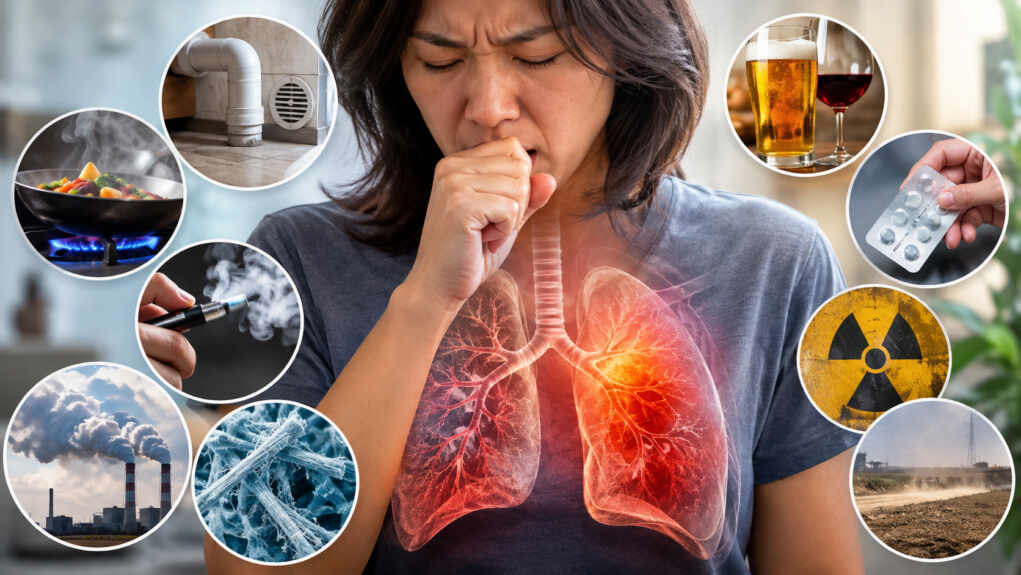
Lung cancer is often associated with smoking, and for good reason: tobacco use remains its leading risk factor. However, what many people don’t realize is that smoking is not the only thing that can damage the lungs and increase the likelihood of developing this potentially life-threatening disease. Everyday surroundings, workplace conditions, household environments, and even certain naturally occurring substances can expose people to cancer-causing agents without them knowing it.
What’s more concerning is that people who have never smoked can still develop lung cancer. According to health authorities, exposure to secondhand smoke, radon gas, air pollution, and hazardous workplace chemicals can significantly contribute to lung cancer risk. Understanding these lesser-known causes is an important step toward protecting lung health, recognizing potential environmental hazards, and making informed decisions about prevention. Here are some common sources of exposure that deserve more attention.
1. Secondhand Smoke: Breathing in Someone Else’s Cigarette Smoke
You don’t have to be a smoker to experience the harmful effects of tobacco. Secondhand smoke, which comes from burning tobacco products and the smoke exhaled by smokers, contains numerous toxic chemicals, including substances known to cause cancer.
People who regularly spend time around smokers, whether at home, in the workplace, or in other enclosed environments, may be exposed to these harmful substances. Long-term exposure to secondhand smoke increases the risk of developing lung cancer, even among individuals who have never smoked.
Children, older adults, and people living with smokers may face repeated exposure, particularly in homes and vehicles where ventilation is limited.
How to reduce the risk: Maintain smoke-free homes and vehicles, avoid enclosed spaces where people smoke, and encourage family members and colleagues to follow smoke-free policies.
2. Radon Gas: An Invisible Threat Inside Homes
Radon is a naturally occurring radioactive gas produced when uranium in rocks and soil breaks down. Although it exists outdoors in small amounts, it can accumulate indoors when it enters buildings through cracks in floors, walls, foundations, and other openings.
What makes radon particularly dangerous is that it has no smell, color, or taste. People can unknowingly breathe in elevated concentrations for years without realizing they are being exposed.
When inhaled, radioactive particles released as radon decays can damage the cells lining the lungs. Prolonged exposure increases the risk of lung cancer, making radon one of the most important environmental causes of the disease.
The risk is even greater for people who smoke because tobacco smoke and radon exposure can work together to increase lung cancer risk.
How to reduce the risk: Consider professional radon testing if testing services are available in your area. If elevated levels are detected, consult qualified professionals about appropriate ventilation and radon-reduction measures.
3. Air Pollution: The Hidden Danger in the Air We Breathe
Air pollution is more than an environmental concern. It is also a significant public health issue associated with several respiratory conditions, including lung cancer.
Fine particulate matter, particularly PM2.5, consists of extremely small particles that can travel deep into the respiratory system. These particles may come from vehicle emissions, industrial activities, power plants, construction, and the burning of fossil fuels or other materials.
Long-term exposure to polluted air can contribute to inflammation and cellular damage in the lungs. The World Health Organization recognizes outdoor air pollution as an important lung cancer risk factor.
People living in heavily populated cities, industrial areas, and locations with frequent traffic congestion may experience greater exposure to certain air pollutants.
Indoor air pollution also deserves attention. Smoke from cooking with solid fuels, poorly ventilated spaces, and other combustion sources can expose household members to harmful pollutants.
How to reduce the risk: Avoid prolonged exposure to heavily polluted environments when possible, improve indoor ventilation, avoid burning waste, and monitor local air quality reports. Using appropriate air filtration may also help reduce indoor particle exposure.
4. Asbestos: A Dangerous Workplace and Building Material
Asbestos is a group of naturally occurring minerals historically used in construction and manufacturing because of its heat resistance and insulating properties.
It was commonly incorporated into roofing materials, insulation, cement products, and other building components. However, asbestos fibers become dangerous when disturbed and released into the air.
When inhaled, these microscopic fibers can become lodged in lung tissue. Prolonged exposure can cause serious diseases, including lung cancer and mesothelioma, a cancer affecting the lining of the lungs and other organs.
People working in construction, demolition, shipbuilding, insulation installation, and certain industrial occupations may face increased exposure if proper precautions are not followed.
Importantly, older buildings may still contain asbestos-containing materials. Simply living or working in an older building does not necessarily mean someone is exposed. The risk increases when these materials deteriorate or are improperly disturbed.
How to reduce the risk: Never attempt to remove suspected asbestos-containing materials yourself. Have them assessed by qualified professionals and follow appropriate occupational safety procedures.
5. Diesel Exhaust: More Than Just Traffic Pollution
The smoke and fumes released by diesel-powered engines contain a complex mixture of gases and particles. Diesel exhaust is a recognized carcinogenic exposure associated with an increased risk of lung cancer.
People who work around diesel-powered machinery, trucks, buses, generators, mining equipment, and heavy industrial vehicles may experience repeated exposure, especially in poorly ventilated environments.
Although occasional exposure does not automatically mean someone will develop cancer, prolonged occupational exposure can increase health risks.
People who live near busy roads, transport terminals, and industrial facilities may also encounter diesel-related air pollution as part of their everyday environment.
How to reduce the risk: Employers should provide adequate ventilation, maintain diesel-powered equipment, minimize unnecessary engine idling, and follow workplace exposure-control standards. Workers should also use appropriate protective equipment when required.
6. Workplace Chemicals: Exposure That Can Accumulate Over Time
Certain chemicals and industrial substances are known carcinogens that can increase lung cancer risk when inhaled over extended periods.
Examples include:
- Arsenic: Exposure can occur in certain mining, smelting, and industrial processes.
- Silica dust: Respirable crystalline silica can be released during activities such as cutting, drilling, grinding, and construction work.
- Chromium compounds: Certain forms, particularly hexavalent chromium, are associated with increased cancer risk.
- Nickel compounds: Certain occupational exposures have been linked to lung cancer.
- Cadmium: Exposure may occur in particular industrial processes, including metal production and battery manufacturing.
These substances can damage lung tissue and contribute to cancer development, particularly when exposure is repeated or prolonged.
Workers in mining, manufacturing, metal processing, construction, and other industrial sectors should be especially aware of the hazards associated with their occupations.
How to reduce the risk: Follow workplace safety regulations, use appropriate respiratory protection, ensure adequate ventilation, and participate in occupational health monitoring when recommended.
7. Family History and Genetic Factors
Not every lung cancer case can be explained by environmental exposure or smoking history. Genetics may also play a role.
Having a close relative, such as a parent, sibling, or child, who has had lung cancer may increase a person’s risk of developing the disease.
Researchers believe inherited genetic variations may influence how the body responds to environmental carcinogens and repairs damaged cells. However, family history does not mean someone will inevitably develop lung cancer.
It is also important to remember that relatives may share environmental exposures, such as secondhand smoke or occupational hazards, which can contribute to similar health risks.
How to reduce the risk: People with a strong family history of lung cancer should discuss their individual risk factors with a healthcare professional. A doctor can help determine whether additional evaluation or preventive measures are appropriate.
8. Previous Radiation Therapy to the Chest
Radiation therapy is an important treatment for several types of cancer. However, exposure to high doses of ionizing radiation involving the chest can increase the risk of developing lung cancer later in life.
This is particularly relevant for individuals who previously received radiation treatment for cancers affecting areas near the lungs, including certain breast cancers and lymphomas.
The increased risk depends on several factors, including the radiation dose, treatment area, age at exposure, and other risk factors such as smoking.
This does not mean patients should avoid medically necessary radiation therapy. Its benefits in treating cancer often outweigh the potential long-term risks.
How to reduce the risk: People with a history of chest radiation should maintain regular follow-up appointments and discuss their long-term health risks with their healthcare providers.
9. Certain Supplements: Why More Is Not Always Better
Many people take supplements to improve their health, but certain formulations may carry unexpected risks.
One example is high-dose beta-carotene supplementation. Although beta-carotene naturally occurs in foods such as carrots, sweet potatoes, and leafy vegetables, research has found that beta-carotene supplements can increase lung cancer risk among people who smoke heavily.
This distinction is important: eating fruits and vegetables containing beta-carotene is not associated with the same increased risk.
The findings highlight why supplements should not automatically be considered harmless simply because they contain nutrients found naturally in food.
How to reduce the risk: Avoid taking high-dose beta-carotene supplements without medical advice, particularly if you smoke or have a history of heavy smoking. Prioritize a balanced diet and discuss supplementation with a qualified healthcare professional.
Can You Develop Lung Cancer Even If You Never Smoked?
Yes. Although smoking remains the leading risk factor, lung cancer can affect people who have never used tobacco.
According to the U.S. Centers for Disease Control and Prevention (CDC), approximately 10% to 20% of lung cancers in the United States occur among people who have never smoked or have smoked fewer than 100 cigarettes during their lifetime.
Environmental exposures, secondhand smoke, radon, occupational carcinogens, and genetic factors can all contribute to the development of lung cancer.
This is why it is important not to dismiss persistent respiratory symptoms simply because someone has never smoked.
Some potential warning signs include:
- A persistent cough that does not improve.
- Coughing up blood or blood-stained mucus.
- Chest pain or discomfort, particularly when breathing deeply or coughing.
- Shortness of breath.
- Unexplained weight loss.
- Persistent fatigue.
- Recurrent respiratory infections.
These symptoms do not necessarily indicate lung cancer, as they can also occur with other medical conditions. However, anyone experiencing persistent or concerning symptoms should seek medical evaluation.
Practical Ways to Protect Your Lungs and Lower Your Risk
Although not every lung cancer risk factor can be controlled, there are practical steps people can take to minimize exposure to known carcinogens.
Here are some important preventive measures:
- Avoid tobacco and secondhand smoke. Do not start smoking, and seek support to quit if you currently smoke.
- Check your indoor environment. Investigate potential radon exposure where testing is available and address other sources of indoor pollution.
- Pay attention to workplace safety. Follow protective guidelines when working around asbestos, silica, diesel exhaust, and industrial chemicals.
- Reduce exposure to air pollution. Monitor air quality and limit unnecessary outdoor activities when pollution levels are particularly high.
- Maintain a healthy lifestyle. Eat a balanced diet, exercise regularly, and avoid unnecessary exposure to harmful substances.
- Know your family medical history. Inform your healthcare provider if close relatives have had lung cancer.
- Seek medical advice when symptoms persist. Early evaluation can help identify potential health problems and determine whether further testing is necessary.
People who meet established high-risk criteria should also discuss lung cancer screening with their healthcare providers. Screening recommendations depend on factors such as age and smoking history, and routine screening is not recommended for everyone.
The Bottom Line: Lung Cancer Prevention Goes Beyond Avoiding Cigarettes
Smoking is undoubtedly the most significant preventable risk factor for lung cancer, but it is not the only one. From invisible radon gas and polluted air to workplace chemicals and secondhand smoke, several everyday exposures can affect lung health and increase cancer risk.
The good news is that greater awareness can lead to better prevention. Identifying environmental hazards, following workplace safety practices, maintaining smoke-free spaces, and seeking medical attention when necessary can all contribute to protecting lung health.
Ultimately, protecting your lungs is not just about avoiding cigarettes. It is also about understanding the air you breathe, the environments you spend time in, and the potential hazards you encounter every day.
Sources:
- World Health Organization (WHO) – Lung Cancer
- Centers for Disease Control and Prevention (CDC) – Lung Cancer Risk Factors
- American Cancer Society – What Causes Lung Cancer?
- National Cancer Institute (NCI) – Lung Cancer Prevention
- National Health Service (NHS) – Causes of Lung Cancer
- Johns Hopkins Medicine – Lung Cancer Risk Factors
- World Health Organization (WHO) – Radon and Health
- National Cancer Institute (NCI) – Radon and Cancer
Website operated and published by:
FAB LTD
Ground Floor, 14 Stewart Dr.
Berea, East London 5241
South Africa
Disclaimer
The watching, interacting, and participation of any kind with anything on this page does not constitute or initiate a doctor-patient relationship with Dr. Farrah™. None of the statements here have been evaluated by the Food and Drug Administration (FDA). The products of Dr. Farrah™ are not intended to diagnose, treat, cure, or prevent any disease. The information being provided should only be considered for education and entertainment purposes only. If you feel that anything you see or hear may be of value to you on this page or on any other medium of any kind associated with, showing, or quoting anything relating to Dr. Farrah™ in any way at any time, you are encouraged to and agree to consult with a licensed healthcare professional in your area to discuss it. If you feel that you’re having a healthcare emergency, seek medical attention immediately. The views expressed here are simply either the views and opinions of Dr. Farrah™ or others appearing and are protected under the First Amendment.
Dr. Farrah™ is a highly experienced Licensed Medical Doctor certified in evidence-based clinical nutrition, not some enthusiast, formulator, or medium promoting the wild and unrestrained use of nutrition products for health issues without clinical experience and scientific evidence of therapeutic benefit. Dr. Farrah™ has personally and keenly studied everything she recommends, and more importantly, she’s closely observed the reactions and results in a clinical setting countless times over the course of her career involving the treatment of over 150,000 patients.
Dr. Farrah™ promotes evidence-based natural approaches to health, which means integrating her individual scientific and clinical expertise with the best available external clinical evidence from systematic research. By individual clinical expertise, I refer to the proficiency and judgment that individual clinicians acquire through clinical experience and clinical practice.
Dr. Farrah™ does not make any representations or warranties with respect to the accuracy, applicability, fitness, or completeness of any multimedia content provided. Dr. Farrah™ does not warrant the performance, effectiveness, or applicability of any sites listed, linked, or referenced to, in, or by any multimedia content.
To be clear, the multimedia content is not intended to be a substitute for professional medical advice, diagnosis, or treatment. Always seek the advice of your physician or other qualified health providers with any questions you may have regarding a medical condition. Never disregard professional medical advice or delay in seeking it because of something you have read or seen in any website, video, image, or media of any kind. Dr. Farrah™ hereby disclaims any and all liability to any party for any direct, indirect, implied, punitive, special, incidental, or other consequential damages arising directly or indirectly from any use of the content, which is provided as is, and without warranties.