
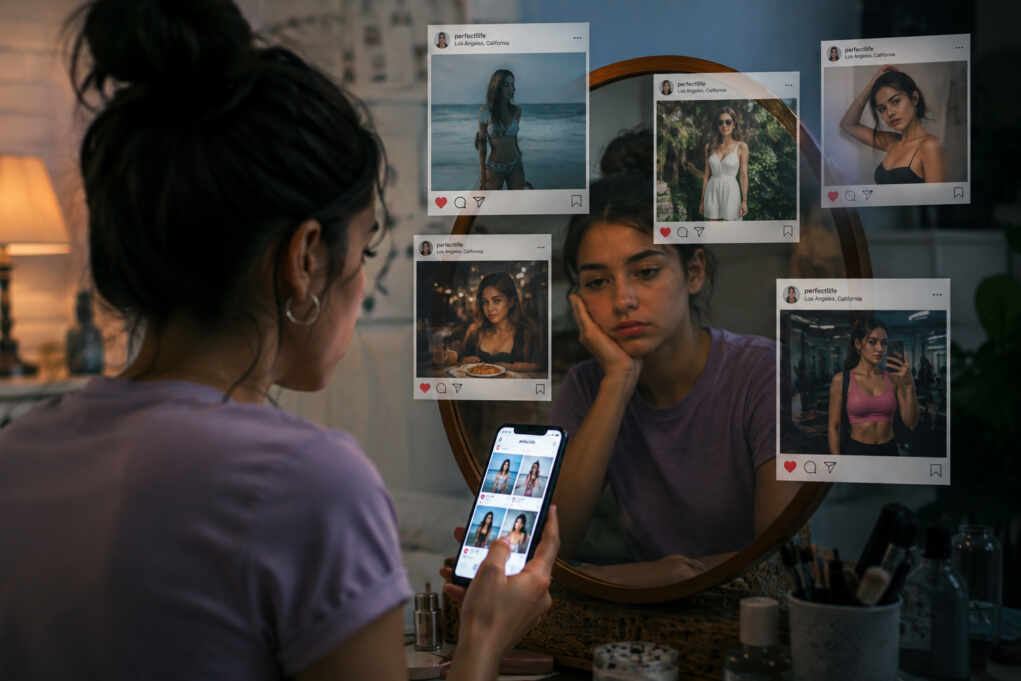
Social media has transformed the way people communicate, share experiences, and shape their identities. Among the most influential platforms is Instagram, where visual storytelling, curated lifestyles, and constant interaction have become part of everyday life for millions of users. While the platform offers opportunities for creativity, connection, and self-expression, researchers are increasingly examining its long-term effects on mental health and personal identity.
A growing body of research suggests that prolonged Instagram use may gradually weaken a person’s sense of self, particularly when users become heavily invested in external validation through likes, comments, and follower counts. Experts believe that frequent social comparison, pressure to maintain an idealized online image, and reliance on digital approval can influence how individuals view themselves, potentially making self-worth more dependent on social media feedback than on internal values or real-world relationships.
How Instagram Can Influence Self-Identity
A person’s sense of self refers to the stable understanding of who they are, including their beliefs, values, personality, and goals. Healthy self-identity develops through real-life experiences, relationships, and personal growth. However, Instagram encourages users to constantly present carefully selected moments of their lives, often emphasizing appearance, achievements, and social status.
Researchers suggest that repeated exposure to highly curated content can lead users to compare themselves with unrealistic standards. Over time, this habit may shift attention away from personal authenticity and toward creating an online persona designed to gain approval. Individuals may begin evaluating their worth based on engagement metrics rather than genuine self-confidence.
The Role of Social Comparison
One of the strongest psychological effects associated with Instagram is social comparison. Users frequently encounter edited photos, luxury lifestyles, fitness transformations, and seemingly perfect relationships. Although many people understand that these images are filtered or selectively presented, repeated exposure can still affect self-esteem.
Studies have found that upward social comparison—comparing oneself to people perceived as more successful or attractive—is associated with increased dissatisfaction, lower self-esteem, and greater emotional distress. Younger users, whose identities are still developing, may be particularly vulnerable to these effects.
External Validation and the Search for Approval
Instagram’s design naturally encourages users to seek positive feedback through likes, comments, and shares. While receiving validation can provide temporary satisfaction, relying heavily on these responses may create an unhealthy cycle in which self-worth becomes tied to online approval.
Mental health professionals note that emotional attachment to social media platforms—not simply the amount of time spent using them—appears to have a stronger relationship with reduced well-being. People who frequently check notifications or feel anxious when disconnected from social media may experience greater psychological strain than those who use these platforms more intentionally.
What the Latest Research Suggests
Recent research examining Instagram use indicates that intensive engagement with the platform can influence how people perceive themselves and relate to others. Rather than causing harm directly, Instagram may amplify existing tendencies toward perfectionism, insecurity, or dependence on social comparison.
Experts emphasize that the platform itself is not inherently harmful. Its impact depends largely on how individuals use it. Active, purposeful interactions with supportive communities can promote connection and well-being, while passive scrolling and constant comparison are more likely to contribute to negative emotional outcomes.
Protecting Your Sense of Self
Maintaining a healthy relationship with Instagram involves using the platform intentionally rather than habitually. Mental health experts recommend several practical strategies:
- Limit passive scrolling and set daily screen-time boundaries.
- Follow accounts that inspire learning, creativity, or genuine connection instead of those that trigger unhealthy comparisons.
- Remember that most social media content represents carefully selected highlights rather than everyday reality.
- Spend time cultivating offline relationships, hobbies, and experiences that reinforce personal identity.
- Practice self-reflection by focusing on personal values and accomplishments that exist independently of online feedback.
Developing a strong sense of self requires experiences beyond the digital world. Face-to-face relationships, meaningful activities, personal achievements, and self-awareness remain some of the most important foundations of long-term emotional well-being.
Final Thoughts
Instagram continues to be a valuable platform for creativity, education, and social connection. However, emerging evidence suggests that excessive or emotionally dependent use may gradually weaken a person’s sense of self by encouraging constant comparison and reliance on external validation. Recognizing these patterns and using social media with greater intention can help users enjoy its benefits while protecting their mental health and preserving a healthier, more authentic identity.
Sources:
- National Center for Complementary and Integrative Health (NCCIH): https://www.nccih.nih.gov/health/know-science/finding-and-evaluating-online-resources/finding-health-information-on-social-media/how-to-know-if-health-information-on-social-media-is-accurate
- Harvard T.H. Chan School of Public Health: https://hsph.harvard.edu/news/how-to-use-social-media-healthfully/
- Harvard Health Publishing: https://www.health.harvard.edu/mind-and-mood/scroll-smarter-to-protect-your-mental-health
- Cleveland Clinic: https://health.clevelandclinic.org/social-media-and-body-image
- National Institutes of Health (NIH): https://www.nih.gov/news-events/nih-research-matters/factors-affect-depression-risk
Disclaimer
The watching, interacting, and participation of any kind with anything on this page does not constitute or initiate a doctor-patient relationship with Dr. Farrah™. None of the statements here have been evaluated by the Food and Drug Administration (FDA). The products of Dr. Farrah™ are not intended to diagnose, treat, cure, or prevent any disease. The information being provided should only be considered for education and entertainment purposes only. If you feel that anything you see or hear may be of value to you on this page or on any other medium of any kind associated with, showing, or quoting anything relating to Dr. Farrah™ in any way at any time, you are encouraged to and agree to consult with a licensed healthcare professional in your area to discuss it. If you feel that you’re having a healthcare emergency, seek medical attention immediately. The views expressed here are simply either the views and opinions of Dr. Farrah™ or others appearing and are protected under the First Amendment.
Dr. Farrah™ is a highly experienced Licensed Medical Doctor certified in evidence-based clinical nutrition, not some enthusiast, formulator, or medium promoting the wild and unrestrained use of nutrition products for health issues without clinical experience and scientific evidence of therapeutic benefit. Dr. Farrah™ has personally and keenly studied everything she recommends, and more importantly, she’s closely observed the reactions and results in a clinical setting countless times over the course of her career involving the treatment of over 150,000 patients.
Dr. Farrah™ promotes evidence-based natural approaches to health, which means integrating her individual scientific and clinical expertise with the best available external clinical evidence from systematic research. By individual clinical expertise, I refer to the proficiency and judgment that individual clinicians acquire through clinical experience and clinical practice.
Dr. Farrah™ does not make any representations or warranties with respect to the accuracy, applicability, fitness, or completeness of any multimedia content provided. Dr. Farrah™ does not warrant the performance, effectiveness, or applicability of any sites listed, linked, or referenced to, in, or by any multimedia content.
To be clear, the multimedia content is not intended to be a substitute for professional medical advice, diagnosis, or treatment. Always seek the advice of your physician or other qualified health providers with any questions you may have regarding a medical condition. Never disregard professional medical advice or delay in seeking it because of something you have read or seen in any website, video, image, or media of any kind. Dr. Farrah™ hereby disclaims any and all liability to any party for any direct, indirect, implied, punitive, special, incidental, or other consequential damages arising directly or indirectly from any use of the content, which is provided as is, and without warranties.