
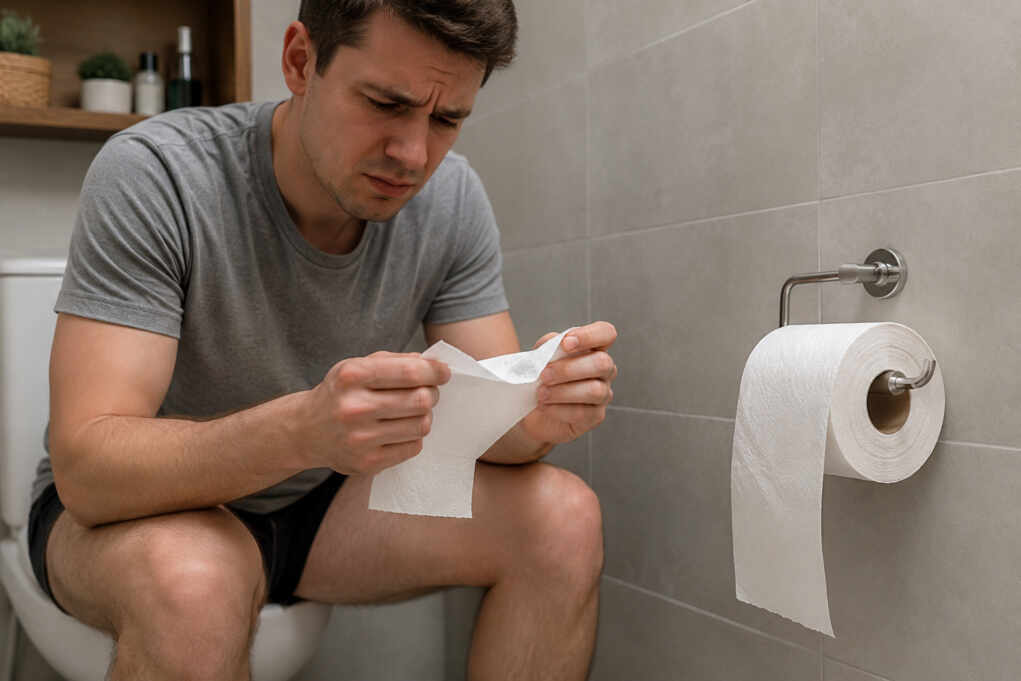
Toilet paper is one of those everyday products most people rarely think twice about. We use it several times a day, yet questions about whether it can irritate the skin, contribute to infections, or cause other health problems have become increasingly common. The good news is that for most people, ordinary toilet paper is not inherently bad for you. However, the way you wipe, how often you wipe, and the type of toilet paper you use can make a difference to sensitive skin and existing conditions such as hemorrhoids or anal itching.
Health experts generally agree that the bigger concern isn’t toilet paper itself, but friction, excessive wiping, fragrances, dyes, and other potentially irritating ingredients. Sensitive skin around the anus and vulva can become irritated when it is repeatedly rubbed or exposed to scented products. So, should you stop using toilet paper? Not necessarily. Instead, choosing a simple, fragrance-free product and using it gently may be a better approach.
Can Toilet Paper Irritate Your Skin?
Yes. The skin around the anus is sensitive, and repeated rubbing can cause irritation. Mayo Clinic advises people with anal itching to avoid scrubbing or using rough materials and to be cautious with products that can irritate the area, including scented toilet paper.
MedlinePlus similarly lists scents and dyes in toilet paper among possible causes of anal itching. It recommends cleaning gently rather than scrubbing and patting the area dry instead of rubbing it.
This doesn’t mean everyone will react to scented or colored toilet paper. Some people can use these products without any problems. But if you regularly experience itching, burning, redness, or soreness, switching to plain, unscented and dye-free toilet paper may help.
Is Scented Toilet Paper Worse?
For people with sensitive skin, scented toilet paper may be more likely to cause problems than plain varieties.
Harvard Health notes that scented toilet paper can act as an irritant to vulvar skin. The vulva is particularly sensitive, and exposure to fragrances and other personal-care ingredients can contribute to burning, itching, or irritation.
Cleveland Clinic also recommends dye-free and unscented toilet paper for people experiencing anal itching.
If you’re prone to irritation, there is little reason to choose a product that contains added fragrance simply for the scent. A basic, soft, fragrance-free product is generally a sensible choice.
Can Wiping Too Much Cause Problems?
Absolutely. Over-wiping may be more problematic than toilet paper itself.
Cleveland Clinic explains that excessive wiping can irritate the delicate skin around the anus and contribute to tiny tears, burning, and itching. Mayo Clinic also identifies wiping too hard and too often as potential causes of anal irritation.
The goal isn’t to keep wiping until the toilet paper looks perfectly clean. Instead, wipe gently and stop once the area is adequately clean. If you find that you’re repeatedly wiping because stool is difficult to clean away, addressing constipation, diarrhea, or stool consistency may be more useful than simply using more toilet paper.
What About Hemorrhoids?
People with hemorrhoids may find aggressive wiping particularly uncomfortable. Hemorrhoids can cause itching, irritation, pain, and bleeding, and excessive rubbing or cleaning may make symptoms worse. Cleveland Clinic recommends measures such as keeping the area clean and using gentle cleaning methods.
If toilet paper feels uncomfortable, some people may prefer rinsing with water or using a bidet, followed by gentle patting dry. The important point is to avoid replacing vigorous wiping with equally vigorous washing.
Is a Bidet Better Than Toilet Paper?
A bidet can be a useful alternative, particularly for people who find wiping irritating. Cleveland Clinic describes bidets as a sanitary option and notes that using water can make cleaning easier while reducing the need for repeated wiping.
However, more cleaning isn’t necessarily better. Excessive washing or high-pressure water can also irritate sensitive skin. The aim should be gentle cleaning, not aggressive cleaning.
If you use a bidet, a gentle stream of water followed by careful patting dry is generally preferable to prolonged washing or scrubbing.
Does Toilet Paper Cause UTIs?
Toilet paper itself is not generally considered a direct cause of urinary tract infections (UTIs). However, wiping technique matters, particularly for people with a vulva.
Harvard Health says that wiping from front to back makes sense because it can help prevent bacteria from the anal area from being moved toward the urinary tract.
This is especially important after a bowel movement. The goal is to avoid transferring fecal bacteria toward the urethra. Toilet paper can be used safely for this purpose as long as it is used correctly and gently.
What Kind of Toilet Paper Should You Choose?
If you have sensitive skin or recurring irritation, consider looking for toilet paper that is:
- Unscented
- Dye-free
- Soft but not excessively treated with fragrances or lotions
- Comfortable enough that you don’t need to rub repeatedly
- Free from ingredients you’ve previously reacted to
“Cleansing” products aren’t automatically safer just because they’re marketed for sensitive skin. If a product causes burning, itching, or redness, stop using it and see whether your symptoms improve.
Are Wet Wipes Better?
Not necessarily.
Wet wipes can seem like a cleaner alternative, but some contain fragrances, preservatives, alcohol, or other ingredients that may irritate sensitive skin. Mayo Clinic advises people with anal itching to avoid personal cleansing wipes and irritating products, while Cleveland Clinic notes that some wet wipes contain fragrances or alcohol that can irritate the skin.
If you use wipes, choosing a fragrance-free product may reduce the chance of irritation. However, plain toilet paper or gentle water cleansing may be perfectly adequate.
How to Wipe More Safely
A few simple habits can reduce irritation:
- Wipe gently. Avoid vigorous scrubbing.
- Don’t over-wipe. Once you’re clean, stop.
- Choose fragrance-free products if you have sensitive skin.
- Wipe front to back if you have a vulva, particularly after bowel movements.
- Consider water cleansing if wiping causes discomfort.
- Pat rather than rub when drying the area.
- Keep the area clean and dry without excessive washing.
When Should You Talk to a Doctor?
Occasional mild irritation isn’t usually a reason for alarm. But persistent itching, pain, burning, or bleeding shouldn’t automatically be blamed on toilet paper.
Hemorrhoids, anal fissures, infections, skin conditions, and other medical problems can cause similar symptoms. Cleveland Clinic notes that rectal bleeding can have several causes and should be evaluated by a healthcare professional rather than automatically attributed to hemorrhoids or wiping.
Seek medical advice if symptoms are persistent, severe, worsening, or accompanied by significant bleeding, discharge, a lump, fever, or unexplained changes in bowel habits.
The Bottom Line
Is toilet paper bad for you? For most people, no. Toilet paper is a practical and generally safe way to clean yourself after using the bathroom. Problems are more likely to arise from excessive wiping, rough materials, fragrances, dyes, or other ingredients that irritate sensitive skin.
If you regularly experience irritation, try simplifying your routine: use a soft, unscented and dye-free toilet paper, wipe gently, avoid excessive cleaning, and consider rinsing with water if that feels more comfortable. And if symptoms continue despite changing your hygiene routine, don’t assume toilet paper is the culprit—talk with a healthcare professional to find the underlying cause.
Sources:
- Mayo Clinic — Anal itching: Diagnosis and treatment
- Harvard Health Publishing — Managing common vulvar skin conditions
- Cleveland Clinic — Anal itching (Pruritus Ani)
- MedlinePlus — Anal itching: Self-care
- WebMD — What to Know About Anal Itching
Disclaimer
The watching, interacting, and participation of any kind with anything on this page does not constitute or initiate a doctor-patient relationship with Dr. Farrah™. None of the statements here have been evaluated by the Food and Drug Administration (FDA). The products of Dr. Farrah™ are not intended to diagnose, treat, cure, or prevent any disease. The information being provided should only be considered for education and entertainment purposes only. If you feel that anything you see or hear may be of value to you on this page or on any other medium of any kind associated with, showing, or quoting anything relating to Dr. Farrah™ in any way at any time, you are encouraged to and agree to consult with a licensed healthcare professional in your area to discuss it. If you feel that you’re having a healthcare emergency, seek medical attention immediately. The views expressed here are simply either the views and opinions of Dr. Farrah™ or others appearing and are protected under the First Amendment.
Dr. Farrah™ is a highly experienced Licensed Medical Doctor certified in evidence-based clinical nutrition, not some enthusiast, formulator, or medium promoting the wild and unrestrained use of nutrition products for health issues without clinical experience and scientific evidence of therapeutic benefit. Dr. Farrah™ has personally and keenly studied everything she recommends, and more importantly, she’s closely observed the reactions and results in a clinical setting countless times over the course of her career involving the treatment of over 150,000 patients.
Dr. Farrah™ promotes evidence-based natural approaches to health, which means integrating her individual scientific and clinical expertise with the best available external clinical evidence from systematic research. By individual clinical expertise, I refer to the proficiency and judgment that individual clinicians acquire through clinical experience and clinical practice.
Dr. Farrah™ does not make any representations or warranties with respect to the accuracy, applicability, fitness, or completeness of any multimedia content provided. Dr. Farrah™ does not warrant the performance, effectiveness, or applicability of any sites listed, linked, or referenced to, in, or by any multimedia content.
To be clear, the multimedia content is not intended to be a substitute for professional medical advice, diagnosis, or treatment. Always seek the advice of your physician or other qualified health providers with any questions you may have regarding a medical condition. Never disregard professional medical advice or delay in seeking it because of something you have read or seen in any website, video, image, or media of any kind. Dr. Farrah™ hereby disclaims any and all liability to any party for any direct, indirect, implied, punitive, special, incidental, or other consequential damages arising directly or indirectly from any use of the content, which is provided as is, and without warranties.