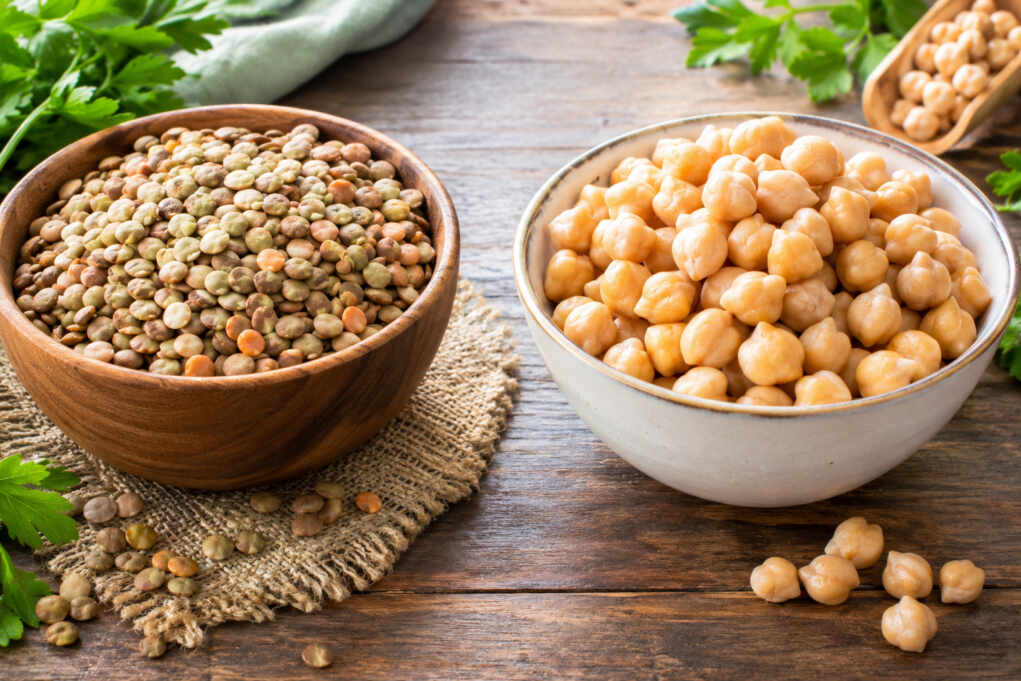
Lentils and chickpeas are two of the most nutritious foods in the legume family, offering an affordable way to add plant-based protein, fiber, vitamins and minerals to your diet. Both can support a healthy eating pattern, whether you enjoy them in soups, salads, curries, grain bowls or dips. But when it comes to nutrition, are lentils actually better than chickpeas—or does each have its own advantages?
The answer isn’t quite as simple as choosing one winner. Nutrition experts generally agree that both foods can be excellent additions to a balanced diet, but their nutritional profiles differ slightly. Lentils tend to have an edge when it comes to fiber, protein and iron, while chickpeas provide healthy fats and are particularly versatile and filling. Here’s how the two compare and which one may be the better choice depending on your nutritional goals.
Lentils vs. Chickpeas: A Quick Nutrition Comparison
For a typical cooked serving, both lentils and chickpeas provide substantial amounts of plant protein and fiber. However, lentils generally come out slightly ahead.
According to a recent comparison published by Health, 100 grams of cooked lentils provides about 9 grams of protein and 7.9 grams of fiber, compared with roughly 8.9 grams of protein and 7.6 grams of fiber in the same amount of chickpeas. Lentils also contain fewer calories per cup—about 230 compared with approximately 269 for chickpeas.
Chickpeas aren’t far behind. Harvard Health reports that one cup of cooked chickpeas provides about 14.5 grams of plant protein and 12.5 grams of fiber, along with folate, iron, magnesium, potassium and other important nutrients.
| Nutrient | Lentils | Chickpeas |
| Protein | Slightly higher | High |
| Fiber | Slightly higher | High |
| Iron | Generally higher | Good source |
| Folate | Excellent source | Excellent source |
| Healthy fats | Very little | More monounsaturated & polyunsaturated fat |
| Calories | Lower | Slightly higher |
| Best known for | Fiber, protein and iron | Protein, fiber and versatility |
Exact amounts vary by variety, preparation method and serving size.
Lentils May Have the Edge for Fiber
If getting more fiber is your primary goal, lentils are a particularly strong choice.
Mayo Clinic lists about 15.5 grams of fiber in a cup of boiled lentils. Fiber helps promote regular bowel movements, supports fullness and may contribute to heart health.
Harvard’s Nutrition Source also notes that lentils provide both soluble and insoluble fiber. They contain resistant starch and compounds that can act as prebiotics, helping support beneficial bacteria in the gut.
Chickpeas are also an excellent source of fiber, so choosing them is certainly not a nutritional compromise. Their fiber can help with fullness, digestion and blood-sugar management.
The verdict: Lentils have a slight advantage, but both are excellent high-fiber foods.
Which Has More Protein?
Lentils again have a modest advantage when the two are compared gram for gram, although the difference isn’t large enough to make chickpeas a poor protein choice.
Both foods are useful sources of plant-based protein, particularly for people who eat less meat or follow vegetarian or vegan eating patterns. Mayo Clinic recommends legumes such as lentils and chickpeas as part of a varied plant-based diet.
One important point: neither lentils nor chickpeas provides all essential amino acids in ideal proportions on its own. Eating legumes alongside foods such as whole grains, nuts or seeds throughout the day can help provide a broader amino-acid profile.
The verdict: Lentils win by a small margin, but both are worthwhile plant-protein sources.
What About Iron?
Iron is another area where lentils generally have the advantage.
Lentils are a particularly good source of plant-based iron, while chickpeas also contribute a meaningful amount. Because iron from plant foods is non-heme iron, the body doesn’t absorb it as efficiently as the heme iron found in animal foods.
You can improve absorption by eating lentils or chickpeas with vitamin-C-rich foods such as bell peppers, tomatoes, broccoli, citrus fruits or strawberries. Mayo Clinic specifically recommends combining plant sources of iron with vitamin C to help the body absorb more of the mineral.
The verdict: Lentils are the better choice if you’re specifically looking to maximize iron from legumes.
Chickpeas Have One Nutritional Advantage: Healthy Fats
Where chickpeas distinguish themselves is their fat content.
Unlike lentils, which are extremely low in fat, chickpeas contain small amounts of monounsaturated and polyunsaturated fats—the types of fats generally associated with a heart-healthy eating pattern. Harvard’s Nutrition Source identifies chickpeas as a source of these unsaturated fats in addition to protein and fiber.
That doesn’t make chickpeas “better” overall, but it does give them a slightly different nutritional profile. Their combination of protein, fiber and healthy fats can also make meals particularly satisfying.
The verdict: Chickpeas have the advantage for healthy fats.
Which Is Better for Blood Sugar?
Both can be good choices.
Lentils and chickpeas are legumes with relatively low glycemic indexes, meaning they generally digest more slowly than refined carbohydrate foods. Their fiber and protein can also slow digestion and carbohydrate absorption.
Mayo Clinic lists both chickpeas and lentils among low-glycemic foods. Harvard also notes that lentils contain resistant starch and that chickpeas have a low glycemic index and glycemic load.
For blood-sugar management, what you eat with the legumes matters, too. A lentil soup loaded with vegetables is very different nutritionally from a highly processed meal containing a small amount of lentils alongside refined carbohydrates.
The verdict: It’s essentially a tie.
Which Is Better for Heart Health?
Both deserve a place in a heart-healthy diet.
Legumes are naturally low in saturated fat and provide fiber, folate, potassium and other compounds associated with cardiovascular health. Harvard Health notes that legumes can help lower cholesterol and other risk factors associated with heart disease.
Lentils may have a slight advantage in some comparisons. Cleveland Clinic notes that research has found lentil consumption associated with improvements in blood pressure and that one study found greater blood-pressure reductions with lentils than with chickpeas, peas or beans.
Still, it’s better to think of both foods as part of an overall heart-healthy diet rather than expecting one ingredient to dramatically change cardiovascular risk on its own.
Which Is Better for Weight Management?
Neither food is inherently a “weight-loss food,” but both can make meals more filling.
Protein and fiber slow digestion and can increase feelings of fullness, which may make it easier to maintain a satisfying diet without relying heavily on calorie-dense, highly processed foods. Chickpeas, in particular, combine protein and fiber with a small amount of healthy fat.
Lentils have the advantage of being slightly lower in calories per cup, while chickpeas may be particularly satisfying because of their texture and combination of protein, fiber and fat.
The verdict: Lentils have a small calorie advantage; both can support a healthy weight-management eating pattern.
Which One Should You Eat?
Rather than choosing one and ignoring the other, dietitians would generally encourage variety.
Choose lentils when you want:
- More fiber and protein per comparable serving
- A particularly good plant-based source of iron
- A lower-calorie legume
- An ingredient for soups, stews, dals and grain bowls
- A quick-cooking legume that often doesn’t require soaking
Choose chickpeas when you want:
- A substantial source of plant protein and fiber
- More healthy unsaturated fats
- A satisfying ingredient for salads and bowls
- A base for hummus
- A crunchy roasted snack or versatile pantry staple
Canned versions of either food can be convenient. If you’re watching sodium intake, choose no-salt-added or low-sodium varieties when available and rinse canned legumes before eating. Harvard specifically recommends rinsing canned lentils, while Mayo Clinic recommends rinsing canned chickpeas to remove excess sodium.
The Bottom Line
If you force us to pick a nutritional winner, lentils have a slight edge. They generally provide a little more protein, fiber and iron while containing fewer calories than chickpeas. But that doesn’t mean chickpeas are second-rate.
Chickpeas bring their own strengths, including healthy unsaturated fats, substantial protein and fiber, plus exceptional versatility. Both foods are nutrient-dense, affordable and naturally low in saturated fat, making either an excellent alternative to more heavily processed foods or protein sources higher in saturated fat.
Ultimately, the best choice is the one you’ll eat regularly. Rotating lentils, chickpeas and other legumes through your meals gives you variety while helping you increase your intake of plant-based protein, fiber and micronutrients. In other words, you don’t really need to choose sides—make room for both.
Sources:
- Health — Lentils vs. Chickpeas: Which Is Better for Fiber and Protein?
- Harvard T.H. Chan School of Public Health — Lentils
- Cleveland Clinic — Health Benefits of Lentils
- Healthline — Lentils: Nutrition, Benefits, and How to Cook Them
- Mayo Clinic — Check Out Chickpeas for Year-Round Healthy Eating
Disclaimer
The watching, interacting, and participation of any kind with anything on this page does not constitute or initiate a doctor-patient relationship with Dr. Farrah™. None of the statements here have been evaluated by the Food and Drug Administration (FDA). The products of Dr. Farrah™ are not intended to diagnose, treat, cure, or prevent any disease. The information being provided should only be considered for education and entertainment purposes only. If you feel that anything you see or hear may be of value to you on this page or on any other medium of any kind associated with, showing, or quoting anything relating to Dr. Farrah™ in any way at any time, you are encouraged to and agree to consult with a licensed healthcare professional in your area to discuss it. If you feel that you’re having a healthcare emergency, seek medical attention immediately. The views expressed here are simply either the views and opinions of Dr. Farrah™ or others appearing and are protected under the First Amendment.
Dr. Farrah™ is a highly experienced Licensed Medical Doctor certified in evidence-based clinical nutrition, not some enthusiast, formulator, or medium promoting the wild and unrestrained use of nutrition products for health issues without clinical experience and scientific evidence of therapeutic benefit. Dr. Farrah™ has personally and keenly studied everything she recommends, and more importantly, she’s closely observed the reactions and results in a clinical setting countless times over the course of her career involving the treatment of over 150,000 patients.
Dr. Farrah™ promotes evidence-based natural approaches to health, which means integrating her individual scientific and clinical expertise with the best available external clinical evidence from systematic research. By individual clinical expertise, I refer to the proficiency and judgment that individual clinicians acquire through clinical experience and clinical practice.
Dr. Farrah™ does not make any representations or warranties with respect to the accuracy, applicability, fitness, or completeness of any multimedia content provided. Dr. Farrah™ does not warrant the performance, effectiveness, or applicability of any sites listed, linked, or referenced to, in, or by any multimedia content.
To be clear, the multimedia content is not intended to be a substitute for professional medical advice, diagnosis, or treatment. Always seek the advice of your physician or other qualified health providers with any questions you may have regarding a medical condition. Never disregard professional medical advice or delay in seeking it because of something you have read or seen in any website, video, image, or media of any kind. Dr. Farrah™ hereby disclaims any and all liability to any party for any direct, indirect, implied, punitive, special, incidental, or other consequential damages arising directly or indirectly from any use of the content, which is provided as is, and without warranties.