The human gut is home to a complex community of microorganisms known as the gut microbiome. These bacteria, fungi, and other microbes help break down food, produce certain nutrients, support immune defenses, and influence many aspects of overall health. Scientists now recognize that maintaining a diverse and balanced gut microbiome may be an important part of long-term wellness. While many factors affect gut health—including sleep, stress, physical activity, and genetics—diet remains one of the most powerful influences on the types and activity of gut bacteria.
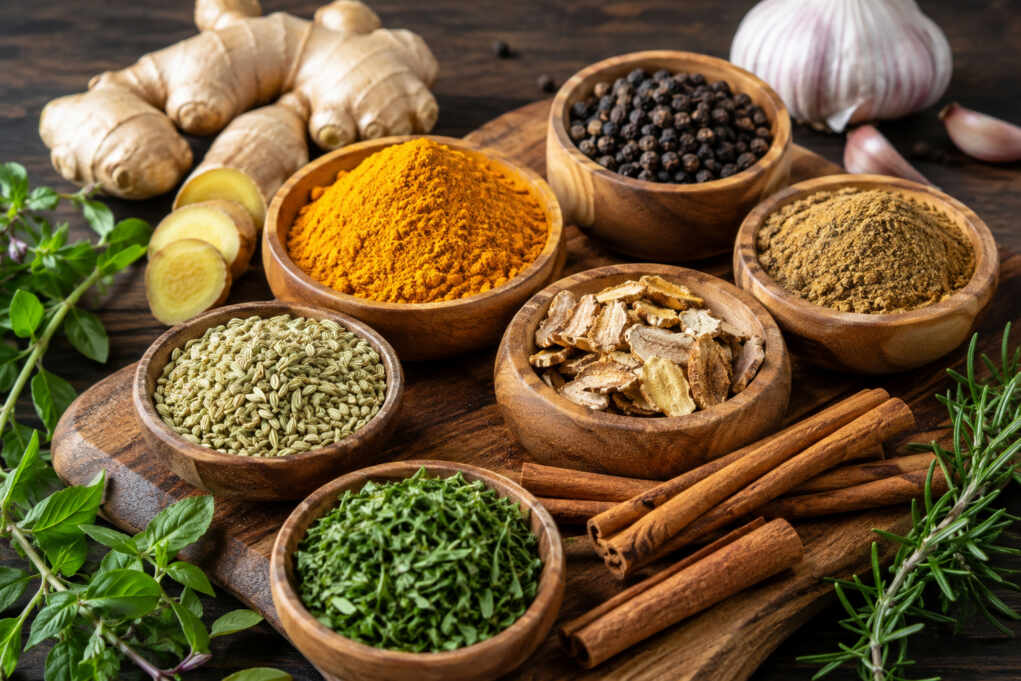
When people think about foods that support the gut, they often focus on fiber-rich foods such as fruits, vegetables, beans, and whole grains. However, research has also begun examining the role of herbs and spices, which contain natural plant compounds that may interact with beneficial microorganisms in the digestive system. Everyday spices found in many kitchens, including cinnamon, ginger, turmeric, and garlic, contain polyphenols, antioxidants, and other compounds that may help create a healthier environment for helpful gut bacteria.
Spices are not a replacement for a balanced diet, but they can be a simple addition to meals that increases dietary variety. A diverse diet provides different nutrients and plant compounds that gut microbes can use. By adding small amounts of flavorful spices to everyday foods, people may support a more varied intake of beneficial compounds while making healthy meals more enjoyable.
Understanding the Connection Between Spices and Gut Bacteria
The gut microbiome responds to the foods we eat. Certain types of dietary fibers act as prebiotics, meaning they provide fuel for beneficial bacteria. Some plant compounds found in spices, especially polyphenols, can also be transformed by gut microbes into new compounds that may influence health.
Researchers are studying how these interactions may affect microbial diversity, inflammation, and digestive function. Although many findings are promising, scientists are still investigating exactly how specific spices affect different individuals because everyone’s microbiome is unique.
The amount of spice used in normal cooking is generally much smaller than the amounts tested in some scientific studies. For this reason, spices should be viewed as one supportive part of an overall healthy eating pattern rather than a stand-alone treatment.
Cinnamon: A Flavorful Spice With Potential Microbiome Benefits
Cinnamon is one of the most popular spices worldwide and has been used traditionally for thousands of years. It contains plant compounds such as polyphenols, which have antioxidant properties and may interact with gut microorganisms.
Some research suggests that compounds in cinnamon may influence the composition and activity of gut bacteria. Certain beneficial microbes can use plant compounds from foods and spices, potentially producing metabolites that contribute to a healthier gut environment.
Cinnamon is also an easy spice to include in daily meals. It can be sprinkled into oatmeal, added to smoothies, mixed into yogurt, or used in baked dishes. Choosing cinnamon instead of extra sugar for flavoring can also help support healthier eating habits.
However, more human studies are needed to determine the exact effects of cinnamon on the gut microbiome and how much is needed to produce measurable benefits.
Ginger: A Traditional Digestive Spice
Ginger has long been valued for its role in traditional medicine, especially for digestive comfort. The spice contains bioactive compounds such as gingerols and shogaols, which are responsible for many of its characteristic flavors and potential health effects.
Research suggests that ginger may influence digestion, inflammation, and the gut environment. Some studies indicate that ginger compounds may interact with gut bacteria, although scientists are continuing to explore the specific mechanisms involved.
Fresh ginger can easily be added to meals. It works well in soups, vegetable dishes, sauces, teas, and stir-fries. Ginger’s strong flavor means that small amounts can provide both taste and beneficial plant compounds.
For people who enjoy herbal teas, ginger tea can be a simple way to include this spice in a daily routine. However, concentrated ginger supplements may not be appropriate for everyone, especially those taking certain medications.
Turmeric: The Golden Spice With Powerful Plant Compounds
Turmeric is recognized by its bright yellow color and its role in many traditional cuisines. Its main active compound, curcumin, has been widely studied for its antioxidant and anti-inflammatory properties.
Scientists are investigating whether turmeric and curcumin may influence gut health by interacting with intestinal microbes. Some research suggests that curcumin may help support a favorable microbial balance, although more studies involving humans are needed.
Turmeric can be used in curries, soups, rice dishes, roasted vegetables, and beverages. Many traditional recipes combine turmeric with black pepper because piperine, a compound in black pepper, may increase the body’s ability to absorb curcumin.
Using turmeric in cooking is generally different from taking high-dose curcumin supplements. Supplements can have stronger effects and may interact with medications, so professional advice is recommended for people considering them.
Garlic: A Spice That Feeds Helpful Bacteria
Garlic is often considered both a culinary ingredient and a functional food because it contains compounds associated with health benefits. One important feature of garlic is that it contains prebiotic fibers, which may help provide nourishment for beneficial gut bacteria.
Prebiotics serve as food sources for certain microorganisms in the gut. When beneficial bacteria use these fibers, they can produce compounds such as short-chain fatty acids, which are associated with maintaining a healthy intestinal environment.
Adding garlic to meals is an easy way to increase flavor without relying heavily on salt or processed seasonings. It can be included in pasta dishes, roasted vegetables, soups, sauces, and marinades.
Both fresh garlic and cooked garlic provide beneficial compounds, although cooking methods can influence the levels of certain active components.
Cloves: A Small Spice With Antioxidant Potential
Cloves are among the most concentrated sources of plant antioxidants among common culinary spices. They contain compounds such as eugenol, which has been studied for various biological effects.
Because cloves have a strong flavor, they are usually used in small amounts. They can be added to teas, baked goods, spice blends, and savory dishes.
While laboratory research has identified interesting properties of cloves, more research is needed to understand how their compounds affect human gut bacteria.
Cumin: Supporting Variety in a Gut-Friendly Diet
Cumin is a common ingredient in many global cuisines and contains plant compounds that contribute to its aroma and flavor. Like other spices, cumin provides antioxidants and may contribute to dietary diversity.
A varied diet that includes many different herbs and spices exposes the gut microbiome to a broader range of plant compounds. This diversity may help support a wider range of microorganisms.
Cumin can be used in beans, vegetables, soups, rice dishes, and seasoning blends.
Black Pepper: More Than Just a Seasoning
Black pepper is one of the most widely used spices in the world. It contains piperine, a compound that has been studied for its antioxidant properties and its ability to influence the absorption of certain nutrients.
Black pepper is often paired with turmeric because piperine may improve curcumin absorption. Beyond this combination, black pepper can help increase the variety of plant compounds consumed as part of a balanced diet.
How to Add More Gut-Friendly Spices to Your Meals
Adding spices to meals does not need to involve complicated recipes. Small changes can make a difference over time:
- Add cinnamon to oatmeal, fruit, or yogurt.
- Use fresh ginger in soups, sauces, or tea.
- Include turmeric in rice, vegetables, or curry dishes.
- Add garlic to roasted vegetables and homemade sauces.
- Experiment with cumin, cloves, and black pepper in seasoning mixes.
- Rotate different herbs and spices throughout the week to increase dietary variety.
A healthy gut is supported by overall eating patterns rather than one specific ingredient. Spices work best when combined with other gut-supportive foods, including vegetables, fruits, legumes, nuts, seeds, and whole grains.
Final Thoughts
Common kitchen spices may offer more than flavor. Their natural plant compounds are being studied for their possible effects on beneficial gut bacteria and overall digestive health. Cinnamon, ginger, turmeric, garlic, cloves, cumin, and black pepper are examples of simple ingredients that can add variety and nutritional value to everyday meals.
Although research into spices and the gut microbiome is still developing, including a wide range of plant-based foods and seasonings is a practical approach to supporting a diverse diet. A balanced lifestyle that includes nutritious foods, regular movement, adequate sleep, and healthy habits remains the foundation for maintaining gut health.
Sources:
- Johns Hopkins Medicine – Turmeric and Curcumin Health Information
https://www.hopkinsmedicine.org/health/wellness-and-prevention/turmeric-benefits - Healthline – Turmeric and Ginger Benefits
https://www.healthline.com/nutrition/turmeric-and-ginger - Verywell Health – Understanding the Gut Microbiome
https://www.verywellhealth.com/gut-microbiome-7253375 - Health.com – Spices With Potential Health Benefits
https://www.health.com/spices-that-reduce-inflammation-11903241 - National Nutrition Council, Republic of the Philippines – Benefits of Herbs and Spices
https://nnc.gov.ph/visayas-region/the-benefits-of-herbs-and-spices/
Disclaimer
The watching, interacting, and participation of any kind with anything on this page does not constitute or initiate a doctor-patient relationship with Dr. Farrah™. None of the statements here have been evaluated by the Food and Drug Administration (FDA). The products of Dr. Farrah™ are not intended to diagnose, treat, cure, or prevent any disease. The information being provided should only be considered for education and entertainment purposes only. If you feel that anything you see or hear may be of value to you on this page or on any other medium of any kind associated with, showing, or quoting anything relating to Dr. Farrah™ in any way at any time, you are encouraged to and agree to consult with a licensed healthcare professional in your area to discuss it. If you feel that you’re having a healthcare emergency, seek medical attention immediately. The views expressed here are simply either the views and opinions of Dr. Farrah™ or others appearing and are protected under the First Amendment.
Dr. Farrah™ is a highly experienced Licensed Medical Doctor certified in evidence-based clinical nutrition, not some enthusiast, formulator, or medium promoting the wild and unrestrained use of nutrition products for health issues without clinical experience and scientific evidence of therapeutic benefit. Dr. Farrah™ has personally and keenly studied everything she recommends, and more importantly, she’s closely observed the reactions and results in a clinical setting countless times over the course of her career involving the treatment of over 150,000 patients.
Dr. Farrah™ promotes evidence-based natural approaches to health, which means integrating her individual scientific and clinical expertise with the best available external clinical evidence from systematic research. By individual clinical expertise, I refer to the proficiency and judgment that individual clinicians acquire through clinical experience and clinical practice.
Dr. Farrah™ does not make any representations or warranties with respect to the accuracy, applicability, fitness, or completeness of any multimedia content provided. Dr. Farrah™ does not warrant the performance, effectiveness, or applicability of any sites listed, linked, or referenced to, in, or by any multimedia content.
To be clear, the multimedia content is not intended to be a substitute for professional medical advice, diagnosis, or treatment. Always seek the advice of your physician or other qualified health providers with any questions you may have regarding a medical condition. Never disregard professional medical advice or delay in seeking it because of something you have read or seen in any website, video, image, or media of any kind. Dr. Farrah™ hereby disclaims any and all liability to any party for any direct, indirect, implied, punitive, special, incidental, or other consequential damages arising directly or indirectly from any use of the content, which is provided as is, and without warranties.