
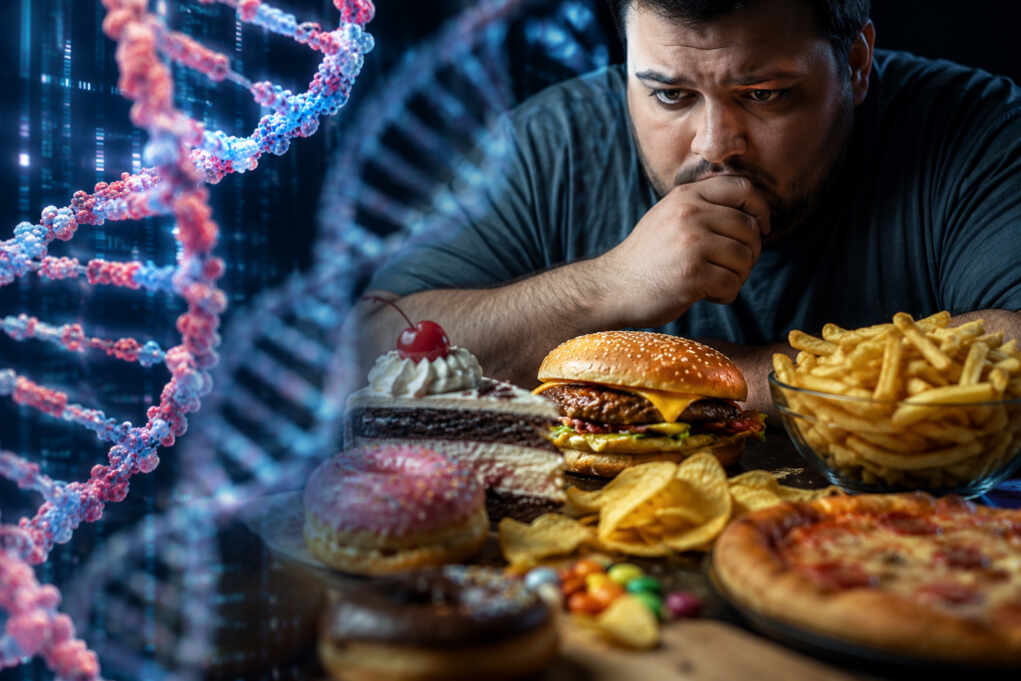
Food cravings are often dismissed as a simple lack of willpower, but modern science tells a much more complex story. Researchers have discovered that genetics can influence how the brain responds to food, affecting appetite, hunger, reward pathways, and the desire for high-fat or high-sugar foods. While environment, stress, sleep, and lifestyle all play important roles, inherited genetic traits may make some people naturally more prone to experiencing intense cravings than others.
Understanding the connection between genes and food cravings is important because these eating behaviors can have long-term health consequences. When genetic predispositions combine with easy access to highly processed foods, the risk of obesity, type 2 diabetes, cardiovascular disease, and other chronic illnesses may increase. Scientists continue to study how genes interact with hormones, the brain, and environmental factors to better understand why some people struggle more with cravings—and how personalized treatments could improve health outcomes.
The Genetic Link to Food Cravings
Human genes help regulate many biological processes involved in eating, including hunger signals, feelings of fullness, and the brain’s reward system. Certain genetic variations may influence how strongly a person responds to foods rich in sugar, fat, or salt.
Research has identified genes associated with appetite regulation and food preferences. For example, studies have found that some genes affect dopamine signaling, the brain chemical responsible for feelings of pleasure and reward. Individuals with certain genetic variants may experience stronger reward responses after eating calorie-dense foods, making cravings more difficult to resist. Although genetics does not determine behavior on its own, it can increase susceptibility to unhealthy eating patterns.
How the Brain Controls Hunger
Food cravings are closely connected to the brain. Several regions, including the hypothalamus and reward centers, communicate with hormones such as leptin, ghrelin, insulin, and GLP-1 to regulate appetite.
When these signals function normally, the body recognizes when it needs food and when it has eaten enough. However, genetic differences may alter these pathways, affecting satiety and increasing the desire to continue eating even after nutritional needs have been met. Researchers are actively investigating these brain circuits to develop more effective treatments for obesity and overeating.
Why Some People Crave Sugary and Fatty Foods
Highly processed foods are designed to be appealing, but genetics may determine just how irresistible they become. Foods rich in sugar and fat stimulate the brain’s reward system, encouraging repeated consumption.
People with genetic tendencies toward heightened reward sensitivity may experience stronger cravings for these foods. Over time, repeated exposure to ultra-processed foods may reinforce habitual eating behaviors, making cravings more frequent and harder to control.
When Food Cravings Increase Disease Risk
Occasional cravings are completely normal. Problems arise when frequent cravings lead to excessive consumption of calorie-dense, nutrient-poor foods.
Long-term overeating can contribute to:
- Obesity
- Type 2 diabetes
- High blood pressure
- Heart disease
- Fatty liver disease
- Metabolic syndrome
Genetic predisposition does not guarantee these conditions will develop. Rather, it can increase vulnerability, especially when combined with poor dietary habits, physical inactivity, chronic stress, and inadequate sleep.
Lifestyle Still Matters
Even if genetics influence food cravings, healthy habits remain one of the most effective ways to reduce disease risk. Experts recommend:
- Eating balanced meals rich in protein, fiber, and healthy fats.
- Getting adequate sleep to support healthy hunger hormones.
- Managing stress through exercise, mindfulness, or relaxation techniques.
- Limiting highly processed foods that may reinforce cravings.
- Staying physically active to improve metabolic health.
- Seeking professional guidance if cravings become overwhelming or contribute to unhealthy eating patterns.
These strategies help regulate appetite naturally and may reduce the impact of genetic predispositions.
The Future of Personalized Nutrition
Scientists are increasingly exploring personalized nutrition based on genetics. As research advances, healthcare providers may eventually use genetic information to create individualized dietary recommendations and obesity treatments.
While this field is still developing, current evidence supports a balanced approach: genetics influence food cravings, but they work alongside lifestyle, environment, and behavioral factors. Understanding these interactions could lead to more effective prevention strategies for obesity and chronic disease in the future.
Conclusion
Genes may shape how strongly we crave certain foods, but they are only one piece of a much larger puzzle. The interaction between genetics, brain chemistry, hormones, and lifestyle determines eating behaviors and overall health. By recognizing the role of inherited traits while maintaining healthy daily habits, individuals can reduce their risk of obesity, diabetes, heart disease, and other chronic conditions. Ongoing research continues to reveal how personalized approaches to nutrition and medicine may help people better manage cravings and improve long-term well-being.
Sources:
- National Institutes of Health (NIH) – Why You Feel Full After Eating
https://www.nih.gov/news-events/nih-research-matters/why-you-feel-full-after-eating - National Institutes of Health (NIH) – Gene Linked to Food Cravings and Exercise in Mice
https://www.nih.gov/news-events/news-releases/nih-researchers-identify-gene-mice-controls-food-cravings-desire-exercise - Harvard T.H. Chan School of Public Health – The Nutrition Source: Cravings
https://nutritionsource.hsph.harvard.edu/cravings/ - Johns Hopkins Medicine – The Appetite Lab
https://www.hopkinsmedicine.org/psychiatry/research/appetite - Cleveland Clinic – Why Are Certain Foods So Addictive?
https://health.clevelandclinic.org/why-are-certain-foods-so-addictive
Disclaimer
The watching, interacting, and participation of any kind with anything on this page does not constitute or initiate a doctor-patient relationship with Dr. Farrah™. None of the statements here have been evaluated by the Food and Drug Administration (FDA). The products of Dr. Farrah™ are not intended to diagnose, treat, cure, or prevent any disease. The information being provided should only be considered for education and entertainment purposes only. If you feel that anything you see or hear may be of value to you on this page or on any other medium of any kind associated with, showing, or quoting anything relating to Dr. Farrah™ in any way at any time, you are encouraged to and agree to consult with a licensed healthcare professional in your area to discuss it. If you feel that you’re having a healthcare emergency, seek medical attention immediately. The views expressed here are simply either the views and opinions of Dr. Farrah™ or others appearing and are protected under the First Amendment.
Dr. Farrah™ is a highly experienced Licensed Medical Doctor certified in evidence-based clinical nutrition, not some enthusiast, formulator, or medium promoting the wild and unrestrained use of nutrition products for health issues without clinical experience and scientific evidence of therapeutic benefit. Dr. Farrah™ has personally and keenly studied everything she recommends, and more importantly, she’s closely observed the reactions and results in a clinical setting countless times over the course of her career involving the treatment of over 150,000 patients.
Dr. Farrah™ promotes evidence-based natural approaches to health, which means integrating her individual scientific and clinical expertise with the best available external clinical evidence from systematic research. By individual clinical expertise, I refer to the proficiency and judgment that individual clinicians acquire through clinical experience and clinical practice.
Dr. Farrah™ does not make any representations or warranties with respect to the accuracy, applicability, fitness, or completeness of any multimedia content provided. Dr. Farrah™ does not warrant the performance, effectiveness, or applicability of any sites listed, linked, or referenced to, in, or by any multimedia content.
To be clear, the multimedia content is not intended to be a substitute for professional medical advice, diagnosis, or treatment. Always seek the advice of your physician or other qualified health providers with any questions you may have regarding a medical condition. Never disregard professional medical advice or delay in seeking it because of something you have read or seen in any website, video, image, or media of any kind. Dr. Farrah™ hereby disclaims any and all liability to any party for any direct, indirect, implied, punitive, special, incidental, or other consequential damages arising directly or indirectly from any use of the content, which is provided as is, and without warranties.