
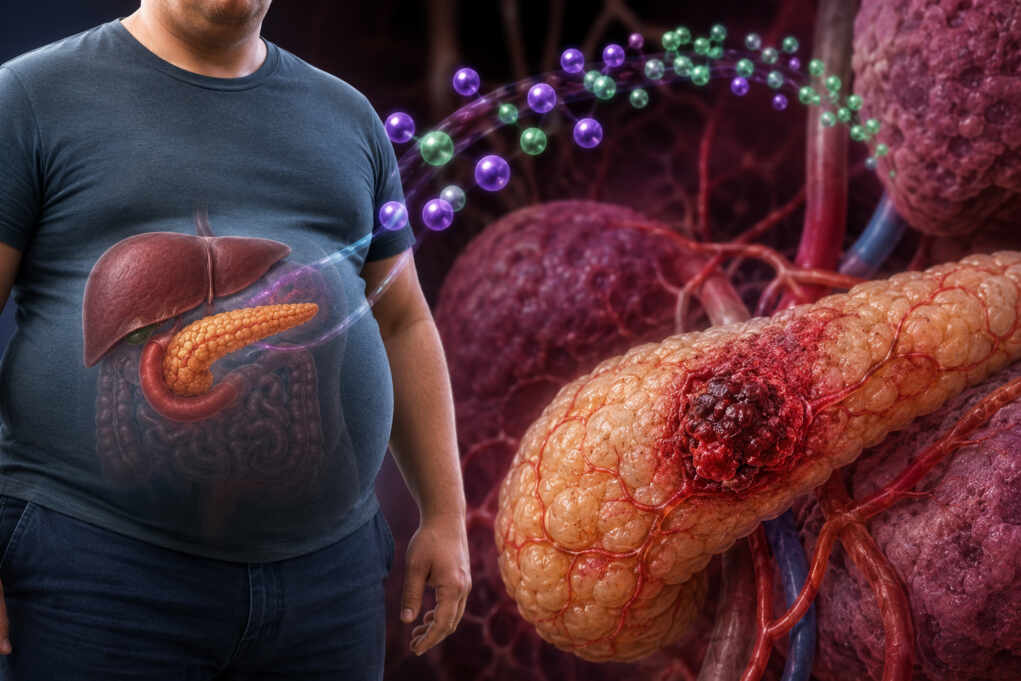
Pancreatic cancer remains one of the deadliest forms of cancer because it often develops quietly, producing few noticeable symptoms until it has reached an advanced stage. Scientists have long recognized that obesity and type 2 diabetes increase the risk of the disease, but new research is drawing attention to another underlying condition that may play a significant role long before cancer develops: insulin resistance.
Emerging evidence suggests that insulin resistance may not simply accompany pancreatic cancer—it could actively contribute to its development. Researchers are uncovering how chronically elevated insulin levels, inflammation, and metabolic dysfunction create an environment that may encourage abnormal pancreatic cells to grow and eventually become cancerous. While additional studies are needed, the findings reinforce the importance of maintaining metabolic health as part of long-term cancer prevention.
Understanding Insulin Resistance
Insulin resistance occurs when the body’s cells no longer respond effectively to insulin, the hormone responsible for helping glucose move from the bloodstream into cells for energy. To compensate, the pancreas produces more insulin, resulting in persistently high insulin levels, a condition known as hyperinsulinemia.
This metabolic imbalance is common among people with obesity, prediabetes, and type 2 diabetes. Because insulin resistance often develops gradually and causes few early symptoms, many individuals may be unaware they have the condition for years.
How It May Promote Pancreatic Cancer
Researchers believe insulin resistance may contribute to pancreatic cancer through several biological mechanisms. Elevated insulin levels can stimulate cell growth while reducing the body’s natural ability to eliminate damaged cells. At the same time, insulin resistance is associated with chronic low-grade inflammation, which can damage tissues and create favorable conditions for cancer development.
Scientists also point to the interaction between insulin and insulin-like growth factor (IGF) pathways, both of which influence cell growth and survival. When these pathways remain overactive for extended periods, they may increase the likelihood that abnormal pancreatic cells survive and multiply.
Recent research further suggests that metabolic changes linked to insulin resistance may occur years before pancreatic cancer is diagnosed, making insulin resistance a potential early warning sign rather than simply a consequence of the disease.
A Two-Way Relationship
The relationship between insulin resistance and pancreatic cancer appears to be complex. Long-standing insulin resistance may increase the risk of developing pancreatic cancer, but pancreatic tumors themselves can also interfere with normal insulin production and glucose regulation.
This explains why some adults over age 50 who suddenly develop diabetes—particularly when accompanied by unexplained weight loss—may undergo additional evaluation to rule out pancreatic cancer. However, experts emphasize that the vast majority of people with diabetes or insulin resistance will never develop pancreatic cancer.
Reducing the Risk
Although no strategy can completely prevent pancreatic cancer, improving insulin sensitivity may help lower overall risk while benefiting cardiovascular and metabolic health. Health experts recommend:
- Maintaining a healthy body weight.
- Engaging in regular physical activity.
- Eating a diet rich in vegetables, fruits, whole grains, legumes, and lean proteins.
- Limiting sugary beverages, processed foods, and excessive refined carbohydrates.
- Avoiding tobacco use and limiting alcohol intake.
- Managing diabetes and other metabolic conditions under the guidance of a healthcare provider.
These lifestyle habits not only improve insulin sensitivity but also reduce several other established risk factors associated with pancreatic cancer.
Looking Ahead
The growing body of research linking insulin resistance and pancreatic cancer highlights the importance of identifying metabolic problems before serious disease develops. While researchers continue investigating the exact biological mechanisms involved, the evidence suggests that addressing insulin resistance early could become an important component of future cancer prevention strategies.
For now, experts encourage regular health screenings, awareness of changes in blood sugar, and healthy lifestyle choices to support both metabolic health and long-term cancer risk reduction.
Sources:
- American Cancer Society – https://www.cancer.org/cancer/types/pancreatic-cancer.html
- MD Anderson Cancer Center – https://www.mdanderson.org/cancerwise/diabetes-and-pancreatic-cancer–what-is-the-link.h00-159464001.html
- National Cancer Institute – https://www.cancer.gov/types/pancreatic
- Mayo Clinic – https://www.mayoclinic.org/diseases-conditions/pancreatic-cancer
- Cleveland Clinic – https://my.clevelandclinic.org/health/diseases/15806-pancreatic-cancer
Disclaimer
The watching, interacting, and participation of any kind with anything on this page does not constitute or initiate a doctor-patient relationship with Dr. Farrah™. None of the statements here have been evaluated by the Food and Drug Administration (FDA). The products of Dr. Farrah™ are not intended to diagnose, treat, cure, or prevent any disease. The information being provided should only be considered for education and entertainment purposes only. If you feel that anything you see or hear may be of value to you on this page or on any other medium of any kind associated with, showing, or quoting anything relating to Dr. Farrah™ in any way at any time, you are encouraged to and agree to consult with a licensed healthcare professional in your area to discuss it. If you feel that you’re having a healthcare emergency, seek medical attention immediately. The views expressed here are simply either the views and opinions of Dr. Farrah™ or others appearing and are protected under the First Amendment.
Dr. Farrah™ is a highly experienced Licensed Medical Doctor certified in evidence-based clinical nutrition, not some enthusiast, formulator, or medium promoting the wild and unrestrained use of nutrition products for health issues without clinical experience and scientific evidence of therapeutic benefit. Dr. Farrah™ has personally and keenly studied everything she recommends, and more importantly, she’s closely observed the reactions and results in a clinical setting countless times over the course of her career involving the treatment of over 150,000 patients.
Dr. Farrah™ promotes evidence-based natural approaches to health, which means integrating her individual scientific and clinical expertise with the best available external clinical evidence from systematic research. By individual clinical expertise, I refer to the proficiency and judgment that individual clinicians acquire through clinical experience and clinical practice.
Dr. Farrah™ does not make any representations or warranties with respect to the accuracy, applicability, fitness, or completeness of any multimedia content provided. Dr. Farrah™ does not warrant the performance, effectiveness, or applicability of any sites listed, linked, or referenced to, in, or by any multimedia content.
To be clear, the multimedia content is not intended to be a substitute for professional medical advice, diagnosis, or treatment. Always seek the advice of your physician or other qualified health providers with any questions you may have regarding a medical condition. Never disregard professional medical advice or delay in seeking it because of something you have read or seen in any website, video, image, or media of any kind. Dr. Farrah™ hereby disclaims any and all liability to any party for any direct, indirect, implied, punitive, special, incidental, or other consequential damages arising directly or indirectly from any use of the content, which is provided as is, and without warranties.