
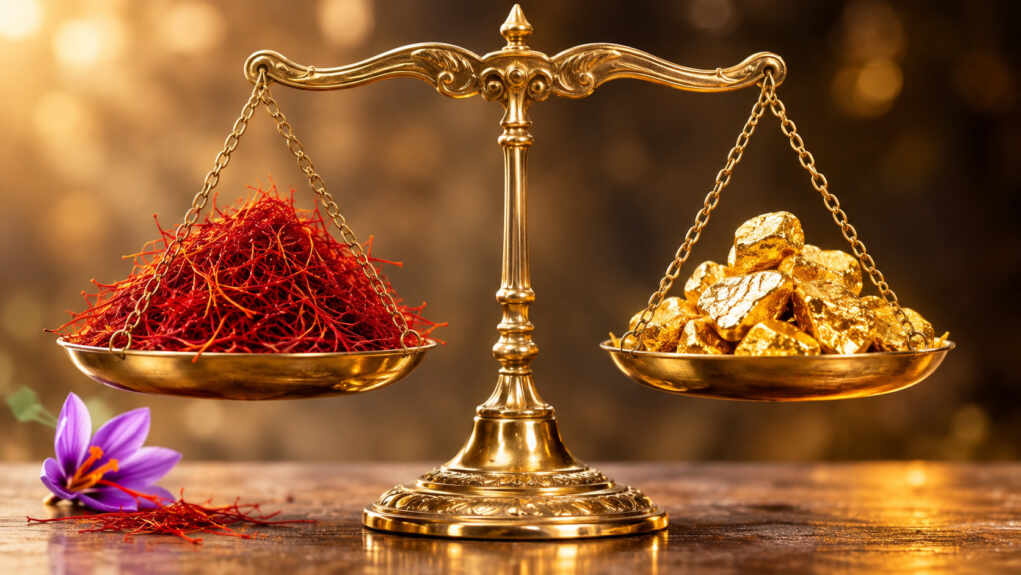
Imagine a spice so precious that a tiny pinch can transform an ordinary meal into a luxurious culinary experience. Its deep crimson threads are harvested from delicate purple flowers, collected by hand, and sold for astonishing prices. Known as saffron, this extraordinary ingredient has fascinated civilizations for thousands of years. Often described as more valuable than gold, saffron has earned its reputation not only because of its rarity and labor-intensive harvesting process but also because modern science is beginning to uncover the remarkable compounds hidden within its delicate threads.
But what makes saffron so special beyond its price tag? Researchers have discovered that this vibrant spice contains powerful plant compounds associated with antioxidant activity, brain health, mood regulation, and other potential health benefits. Some clinical studies have even explored its effects on depressive symptoms, sleep quality, and age-related eye conditions. While scientists are still investigating many of these claims, the growing body of research suggests that saffron is much more than an expensive kitchen ingredient. It is a fascinating example of how traditional foods can inspire modern scientific discoveries.
What Is Saffron, and Why Is It So Expensive?
Saffron comes from the flower of Crocus sativus, commonly known as the saffron crocus. Unlike many other spices obtained from seeds, roots, or leaves, saffron is harvested from the tiny red stigmas inside the flower.
Each flower produces only three delicate stigmas. These must be carefully removed by hand, separated, and dried before they become the aromatic red threads sold as saffron.
The harvesting process explains much of its extraordinary price.
Approximately 75,000 flowers may be needed to produce just one pound of saffron. Because the flowers are delicate and the stigmas cannot easily be harvested using conventional machinery without damaging them, production remains highly labor-intensive.
Major producers include Iran, India, and Spain, with Iranian saffron particularly prominent in international markets.
Although saffron is frequently described as more expensive than gold, this comparison is best understood as a reflection of its historical prestige and exceptional cost per unit of spice rather than a literal comparison with today’s gold prices.
Its rarity, limited yield, careful harvesting, and distinctive flavor make saffron one of the world’s most valuable culinary ingredients.
The Science Behind Saffron: Three Powerful Compounds
The real fascination with saffron begins at the molecular level.
Scientists have identified several biologically active compounds that may help explain why this spice has attracted so much attention in nutritional and medical research.
Three compounds are particularly important.
1. Crocin: The Antioxidant Behind Its Golden Reputation
Crocin is one of the primary compounds responsible for saffron’s brilliant red-orange color.
It belongs to a family of carotenoid compounds and has demonstrated antioxidant properties in laboratory research.
Antioxidants help protect cells against oxidative stress, a process involving an imbalance between harmful reactive molecules and the body’s antioxidant defenses.
Oxidative stress is associated with cellular damage and has been investigated in connection with aging, cardiovascular disease, and neurological conditions.
Researchers are particularly interested in crocin because preliminary studies suggest it may influence inflammatory and oxidative pathways.
Some research has also explored its potential effects on memory and brain function. However, much of this evidence comes from laboratory and animal studies, so its effects in humans require further investigation.
2. Safranal: The Compound Responsible for Saffron’s Distinctive Aroma
Have you ever noticed saffron’s unusual fragrance?
That characteristic aroma is largely associated with safranal, a volatile compound that develops during the processing and drying of saffron.
But safranal is interesting for reasons beyond its smell.
Laboratory studies suggest that it may have antioxidant and neuroprotective properties. Researchers have also investigated its possible influence on neurotransmitter systems involved in mood and anxiety.
These findings have helped generate interest in saffron as a potential ingredient in future mental health research.
However, it is important to distinguish promising laboratory findings from proven treatments. Saffron should not be considered a replacement for established mental health care.
3. Picrocrocin: The Secret Behind Its Distinctive Taste
Picrocrocin is responsible for much of saffron’s characteristic bitter taste.
During the drying process, picrocrocin can break down and contribute to the formation of safranal, helping create saffron’s distinctive flavor and aroma.
Together, these compounds give saffron its recognizable sensory qualities while making it scientifically interesting.
The combination of color, fragrance, and flavor is part of what makes saffron unlike almost any other spice.
6 Potential Health Benefits of Saffron Backed by Scientific Research
Saffron has been used in traditional medicine for centuries. Today, researchers are examining whether some of its traditional uses have a scientific basis.
Although the evidence varies depending on the condition being studied, several areas have attracted particular attention.
1. It May Help Support a Healthy Mood
One of the most interesting areas of saffron research involves mental health.
Several clinical studies have investigated saffron supplementation in adults experiencing depressive symptoms.
A systematic review and meta-analysis published in the Journal of Affective Disorders examined randomized controlled trials and found that saffron supplementation was associated with improvements in depression and anxiety scores compared with placebo.
Scientists are investigating whether compounds such as crocin and safranal influence neurotransmitter activity and biological pathways involved in mood regulation.
These findings are encouraging, but they do not establish saffron as a proven treatment for depression.
People experiencing persistent depression should seek professional medical advice rather than replacing prescribed treatments with herbal supplements.
2. It Contains Antioxidants That May Protect Cells
Saffron contains several antioxidant compounds, including crocin, crocetin, and safranal.
These substances have demonstrated the ability to interact with oxidative processes in experimental research.
Why does this matter?
Oxidative stress occurs when reactive molecules accumulate beyond the body’s ability to control them effectively. Over time, this process can contribute to cellular damage.
Antioxidants help the body manage these processes.
While saffron provides potentially beneficial plant compounds, researchers have not established that consuming it prevents chronic diseases. A balanced diet containing a variety of fruits, vegetables, herbs, and spices remains a more reliable approach to obtaining dietary antioxidants.
3. It May Support Eye Health
Another fascinating area of research involves saffron and age-related macular degeneration (AMD).
AMD affects the macula, the part of the retina responsible for detailed central vision. It becomes increasingly common with age and can interfere with activities such as reading and recognizing faces.
Researchers have investigated whether saffron supplementation could help support retinal function.
Some small human clinical trials have reported improvements in certain measures of visual function among people with early AMD.
Crocin and crocetin are among the compounds being studied for their potential effects on retinal cells and oxidative stress.
Although these findings are promising, saffron is not a cure for macular degeneration and should never replace recommended eye examinations or medical treatment.
4. It May Help Improve Sleep Quality
Could a tiny amount of saffron help you sleep better?
Researchers have explored this possibility in clinical trials.
One randomized, double-blind, placebo-controlled study published in the Journal of Clinical Sleep Medicine investigated a standardized saffron extract in adults experiencing self-reported sleep difficulties.
The researchers observed improvements in several self-reported measures of sleep quality compared with placebo over the study period.
Scientists believe saffron’s biologically active compounds may influence pathways associated with relaxation and sleep regulation.
However, the research remains relatively limited. More studies involving larger and more diverse populations are necessary before saffron can be recommended as an established sleep treatment.
5. It May Help Ease Premenstrual Symptoms
Premenstrual syndrome (PMS) can involve physical and emotional symptoms, including abdominal discomfort, irritability, fatigue, and mood changes.
Some clinical studies have investigated saffron supplementation as a possible complementary approach to managing certain PMS symptoms.
The findings suggest that saffron may help improve some emotional symptoms in certain participants.
Researchers are interested in its potential influence on mood-related biological pathways.
Nevertheless, PMS symptoms vary considerably, and saffron supplementation has not been established as a standard treatment. Anyone experiencing severe or disruptive symptoms should discuss appropriate treatment options with a healthcare professional.
6. It May Have Potential Benefits for Brain Health
Saffron has attracted considerable interest in neurological research.
Scientists are examining whether crocin and other saffron compounds could help protect brain cells against oxidative stress and inflammation.
Some preliminary research has explored their possible effects on memory, learning, and cognitive function.
There have also been small clinical studies investigating saffron extract in people with mild-to-moderate Alzheimer’s disease.
Although early findings have generated interest, the available evidence is insufficient to establish saffron as an effective treatment or preventive measure for Alzheimer’s disease.
More extensive clinical research is needed.
Why Scientists Are So Interested in Saffron
What makes saffron particularly interesting is that its potential health effects do not appear to depend on just one compound.
Instead, researchers are investigating several naturally occurring substances that may interact with different biological pathways.
For example:
- Crocin is being studied for its antioxidant and potential neuroprotective properties.
- Crocetin is being investigated for its possible effects on oxidative stress and cellular function.
- Safranal is attracting attention for its potential neurological and mood-related effects.
- Picrocrocin contributes to saffron’s distinctive chemistry and sensory characteristics.
This combination makes saffron an interesting subject for research into nutrition, brain health, and plant-derived bioactive compounds.
However, laboratory results do not automatically translate into health benefits in humans. Clinical trials are essential for determining whether these compounds produce meaningful improvements in real-world health outcomes.
How to Use Saffron in Your Everyday Diet
You do not need to purchase expensive supplements to enjoy saffron’s culinary qualities.
A few threads can add distinctive flavor, fragrance, and color to everyday meals.
Here are some simple ways to incorporate it into your cooking:
1. Saffron Tea
Steep a few saffron threads in warm water for several minutes. The water gradually develops a beautiful golden-orange color and a delicate floral aroma.
2. Saffron Rice
Add saffron-infused water to rice before cooking. This creates a fragrant dish with a distinctive golden appearance.
3. Saffron Milk
Combine a few threads with warm milk and a little cinnamon for a comforting beverage.
4. Soups and Stews
Add a small amount of saffron to seafood soups, vegetable stews, or chicken dishes to create a deeper flavor.
5. Seafood Dishes
Saffron pairs particularly well with fish, shrimp, and shellfish. It is also a traditional ingredient in Spanish paella.
A useful tip: Soak saffron threads in a little warm water before adding them to your recipe. This helps release their color and aroma throughout the dish.
Is Saffron Safe? Important Things to Know
Although saffron is generally considered safe when consumed in the small quantities commonly used in cooking, concentrated supplements require greater caution.
The amount used in food is very different from the quantities found in some research studies.
Potential side effects of saffron supplements include:
- Nausea and digestive discomfort.
- Headaches.
- Dizziness.
- Changes in appetite.
- Allergic reactions in susceptible individuals.
High doses can be toxic, and concentrated saffron supplements may interact with certain medications.
People who are pregnant or breastfeeding, have underlying medical conditions, or take prescription medications should consult a healthcare professional before using saffron supplements.
High-dose saffron should be avoided during pregnancy because of potential safety concerns.
It is also important to remember that dietary supplements are not necessarily standardized. Different products may contain different concentrations and amounts of active compounds.
More saffron does not automatically mean greater health benefits.
Saffron vs. Gold: What Makes This Spice So Valuable?
Gold is valuable because of its rarity, physical properties, and economic demand.
Saffron’s value comes from a different combination of factors.
Its production requires enormous quantities of flowers, careful manual harvesting, and delicate processing. Even after all that work, the final yield is surprisingly small.
But its value extends beyond the kitchen.
Saffron has a long history in traditional medicine, cultural ceremonies, cosmetics, and culinary traditions. Modern research has added another dimension by examining its naturally occurring compounds and their potential biological effects.
The growing scientific interest in saffron demonstrates how a traditional ingredient can become the subject of modern nutritional and medical investigation.
Still, its impressive reputation should not be confused with proof that it can treat or prevent disease.
The Final Verdict: Is Saffron Worth the Price?
Saffron is undoubtedly one of the world’s most fascinating spices.
Its extraordinary price is explained by the labor-intensive process required to harvest it, its limited production yield, and its distinctive culinary qualities.
But science offers another reason to appreciate these delicate red threads.
Its naturally occurring compounds, particularly crocin, crocetin, and safranal, have attracted considerable scientific interest because of their potential antioxidant, neurological, and mood-related properties.
Human studies have produced encouraging findings in areas such as depressive symptoms, sleep quality, and age-related eye health. However, larger and longer clinical trials are still needed to establish the extent of these benefits.
So, is saffron really a spice worth more than gold?
Perhaps not in a literal financial comparison today. But its unique combination of history, extraordinary harvesting requirements, culinary importance, and fascinating chemistry makes it priceless in another sense.
Sometimes, the smallest ingredients hold the most interesting scientific stories.
And saffron may be one of the best examples.
Sources:
- Cleveland Clinic – How Saffron Could Benefit Your Health
- Healthline – 11 Impressive Health Benefits of Saffron
- WebMD – Saffron: Uses and Risks
- Medical News Today – Saffron: Health Benefits, Side Effects, and How to Use It
- Medical News Today – What to Know About Saffron for Anxiety
- National Library of Medicine (PubMed Central) – Effects of Saffron on Sleep Quality in Healthy Adults
- National Library of Medicine (PubMed Central) – Adverse Events of Saffron: A Systematic Review of Current Evidence
- Harvard Health Publishing – Spice Up Your Holidays
Website operated and published by:
FAB LTD
Ground Floor, 14 Stewart Dr.
Berea, East London 5241
South Africa
Disclaimer
The watching, interacting, and participation of any kind with anything on this page does not constitute or initiate a doctor-patient relationship with Dr. Farrah™. None of the statements here have been evaluated by the Food and Drug Administration (FDA). The products of Dr. Farrah™ are not intended to diagnose, treat, cure, or prevent any disease. The information being provided should only be considered for education and entertainment purposes only. If you feel that anything you see or hear may be of value to you on this page or on any other medium of any kind associated with, showing, or quoting anything relating to Dr. Farrah™ in any way at any time, you are encouraged to and agree to consult with a licensed healthcare professional in your area to discuss it. If you feel that you’re having a healthcare emergency, seek medical attention immediately. The views expressed here are simply either the views and opinions of Dr. Farrah™ or others appearing and are protected under the First Amendment.
Dr. Farrah™ is a highly experienced Licensed Medical Doctor certified in evidence-based clinical nutrition, not some enthusiast, formulator, or medium promoting the wild and unrestrained use of nutrition products for health issues without clinical experience and scientific evidence of therapeutic benefit. Dr. Farrah™ has personally and keenly studied everything she recommends, and more importantly, she’s closely observed the reactions and results in a clinical setting countless times over the course of her career involving the treatment of over 150,000 patients.
Dr. Farrah™ promotes evidence-based natural approaches to health, which means integrating her individual scientific and clinical expertise with the best available external clinical evidence from systematic research. By individual clinical expertise, I refer to the proficiency and judgment that individual clinicians acquire through clinical experience and clinical practice.
Dr. Farrah™ does not make any representations or warranties with respect to the accuracy, applicability, fitness, or completeness of any multimedia content provided. Dr. Farrah™ does not warrant the performance, effectiveness, or applicability of any sites listed, linked, or referenced to, in, or by any multimedia content.
To be clear, the multimedia content is not intended to be a substitute for professional medical advice, diagnosis, or treatment. Always seek the advice of your physician or other qualified health providers with any questions you may have regarding a medical condition. Never disregard professional medical advice or delay in seeking it because of something you have read or seen in any website, video, image, or media of any kind. Dr. Farrah™ hereby disclaims any and all liability to any party for any direct, indirect, implied, punitive, special, incidental, or other consequential damages arising directly or indirectly from any use of the content, which is provided as is, and without warranties.