
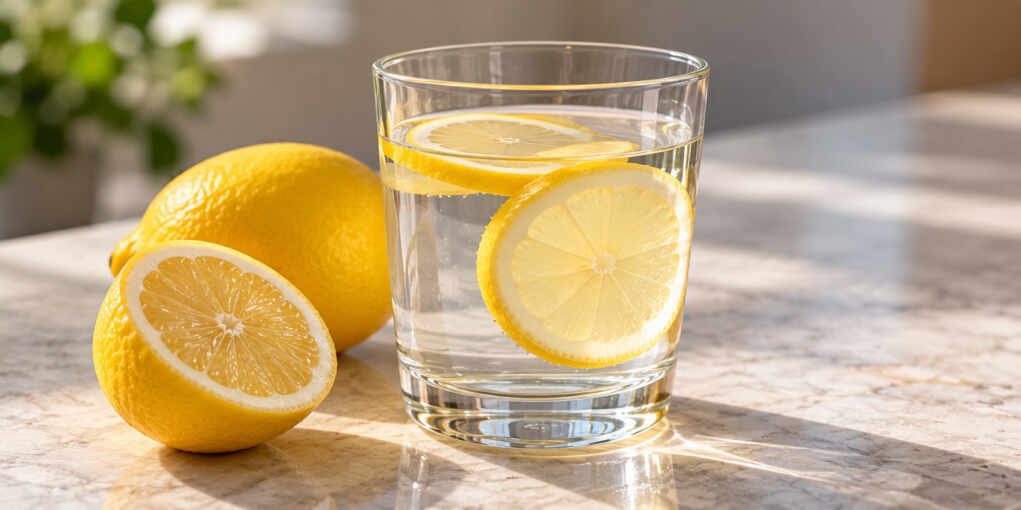
After dinner, choosing the right beverage can be a simple way to support overall kidney health. While there is no special drink that can “cleanse” or detox the kidneys, staying properly hydrated helps the kidneys perform their essential job of filtering waste and maintaining the body’s fluid balance. For most healthy adults, water remains the simplest and most reliable choice.
If plain water feels a little too ordinary, adding fresh lemon can make it more appealing without adding significant sugar or calories. Unsweetened lemon water is a practical after-dinner choice because it provides the hydration of water while adding a small amount of citrate, a compound that may be beneficial for people who are prone to certain types of kidney stones.
Why Water Is So Important for Kidney Health
Your kidneys continuously filter your blood, removing waste and excess fluid that eventually leave the body as urine. Adequate fluid intake helps support this process and prevents urine from becoming excessively concentrated.
According to the National Kidney Foundation, proper hydration helps the kidneys remove waste and maintain the body’s balance of fluids and electrolytes. However, hydration needs aren’t identical for everyone. Factors such as body size, activity level, weather, and medical conditions can all affect how much fluid a person needs.
For that reason, there isn’t necessarily a magic number of glasses that every person should drink each day. Instead, the goal is to consume enough fluids to meet your individual needs without unnecessarily overdoing it.
Why Lemon Water Can Be a Good After-Dinner Option
Adding a squeeze of lemon to water can make the beverage more enjoyable, potentially making it easier to maintain good hydration throughout the day. Lemon also provides a small amount of vitamin C while keeping the drink naturally low in calories.
One of the more interesting features of lemon juice is its citrate content. Citrate can bind with calcium in urine and may help reduce the formation of certain kidney stones. Cleveland Clinic notes that lemon water may be helpful as part of kidney-stone prevention, although it should not be considered a treatment for existing stones or kidney disease.
The key is to keep the drink unsweetened. Adding sugar, syrup or large amounts of sweetened flavoring can turn a simple glass of lemon water into a much less health-conscious beverage.
When Should You Drink It?
An after-dinner glass of lemon water can be a convenient way to add fluids to your daily routine. You don’t need to drink a large quantity immediately before bed, however. Drinking excessive amounts late at night may simply leave you making repeated trips to the bathroom.
Instead, think about hydration as an all-day habit. Drinking water consistently throughout the day is generally more useful than trying to make up for inadequate fluid intake at night.
Your individual needs may also change depending on the weather, exercise and other factors. Someone exercising outdoors in hot weather, for example, may need considerably more fluid than someone spending most of the day in a cool indoor environment.
What About Soda, Juice and Other After-Dinner Drinks?
Many popular after-dinner beverages contain considerably more sugar than water or lemon water. Regular soda, sweetened tea and some fruit drinks can add substantial amounts of added sugar without providing a particular advantage for kidney health.
Water is therefore an easy default when you’re looking for a beverage that hydrates without adding sugar or excess calories. Unsweetened tea can also contribute to daily fluid intake, depending on individual dietary needs.
Coffee and tea don’t necessarily need to be avoided simply because you’re thinking about kidney health. The bigger consideration is often what is added to them and how they fit into your overall diet.
Can Everyone Drink More Water?
Not necessarily. People with certain medical conditions may need individualized fluid recommendations.
For example, people with advanced kidney disease or kidney failure may have difficulty removing excess fluid from the body. Some patients may therefore be advised by their healthcare team to limit their fluid intake.
Anyone who has chronic kidney disease, recurrent kidney stones or has been given a fluid restriction should follow the recommendations of their physician or registered dietitian rather than simply increasing water consumption.
The Bottom Line
For most healthy adults, water is the most straightforward after-dinner beverage for supporting kidney health. If you prefer something with more flavor, unsweetened lemon water is a simple alternative. It provides hydration while adding citrate, which may help reduce the risk of some kidney stones.
The important point is not that lemon water has special detoxifying powers. Rather, it is an easy, low-calorie way to make drinking water more enjoyable. Consistent, appropriate hydration, along with a balanced diet and healthy lifestyle, is much more important to kidney health than any single beverage.
Sources:
- National Kidney Foundation — Healthy Hydration and Your Kidneys
- National Kidney Foundation — Healthy Hydration: What to Sip and What to Skip
- Cleveland Clinic — Benefits of Lemon Water
- Mayo Clinic — Kidney Stones: Diagnosis and Treatment
- Healthline — 7 Science-Based Health Benefits of Drinking Enough Water
- WebMD — Best and Worst Drinks for Your Health
Website operated and published by:
FAB LTD
Ground Floor, 14 Stewart Dr.
Berea, East London 5241
South Africa
Disclaimer
The watching, interacting, and participation of any kind with anything on this page does not constitute or initiate a doctor-patient relationship with Dr. Farrah™. None of the statements here have been evaluated by the Food and Drug Administration (FDA). The products of Dr. Farrah™ are not intended to diagnose, treat, cure, or prevent any disease. The information being provided should only be considered for education and entertainment purposes only. If you feel that anything you see or hear may be of value to you on this page or on any other medium of any kind associated with, showing, or quoting anything relating to Dr. Farrah™ in any way at any time, you are encouraged to and agree to consult with a licensed healthcare professional in your area to discuss it. If you feel that you’re having a healthcare emergency, seek medical attention immediately. The views expressed here are simply either the views and opinions of Dr. Farrah™ or others appearing and are protected under the First Amendment.
Dr. Farrah™ is a highly experienced Licensed Medical Doctor certified in evidence-based clinical nutrition, not some enthusiast, formulator, or medium promoting the wild and unrestrained use of nutrition products for health issues without clinical experience and scientific evidence of therapeutic benefit. Dr. Farrah™ has personally and keenly studied everything she recommends, and more importantly, she’s closely observed the reactions and results in a clinical setting countless times over the course of her career involving the treatment of over 150,000 patients.
Dr. Farrah™ promotes evidence-based natural approaches to health, which means integrating her individual scientific and clinical expertise with the best available external clinical evidence from systematic research. By individual clinical expertise, I refer to the proficiency and judgment that individual clinicians acquire through clinical experience and clinical practice.
Dr. Farrah™ does not make any representations or warranties with respect to the accuracy, applicability, fitness, or completeness of any multimedia content provided. Dr. Farrah™ does not warrant the performance, effectiveness, or applicability of any sites listed, linked, or referenced to, in, or by any multimedia content.
To be clear, the multimedia content is not intended to be a substitute for professional medical advice, diagnosis, or treatment. Always seek the advice of your physician or other qualified health providers with any questions you may have regarding a medical condition. Never disregard professional medical advice or delay in seeking it because of something you have read or seen in any website, video, image, or media of any kind. Dr. Farrah™ hereby disclaims any and all liability to any party for any direct, indirect, implied, punitive, special, incidental, or other consequential damages arising directly or indirectly from any use of the content, which is provided as is, and without warranties.