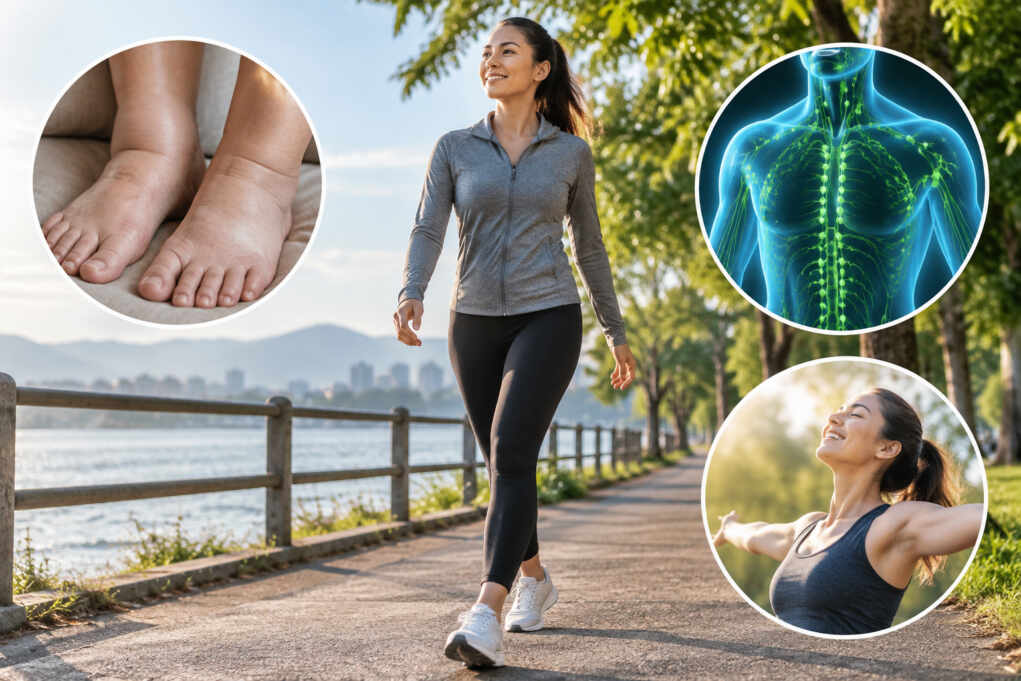
If you have ever woken up feeling puffy, heavy or sluggish, you may have come across the latest wellness trend promising a simple solution: “lymphatic walking.” The idea is appealing. Instead of an intense workout, the practice generally involves gentle, rhythmic walking and movement intended to encourage lymph fluid to circulate through the body. Advocates claim that it can reduce water retention, make the face and body look less swollen, and even leave you feeling more energetic. But does a special type of walking really “flush” the lymphatic system, or is it simply another name for the benefits of regular physical activity?
The answer is somewhere in the middle. Your lymphatic system is genuinely important for maintaining fluid balance, and muscle movement can help lymph fluid move through the body. Health organizations recommend exercise and movement as part of managing lymphedema, and walking can be a practical, low-impact way to get those muscles working. However, there is much less evidence that a particular “lymphatic walking” technique provides dramatic cosmetic or detoxifying effects in otherwise healthy people. The potential benefits are real, but some of the claims circulating online go well beyond what current evidence can establish.
What Exactly Is The Lymphatic System?
The lymphatic system is a network of vessels, tissues and lymph nodes that helps maintain fluid balance and supports the immune system. Lymph is a fluid collected from tissues and eventually returned to the bloodstream.
Unlike the cardiovascular system, which has the heart as a central pump, the lymphatic system relies heavily on muscle contractions, breathing and other body movements to help propel lymph through its vessels. This is one reason physical activity can be useful for people dealing with lymph-related swelling.
When lymph drainage is impaired, fluid can accumulate in tissues and cause swelling known as lymphedema. But not all puffiness is caused by lymphatic dysfunction. Facial puffiness, swollen ankles or temporary bloating can have many causes, including salt intake, prolonged sitting or standing, medications, hormonal changes and various medical conditions.
Can Walking Help Move Lymph Fluid?
Yes—there is a sound physiological reason to think that movement can help.
When muscles contract and relax, they can help push fluid through the lymphatic vessels. The NHS specifically explains that exercise uses the muscles of an affected limb to improve lymph drainage, while walking is included among gentle whole-body activities that can be incorporated into a lymphoedema management plan.
Cancer Research UK similarly notes that research indicates movement and exercise can help lymph move through the lymphatic system. Muscle contractions push lymph through lymph vessels, which may help reduce swelling. Walking is recommended as one possible way to begin exercising, particularly for people who have not been active recently.
That doesn’t mean walking literally “flushes toxins” from your body. The lymphatic system does participate in fluid and immune regulation, but the body already has organs such as the liver and kidneys that play major roles in processing and eliminating waste. Claims that a short walk dramatically detoxifies the body should therefore be viewed skeptically.
Could Lymphatic Walking Reduce Puffiness?
It may help in some circumstances, but expectations matter.
If swelling is partly related to inactivity or prolonged sitting, getting up and walking can encourage circulation and fluid movement. Medical guidance for edema commonly recommends avoiding long periods without movement and taking short walks.
There is also evidence that exercise can help manage genuine lymphedema. The National Cancer Institute describes exercise as a natural pump for the lymphatic system and notes that physical activity may improve lymph flow and help manage lymphedema.
However, that is different from saying that a 10-minute “lymphatic walk” will noticeably sculpt your face or body. Temporary puffiness can fluctuate naturally, and there is not strong evidence showing that a particular walking pattern produces a dramatic cosmetic effect in healthy individuals.
For facial puffiness specifically, gentle lymphatic drainage massage has been suggested as a way to temporarily decrease swelling. Cleveland Clinic notes that lymphatic drainage massage may lessen facial puffiness, while also emphasizing that it is a specialized technique rather than a magical detox treatment.
What About The Claim That It Boosts Energy?
This claim has a stronger foundation—but probably not for the reason social media often suggests.
Walking is a form of physical activity, and regular walking can improve cardiovascular fitness, muscle endurance, mood and sleep. Mayo Clinic lists increased energy among the potential benefits of regular brisk walking, along with improved fitness, mood, sleep and reduced stress.
So if you feel more energized after a lymphatic walk, the explanation may simply be that you moved your body, increased circulation, spent time outdoors or broke up a long period of sitting.
There is also an important distinction between feeling temporarily more alert and treating persistent fatigue. If someone is unusually tired for weeks, particularly alongside unexplained swelling, shortness of breath or other symptoms, exercise should not be used as a substitute for medical evaluation. Persistent or unexplained swelling can have many causes and deserves attention from a healthcare professional.
How To Try Lymphatic Walking Safely
You don’t need a complicated routine to incorporate gentle movement into your day.
A simple approach is:
- Start slowly. Try a comfortable 10- to 15-minute walk if you are not accustomed to regular exercise.
- Keep the pace comfortable. The goal is consistent movement rather than an exhausting workout.
- Use your whole body. Allow your arms to swing naturally and maintain relaxed, regular breathing.
- Build gradually. As your fitness improves, increase the duration or pace rather than suddenly doing a strenuous workout.
- Break up long periods of sitting. Short walks throughout the day can be an easy way to keep your body moving.
- Stay hydrated. Adequate hydration supports normal body fluid balance.
- Pay attention to swelling. If you have diagnosed lymphedema, follow the exercise and compression recommendations provided by your healthcare team.
Cancer Research UK recommends starting gently and gradually increasing walking distance and pace for people with lymphoedema.
Is More Movement Always Better?
Not necessarily.
People with diagnosed lymphedema can benefit from exercise, but the appropriate amount and intensity can vary. Johns Hopkins Medicine recommends regular exercise to improve drainage while advising patients to consult a doctor or physical therapist about an appropriate program.
Likewise, the NHS recommends individualized exercise plans for people with lymphoedema. Walking, swimming and cycling can all be appropriate, but the program should reflect the person’s condition and abilities.
If exercise causes pain, dizziness or a noticeable worsening of swelling, stop and seek professional guidance. Anyone with persistent or unexplained swelling should also be evaluated rather than assuming it is simply “poor lymphatic drainage.”
The Bottom Line
Can lymphatic walking reduce puffiness? Potentially, yes—but mainly because movement helps normal fluid circulation and can be particularly useful in managing certain types of swelling.
Can it boost energy? Yes, regular walking can improve energy, fitness, mood and sleep. But those benefits are better explained by the well-established effects of physical activity than by the idea that walking is “detoxing” the lymphatic system.
The biggest takeaway is that you don’t need a trendy technique or a complicated routine. A gentle daily walk, combined with regular movement throughout the day, is a simple and evidence-supported habit. For people with actual lymphatic disorders or persistent swelling, however, walking should be considered part of a broader management plan rather than a replacement for professional care.
Sources:
- Cleveland Clinic — Lymphatic System
- Mayo Clinic — Walking: Trim your waistline, improve your health
- NHS — Lymphoedema Treatment
- MedlinePlus — Edema
- Johns Hopkins Medicine — Treating Lymphedema
Disclaimer
The watching, interacting, and participation of any kind with anything on this page does not constitute or initiate a doctor-patient relationship with Dr. Farrah™. None of the statements here have been evaluated by the Food and Drug Administration (FDA). The products of Dr. Farrah™ are not intended to diagnose, treat, cure, or prevent any disease. The information being provided should only be considered for education and entertainment purposes only. If you feel that anything you see or hear may be of value to you on this page or on any other medium of any kind associated with, showing, or quoting anything relating to Dr. Farrah™ in any way at any time, you are encouraged to and agree to consult with a licensed healthcare professional in your area to discuss it. If you feel that you’re having a healthcare emergency, seek medical attention immediately. The views expressed here are simply either the views and opinions of Dr. Farrah™ or others appearing and are protected under the First Amendment.
Dr. Farrah™ is a highly experienced Licensed Medical Doctor certified in evidence-based clinical nutrition, not some enthusiast, formulator, or medium promoting the wild and unrestrained use of nutrition products for health issues without clinical experience and scientific evidence of therapeutic benefit. Dr. Farrah™ has personally and keenly studied everything she recommends, and more importantly, she’s closely observed the reactions and results in a clinical setting countless times over the course of her career involving the treatment of over 150,000 patients.
Dr. Farrah™ promotes evidence-based natural approaches to health, which means integrating her individual scientific and clinical expertise with the best available external clinical evidence from systematic research. By individual clinical expertise, I refer to the proficiency and judgment that individual clinicians acquire through clinical experience and clinical practice.
Dr. Farrah™ does not make any representations or warranties with respect to the accuracy, applicability, fitness, or completeness of any multimedia content provided. Dr. Farrah™ does not warrant the performance, effectiveness, or applicability of any sites listed, linked, or referenced to, in, or by any multimedia content.
To be clear, the multimedia content is not intended to be a substitute for professional medical advice, diagnosis, or treatment. Always seek the advice of your physician or other qualified health providers with any questions you may have regarding a medical condition. Never disregard professional medical advice or delay in seeking it because of something you have read or seen in any website, video, image, or media of any kind. Dr. Farrah™ hereby disclaims any and all liability to any party for any direct, indirect, implied, punitive, special, incidental, or other consequential damages arising directly or indirectly from any use of the content, which is provided as is, and without warranties.