
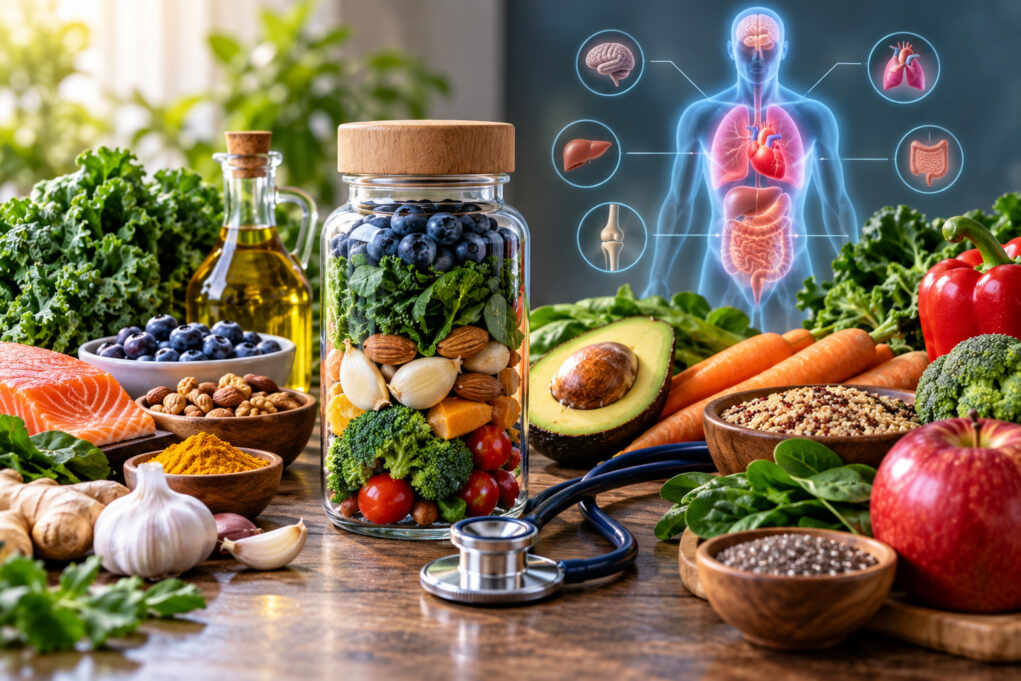
The old idea that food can be medicine has taken on new meaning as researchers continue to uncover the powerful relationship between diet and health. What we eat provides the energy, vitamins, minerals, fiber, fats, proteins, and other compounds our bodies need to function. More importantly, long-term eating patterns can influence the risk of conditions such as heart disease, type 2 diabetes, certain cancers, and other chronic illnesses. Modern nutrition research increasingly suggests that a healthy diet is not simply about maintaining a desirable weight—it can be an important part of protecting the body and supporting overall health.
But should food actually replace medicine? Not necessarily. While a nutritious diet can help prevent disease and, in some circumstances, help manage an existing condition, food does not work like a prescription drug, and its effects are rarely immediate. Some illnesses require medication, surgery, or other medical treatment. The most useful way to think about “food as medicine” is not as an alternative to healthcare, but as one of the foundations of good healthcare: the right foods can work alongside medical treatment and healthy lifestyle habits to give the body a better chance to stay well.
What Does “Food as Medicine” Really Mean?
The phrase “food as medicine” can sound as though a particular food can cure an illness. In reality, nutrition is much more complicated.
The American Heart Association describes “Food Is Medicine” as providing healthy food resources to help prevent, manage, or treat specific health conditions in coordination with the healthcare system. These approaches can include medically tailored meals, healthy groceries, and produce prescriptions. In other words, the concept is broader than simply telling someone to eat more vegetables. It recognizes food as an important component of healthcare while still involving medical professionals when appropriate.
There is strong evidence that overall dietary patterns matter. Research summarized by the National Institutes of Health indicates that healthy dietary patterns are associated with a lower risk of major chronic diseases, including cardiovascular disease, diabetes, and some cancers.
That distinction is important. Eating one “superfood” is unlikely to transform your health. Consistently eating a variety of nutritious foods is much more meaningful.
Your Diet Can Influence Your Risk of Disease
A healthy diet can affect several systems in the body at once.
For cardiovascular health, for example, dietary quality is closely associated with the risk of heart disease. The American Heart Association’s updated 2026 dietary guidance emphasizes the importance of overall food quality and patterns rather than focusing on a single nutrient or food.
A heart-supportive eating pattern generally emphasizes vegetables and fruits, whole grains, beans and other legumes, nuts and seeds, and healthier sources of protein and unsaturated fats. It also limits excessive sodium, added sugars, and foods high in saturated fat.
Nutrition can also play an important role in diabetes management. The National Institute of Diabetes and Digestive and Kidney Diseases notes that food and beverages provide the nutrients needed to improve health, manage disease, and reduce disease risk. For someone with diabetes, the quantity and type of carbohydrates, overall dietary pattern, portion sizes, and consistency of meals can all matter.
This doesn’t mean that eating a particular food can “cure” diabetes or heart disease. Rather, dietary choices can influence risk factors and help people manage certain conditions more effectively.
Think Patterns, Not Miracle Foods
One of the biggest problems with the “food as medicine” idea is that it can encourage people to search for miracle foods.
Blueberries may be nutritious. Leafy greens can provide valuable vitamins and minerals. Beans are excellent sources of fiber and plant protein. Nuts contain beneficial fats and other nutrients. But none of these foods should be viewed as a magic treatment.
Mayo Clinic emphasizes the importance of nutrient-dense foods—foods that provide substantial nutritional value without excessive amounts of added sugar, salt, or unhealthy fats. Eating these foods regularly over time is associated with better health and a lower risk of some chronic diseases.
The bigger goal is therefore to build a dietary pattern that you can maintain.
Instead of asking, “What one food should I eat to become healthier?” a more useful question is, “What does most of my diet look like?”
That shift can make healthy eating much less complicated.
What Should Go on Your Plate?
There is no single perfect diet for everyone. Cultural preferences, budget, allergies, medical conditions, medications, age, activity level, and personal preferences all influence nutritional needs.
Still, several principles are widely supported by nutrition research:
- Eat plenty of vegetables and fruits. Aim for variety rather than relying on one particular type.
- Choose whole grains more often. Foods such as oats, brown rice, and whole-grain breads can provide fiber and other nutrients.
- Include legumes. Beans, lentils, and peas are versatile sources of fiber and plant protein.
- Choose nutritious protein sources. Depending on your needs and preferences, these can include fish, poultry, eggs, beans, lentils, nuts, seeds, and other protein-rich foods.
- Favor healthier fats. Unsaturated fats found in foods such as nuts, seeds, avocados, and many plant oils can be part of a balanced diet.
- Limit highly processed foods when they displace nutritious choices. This does not mean you can never eat them; overall dietary patterns matter.
- Pay attention to sodium and added sugars. Excessive intake can work against long-term health.
- Drink appropriately for your needs. Water is generally a useful everyday choice.
Harvard Health also highlights the importance of food quality, noting that where nutrients come from can be just as important as the nutrients themselves.
Food Can Help, But It Isn’t Always Enough
Perhaps the most important message is that nutrition should complement—not automatically replace—medical care.
Someone with high blood pressure may benefit enormously from improving their diet, but that does not mean they should stop taking prescribed medication without medical guidance. A person with diabetes may improve blood sugar control through dietary changes, but medication may still be necessary. Someone undergoing cancer treatment needs appropriate medical care even if they are also eating a highly nutritious diet.
Stopping prescribed treatment because a food, supplement, or diet is promoted as a “natural cure” can be dangerous.
Food also cannot address every cause of disease. Genetics, infections, environmental exposures, age, physical activity, sleep, stress, and many other factors can influence health. Nutrition is powerful, but it is only one part of the picture.
The Psychological Side of Eating Well
There is another reason to avoid thinking about food as either “medicine” or “poison”: healthy eating should be sustainable.
If every meal feels like a medical prescription, eating can become unnecessarily stressful. A healthier approach is to build habits that are realistic enough to continue for years.
That might mean adding vegetables to a favorite meal rather than completely changing your diet. It could mean replacing sugary drinks with water more often, choosing whole grains, eating fruit as a snack, or cooking at home a few additional times each week.
Small changes may seem insignificant, but consistency matters.
A healthy diet does not have to be perfect. It needs to be good enough, often enough, to make a meaningful difference.
So, Should Food Be Your Medicine?
Yes—but with an important qualification.
Food should be one of your tools for protecting and supporting your health. A nutritious dietary pattern can help reduce disease risk, support normal body functions, and in many cases contribute to the management of chronic conditions. There is good reason for healthcare professionals to take nutrition seriously.
But food should not be treated as a universal replacement for medicine. The strongest approach is usually a combination of good nutrition, physical activity, adequate sleep, preventive healthcare, and appropriate medical treatment when needed.
Rather than asking whether food should replace medicine, perhaps the better question is: How can food become part of the medicine that keeps us healthy?
That question recognizes both the remarkable power of nutrition and the importance of evidence-based medical care. Food may not be a miracle cure, but what we eat every day can be one of the most important long-term investments we make in our health.
Sources:
- Harvard Health Publishing — “Food Is Medicine”
- American Heart Association — “2026 Dietary Guidance to Improve Cardiovascular Health”
- National Institute of Diabetes and Digestive and Kidney Diseases (NIDDK) — Diet & Nutrition
- Mayo Clinic — “10 great health foods”
- Cleveland Clinic — “Food as Medicine: Can It Work for You?”
Disclaimer
The watching, interacting, and participation of any kind with anything on this page does not constitute or initiate a doctor-patient relationship with Dr. Farrah™. None of the statements here have been evaluated by the Food and Drug Administration (FDA). The products of Dr. Farrah™ are not intended to diagnose, treat, cure, or prevent any disease. The information being provided should only be considered for education and entertainment purposes only. If you feel that anything you see or hear may be of value to you on this page or on any other medium of any kind associated with, showing, or quoting anything relating to Dr. Farrah™ in any way at any time, you are encouraged to and agree to consult with a licensed healthcare professional in your area to discuss it. If you feel that you’re having a healthcare emergency, seek medical attention immediately. The views expressed here are simply either the views and opinions of Dr. Farrah™ or others appearing and are protected under the First Amendment.
Dr. Farrah™ is a highly experienced Licensed Medical Doctor certified in evidence-based clinical nutrition, not some enthusiast, formulator, or medium promoting the wild and unrestrained use of nutrition products for health issues without clinical experience and scientific evidence of therapeutic benefit. Dr. Farrah™ has personally and keenly studied everything she recommends, and more importantly, she’s closely observed the reactions and results in a clinical setting countless times over the course of her career involving the treatment of over 150,000 patients.
Dr. Farrah™ promotes evidence-based natural approaches to health, which means integrating her individual scientific and clinical expertise with the best available external clinical evidence from systematic research. By individual clinical expertise, I refer to the proficiency and judgment that individual clinicians acquire through clinical experience and clinical practice.
Dr. Farrah™ does not make any representations or warranties with respect to the accuracy, applicability, fitness, or completeness of any multimedia content provided. Dr. Farrah™ does not warrant the performance, effectiveness, or applicability of any sites listed, linked, or referenced to, in, or by any multimedia content.
To be clear, the multimedia content is not intended to be a substitute for professional medical advice, diagnosis, or treatment. Always seek the advice of your physician or other qualified health providers with any questions you may have regarding a medical condition. Never disregard professional medical advice or delay in seeking it because of something you have read or seen in any website, video, image, or media of any kind. Dr. Farrah™ hereby disclaims any and all liability to any party for any direct, indirect, implied, punitive, special, incidental, or other consequential damages arising directly or indirectly from any use of the content, which is provided as is, and without warranties.