
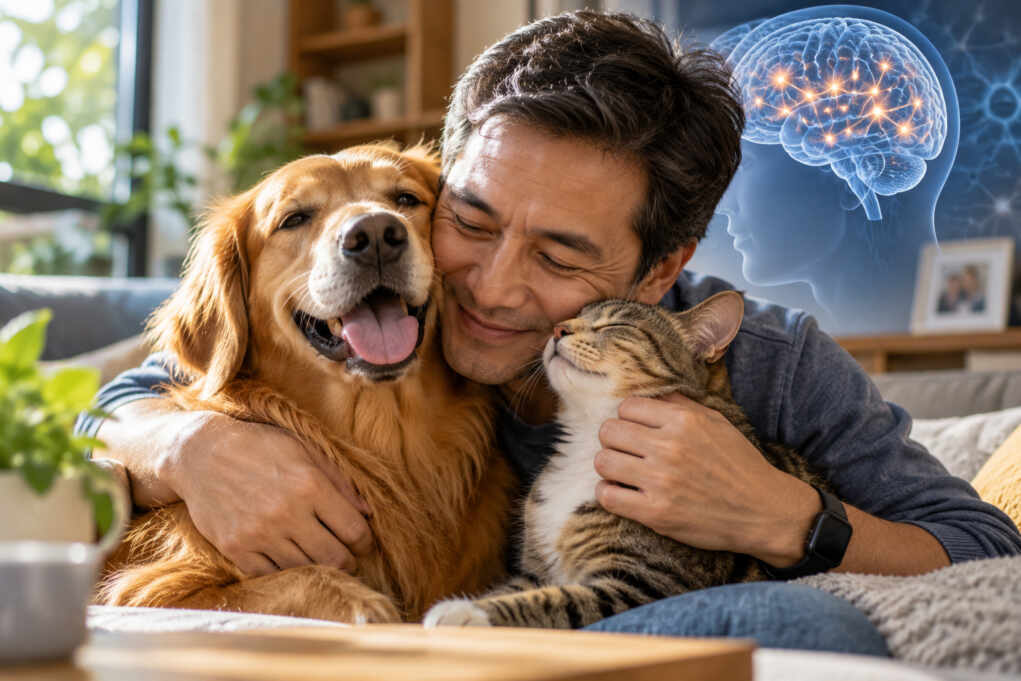
As people get older, keeping the brain healthy becomes increasingly important. Memory lapses, slower thinking, and changes in concentration can occur with normal aging, but researchers are also studying lifestyle factors that may help support cognitive health over time. Exercise, social interaction, meaningful activities, and managing stress are all associated with healthier aging. One surprisingly simple source of these benefits may be sitting beside you on the couch — or waiting impatiently for its morning walk.
Research increasingly suggests that pet ownership may be associated with healthier cognitive aging, although scientists are not yet saying that pets can prevent dementia. Recent research involving thousands of older adults has found associations between owning dogs or cats and slower declines in certain cognitive abilities. Pets may also encourage physical activity, provide companionship, create daily routines, and reduce feelings of loneliness. These factors could help explain why animals may be good for more than our emotional well-being.
What Does Research Say About Pets and Cognitive Decline?
Dog ownership may be linked to slower memory decline
A 2025 study followed 16,582 adults aged 50 and older for 18 years. Researchers found that people who owned dogs experienced a slower decline in memory compared with people who did not own pets.
Cat ownership was associated with a slower decline in verbal fluency — the ability to produce words quickly and easily. Interestingly, the researchers did not find the same cognitive associations among people who owned birds or fish.
These findings do not prove that owning a dog or cat directly prevents cognitive decline. However, they add to a growing body of research suggesting that certain types of pet ownership may be associated with better cognitive outcomes as people age.
Pets may be particularly helpful for people who live alone
Living alone does not automatically mean someone is lonely, but social isolation can be a concern as people get older.
A study of nearly 7,900 adults with an average age of 66 found that people who lived alone and owned pets experienced slower declines in verbal memory, verbal fluency, and verbal cognition than people who lived alone without pets.
The researchers suggested that living with a dog or cat may help reduce loneliness, which is important because social isolation and loneliness have been associated with poorer cognitive outcomes.
How Could Pets Support Brain Health?
Researchers are still working to understand exactly why pets might be associated with better cognitive health. Several explanations are possible.
1. Pets can encourage physical activity
A dog can turn exercise into part of a daily routine.
Walking a dog requires getting outside and moving, sometimes several times a day. Those walks can add up to meaningful amounts of physical activity while also providing opportunities to interact with other people.
Cleveland Clinic notes that dog ownership can encourage older adults to become more physically active and socially engaged. Physical activity itself is an important component of healthy aging.
This may be one reason dogs could have a different relationship with cognitive health than less active pets.
2. Pets provide companionship
A pet can be a consistent source of companionship, particularly for someone who spends a lot of time alone.
Talking to a dog, sitting with a cat, or simply having another living being around can make a home feel less isolated. Cleveland Clinic highlights companionship and reduced loneliness as potential benefits of pet ownership.
The National Institute on Aging also notes that taking care of a pet can be a health-supporting activity and cites research associating pet ownership or regular contact with pets with better cognitive function in some circumstances.
3. Caring for a pet creates routine
Pets depend on their owners.
They need to be fed, walked, groomed, played with, and cared for. That responsibility creates structure throughout the day.
For an older adult, especially someone who has retired or lives alone, having regular responsibilities can provide a sense of purpose and encourage continued engagement with everyday activities.
Mayo Clinic Press identifies companionship, exercise, routine, purpose, and stress management among the ways pets may contribute to overall well-being. It also notes that some research has found an association between long-term pet ownership and better cognitive test scores, although the evidence does not establish cause and effect.
4. Pets may help reduce stress
Chronic stress can affect both physical and mental well-being. Spending time with an animal may provide a calming experience and help people feel more connected.
Mayo Clinic Press notes that interacting with pets can help people manage stress and describes potential biological mechanisms, including the release of oxytocin during physical interaction with an animal.
Lower stress is potentially relevant to brain health because managing cardiovascular and emotional health is an important part of healthy aging.
Are Dogs Better for Brain Health Than Cats?
There is not enough evidence to declare one species the overall winner.
Some recent research has found different associations for dogs and cats. The 2025 study reported by Harvard Health found slower memory decline among dog owners and slower decline in verbal fluency among cat owners.
Dogs may have an advantage when it comes to physical activity because they generally need to be taken outside for walks. Cats, meanwhile, can provide companionship without requiring their owners to leave home multiple times a day.
Ultimately, the best pet for an individual may be the animal that fits their lifestyle, physical abilities, finances, living situation, and preferences.
Can Pets Prevent Dementia?
There is currently no evidence that simply owning a pet prevents dementia.
This distinction is important.
Many studies examining pet ownership and cognitive health are observational. Researchers can identify an association between two things — for example, pet ownership and slower cognitive decline — without proving that one caused the other.
People who own pets may differ from non-pet owners in other important ways. They may be more physically active, socially connected, financially secure, or healthier in ways that also influence brain health.
Mayo Clinic Press specifically notes that studies linking pets with cognitive health cannot establish whether pet ownership itself causes better cognitive outcomes
Therefore, it would be misleading to describe a dog or cat as a treatment for dementia or as a guaranteed strategy for preventing Alzheimer’s disease.
Do Pets Help People With Dementia?
Pets may still have an important role after cognitive problems develop.
The Alzheimer’s Society reports that animals can provide companionship, comfort, purpose, and opportunities for engagement for people living with dementia. Animal-assisted activities may also support confidence, quality of life, and independence.
However, getting a new pet for someone with dementia requires careful consideration.
Dogs and cats can live for many years and require daily care, veterinary attention, exercise, feeding, grooming, and other responsibilities. The person’s ability and willingness to care for the animal — as well as the animal’s welfare — should be considered.
In some situations, regular visits from a friend’s pet, volunteering with animals, fostering, or supervised animal-assisted activities may provide companionship without the full responsibility of ownership.
What If You Can’t Own a Pet?
You do not necessarily need to own an animal to spend time with one.
Possible alternatives include:
- Visiting friends or family members who have pets
- Volunteering at an animal shelter
- Helping a neighbor walk their dog
- Fostering an animal with appropriate support
- Participating in animal-assisted activities
- Spending time with a therapy animal
- Visiting environments where appropriate animal interaction is available
Cleveland Clinic specifically suggests volunteering at an animal shelter or spending time with someone else’s pet for people who cannot own an animal themselves.
These options can potentially provide some of the same social, emotional, and activity-related benefits without the long-term responsibilities of pet ownership.
Other Ways to Keep Your Brain Healthy as You Age
Having a pet can be one part of a healthy lifestyle, but it should not be considered a standalone brain-health strategy.
The National Institute on Aging points to the importance of staying socially and mentally engaged and notes that activities and hobbies are associated with various aspects of healthy aging.
Other brain-health habits include:
Stay physically active
Regular movement supports overall cardiovascular health and can help maintain physical function as you age.
Stay socially connected
Maintaining relationships and participating in meaningful social activities can help combat isolation and support overall well-being.
Keep learning
Reading, learning new skills, playing music, doing puzzles, and engaging in other mentally stimulating activities can keep the brain engaged.
Manage health conditions
Conditions affecting cardiovascular health can also affect brain health. Regular medical care and appropriate management of health conditions are important parts of healthy aging.
Prioritize sleep and a healthy lifestyle
Adequate sleep, nutritious food, physical activity, and avoiding harmful habits all contribute to overall health and can support cognitive function.
The Bottom Line: Can Pets Keep Your Brain Young?
The research offers an encouraging answer, but not a definitive one.
Pets may support healthier brain aging, but they have not been proven to prevent dementia or stop cognitive decline.
The potential benefits may come from everything that having an animal encourages: more movement, more routine, companionship, social interaction, emotional support, and a sense of purpose.
Recent research has found associations between dog or cat ownership and slower decline in certain cognitive abilities, while other research suggests that pets may be especially valuable for older adults who live alone.
So, if you already have a dog or cat, there may be another reason to appreciate your four-legged companion. Your pet may not literally keep your brain young, but the daily activities and connections that come with caring for an animal could be one small — and enjoyable — part of aging well.
And if owning a pet isn’t right for you, you don’t have to miss out entirely. Spending time with animals through friends, family, volunteering, fostering, or structured programs may offer many of the same opportunities for connection and engagement.
Sources:
- Harvard Health Publishing: Dogs and cats may slow cognitive decline — research on pet ownership and cognitive decline in older adults.
- Mayo Clinic Press: Boost your health: The benefits of having a pet — discussion of pets, stress, physical activity, routine, and cognitive health.
- National Institute on Aging: What Do We Know About Healthy Aging? — research on activities, social engagement, pet care, and healthy aging.
- Cleveland Clinic: How Pets Can Help Our Health — expert discussion of pets, physical activity, social engagement, loneliness, and cognitive benefits.
- Alzheimer’s Society: Can caring for a pet help a person with dementia? — information about companionship, purpose, animal-assisted activities, and dementia.
Disclaimer
The watching, interacting, and participation of any kind with anything on this page does not constitute or initiate a doctor-patient relationship with Dr. Farrah™. None of the statements here have been evaluated by the Food and Drug Administration (FDA). The products of Dr. Farrah™ are not intended to diagnose, treat, cure, or prevent any disease. The information being provided should only be considered for education and entertainment purposes only. If you feel that anything you see or hear may be of value to you on this page or on any other medium of any kind associated with, showing, or quoting anything relating to Dr. Farrah™ in any way at any time, you are encouraged to and agree to consult with a licensed healthcare professional in your area to discuss it. If you feel that you’re having a healthcare emergency, seek medical attention immediately. The views expressed here are simply either the views and opinions of Dr. Farrah™ or others appearing and are protected under the First Amendment.
Dr. Farrah™ is a highly experienced Licensed Medical Doctor certified in evidence-based clinical nutrition, not some enthusiast, formulator, or medium promoting the wild and unrestrained use of nutrition products for health issues without clinical experience and scientific evidence of therapeutic benefit. Dr. Farrah™ has personally and keenly studied everything she recommends, and more importantly, she’s closely observed the reactions and results in a clinical setting countless times over the course of her career involving the treatment of over 150,000 patients.
Dr. Farrah™ promotes evidence-based natural approaches to health, which means integrating her individual scientific and clinical expertise with the best available external clinical evidence from systematic research. By individual clinical expertise, I refer to the proficiency and judgment that individual clinicians acquire through clinical experience and clinical practice.
Dr. Farrah™ does not make any representations or warranties with respect to the accuracy, applicability, fitness, or completeness of any multimedia content provided. Dr. Farrah™ does not warrant the performance, effectiveness, or applicability of any sites listed, linked, or referenced to, in, or by any multimedia content.
To be clear, the multimedia content is not intended to be a substitute for professional medical advice, diagnosis, or treatment. Always seek the advice of your physician or other qualified health providers with any questions you may have regarding a medical condition. Never disregard professional medical advice or delay in seeking it because of something you have read or seen in any website, video, image, or media of any kind. Dr. Farrah™ hereby disclaims any and all liability to any party for any direct, indirect, implied, punitive, special, incidental, or other consequential damages arising directly or indirectly from any use of the content, which is provided as is, and without warranties.