
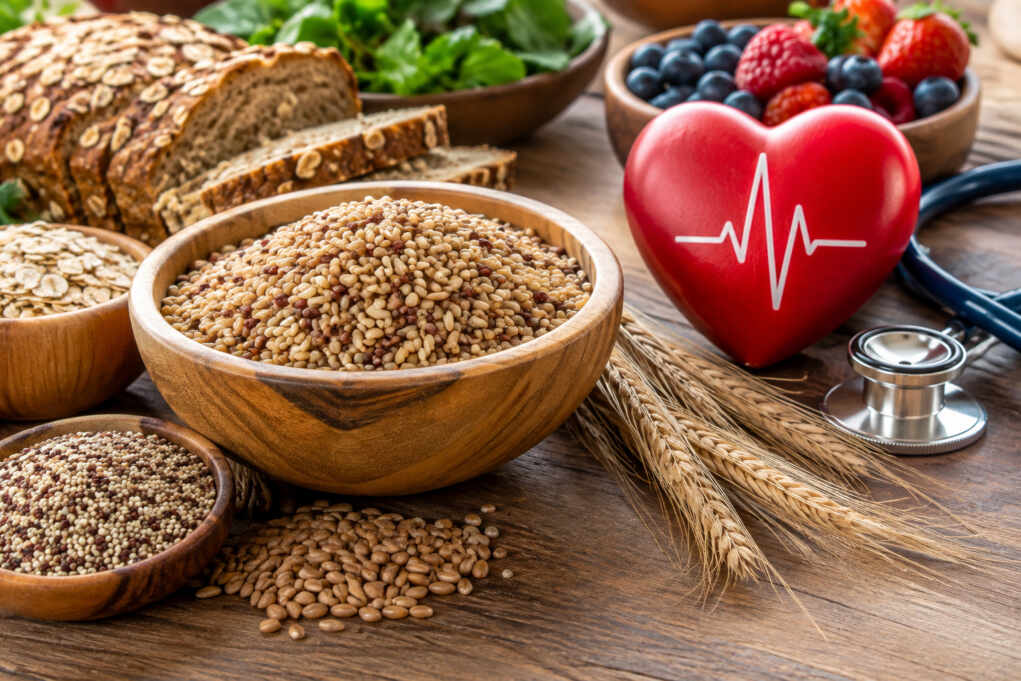
Heart disease remains one of the most important health concerns worldwide, but everyday food choices can play a meaningful role in supporting cardiovascular health. One simple change that may help is choosing more whole grains in place of refined grains. Foods such as oatmeal, brown rice, whole-wheat bread, barley, and quinoa contain fiber and other nutrients that are often reduced or removed when grains are heavily refined. Major health organizations now include whole grains as part of heart-healthy eating patterns.
The potential benefit goes beyond simply adding fiber to your diet. Research summarized by Harvard Health has linked higher whole-grain consumption with lower cardiovascular risk, while health organizations such as the British Heart Foundation and Cleveland Clinic point to whole grains’ fiber, minerals and other plant compounds as reasons they may support heart health. Although eating whole grains does not guarantee protection from heart disease, replacing some refined-grain foods with whole-grain alternatives can be a practical part of an overall healthy eating pattern.
Why Whole Grains Matter
A whole grain contains all three main parts of the grain kernel: the bran, germ and endosperm. The bran provides much of the grain’s fiber, while the germ contains vitamins, minerals, healthy fats and other plant compounds. Refining removes the bran and germ, leaving primarily the starchy endosperm and reducing the amount of fiber and several nutrients.
That difference can matter for cardiovascular health. Whole grains are a source of dietary fiber, and certain types of fiber can help maintain healthier cholesterol levels. Oats and barley, for example, contain soluble fiber that can help lower cholesterol. Whole grains also provide minerals such as magnesium and potassium, which are involved in maintaining healthy blood pressure.
What the Research Says
Evidence linking whole grains with cardiovascular health has accumulated over many years. Harvard Health reported on a study involving more than 3,100 adults from the Framingham Heart Study Offspring Cohort. Participants who consumed at least three servings of whole grains a day experienced smaller increases in blood sugar, blood pressure and waist circumference over time than those who consumed less than half a serving daily. These factors are associated with cardiovascular disease risk.
Other research has found associations between higher whole-grain intake and lower cardiovascular mortality. A large analysis involving more than 786,000 participants found that people consuming about 70 grams of whole grains per day had a 23% lower risk of dying from cardiovascular disease compared with people who consumed little or no whole grains. Importantly, these types of observational findings show an association rather than proving that whole grains alone caused the reduction in risk.
Whole Grains May Help in Several Ways
One reason whole grains may be beneficial is their effect on cholesterol. Fiber can help support healthy cholesterol levels, and replacing refined grains with whole grains has been associated with a lower risk of coronary heart disease.
Whole grains may also help with blood pressure and blood-sugar regulation. Their fiber content can slow digestion and help people feel full for longer, while nutrients such as potassium and magnesium contribute to healthy blood-pressure regulation. These effects can fit into a broader strategy for reducing cardiovascular risk.
The American Heart Association’s 2026 dietary guidance specifically recommends choosing foods made mostly with whole grains rather than refined grains as part of a heart-healthy dietary pattern. The guidance also emphasizes vegetables and fruits, healthy sources of protein and unsaturated fats, minimally processed foods, and limiting excess sodium and added sugars.
Easy Ways to Eat More Whole Grains
Increasing whole-grain intake does not have to mean completely changing your diet. Small substitutions can make a difference.
- Start the day with oatmeal or another whole-grain cereal instead of a refined-grain breakfast.
- Choose whole-wheat or whole-grain bread for sandwiches.
- Replace some or all white rice with brown rice, wild rice or another whole grain.
- Try barley, bulgur, quinoa or whole-wheat pasta in soups, salads and main dishes.
- Choose popcorn without excessive butter and salt as a whole-grain snack.
- When buying packaged bread or cereal, check the ingredient list and look for a whole grain listed prominently rather than relying only on words such as “multigrain.”
Make the Swap, Not Just the Addition
Adding whole grains to an otherwise unchanged diet is useful, but one of the simplest approaches is to use them in place of refined grains. For example, switching from white bread to whole-grain bread or from white rice to brown rice can increase fiber and nutrient intake without requiring a completely different meal.
It is also important to look at the overall quality of the diet. Whole grains work best as one component of a balanced eating pattern that includes plenty of vegetables and fruits, healthy proteins and unsaturated fats. Heart health is influenced by many factors, including physical activity, smoking, blood pressure, cholesterol, body weight and genetics.
The Bottom Line
Whole grains are more than just a source of carbohydrates. Their fiber, vitamins, minerals and other naturally occurring compounds make them a valuable part of a heart-conscious diet. Research has consistently associated greater whole-grain consumption with favorable cardiovascular outcomes, and leading health organizations recommend choosing whole grains more often than refined grains.
You do not have to overhaul your diet overnight. Replacing a few refined-grain foods with oatmeal, brown rice, whole-wheat bread, barley, quinoa or other whole grains is a practical place to start. Over time, those small choices can become part of a broader eating pattern designed to support long-term heart health.
Sources:
- American Heart Association — 2026 Dietary Guidance to Improve Cardiovascular Health
- Mayo Clinic — Whole grains: Hearty options for a healthy diet
- Harvard Health — Eating more whole grains linked to lower heart-related risks
- Cleveland Clinic — The Whole Truth About Whole Grains
- British Heart Foundation — Wholegrains: why there’s more to them than wholemeal bread
Website operated and published by:
FAB LTD
Ground Floor, 14 Stewart Dr.
Berea, East London 5241
South Africa
Disclaimer
The watching, interacting, and participation of any kind with anything on this page does not constitute or initiate a doctor-patient relationship with Dr. Farrah™. None of the statements here have been evaluated by the Food and Drug Administration (FDA). The products of Dr. Farrah™ are not intended to diagnose, treat, cure, or prevent any disease. The information being provided should only be considered for education and entertainment purposes only. If you feel that anything you see or hear may be of value to you on this page or on any other medium of any kind associated with, showing, or quoting anything relating to Dr. Farrah™ in any way at any time, you are encouraged to and agree to consult with a licensed healthcare professional in your area to discuss it. If you feel that you’re having a healthcare emergency, seek medical attention immediately. The views expressed here are simply either the views and opinions of Dr. Farrah™ or others appearing and are protected under the First Amendment.
Dr. Farrah™ is a highly experienced Licensed Medical Doctor certified in evidence-based clinical nutrition, not some enthusiast, formulator, or medium promoting the wild and unrestrained use of nutrition products for health issues without clinical experience and scientific evidence of therapeutic benefit. Dr. Farrah™ has personally and keenly studied everything she recommends, and more importantly, she’s closely observed the reactions and results in a clinical setting countless times over the course of her career involving the treatment of over 150,000 patients.
Dr. Farrah™ promotes evidence-based natural approaches to health, which means integrating her individual scientific and clinical expertise with the best available external clinical evidence from systematic research. By individual clinical expertise, I refer to the proficiency and judgment that individual clinicians acquire through clinical experience and clinical practice.
Dr. Farrah™ does not make any representations or warranties with respect to the accuracy, applicability, fitness, or completeness of any multimedia content provided. Dr. Farrah™ does not warrant the performance, effectiveness, or applicability of any sites listed, linked, or referenced to, in, or by any multimedia content.
To be clear, the multimedia content is not intended to be a substitute for professional medical advice, diagnosis, or treatment. Always seek the advice of your physician or other qualified health providers with any questions you may have regarding a medical condition. Never disregard professional medical advice or delay in seeking it because of something you have read or seen in any website, video, image, or media of any kind. Dr. Farrah™ hereby disclaims any and all liability to any party for any direct, indirect, implied, punitive, special, incidental, or other consequential damages arising directly or indirectly from any use of the content, which is provided as is, and without warranties.