
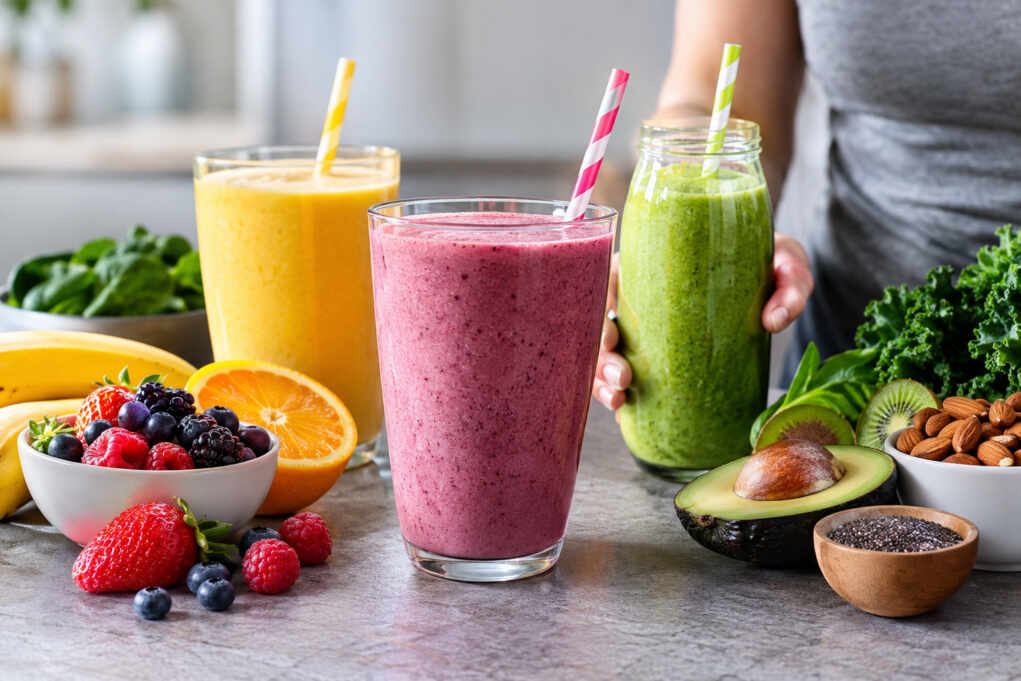
Smoothies are a popular choice for breakfast, post-workout recovery, and quick, nutritious snacks. Made with fruits, vegetables, yogurt, milk, or other wholesome ingredients, they can be an easy way to add more vitamins, minerals, fiber, and protein to your daily diet. But are smoothies healthy, or can they contain more sugar and calories than you might expect? The answer depends on what goes into your blender, how much you drink, and how smoothies fit into your overall eating habits.
According to established nutrition guidance, smoothies can be part of a healthy, balanced diet when they contain a variety of nutrient-rich ingredients and appropriate portions. However, not all smoothies are created equal. A drink made with whole fruit, leafy greens, plain yogurt, and healthy fats offers a different nutritional profile from one loaded with fruit juice, sweetened yogurt, syrups, or oversized servings. To understand the benefits and potential drawbacks, let’s explore what nutrition experts recommend, how smoothies affect your health, and how to make a smoothie that is genuinely good for you.
Are Smoothies Healthy? The Benefits and Potential Risks
The short answer is yes — smoothies can be healthy, but their nutritional value depends on their ingredients, preparation, and serving size. Nutrition experts at Harvard’s T.H. Chan School of Public Health explain that blending whole fruits and vegetables can preserve much of their fiber and nutrients, provided the edible parts are included. However, drinking blended produce may not keep you feeling as full as eating whole fruit, making portion control important.
A well-balanced smoothie can provide essential nutrients in a convenient form. On the other hand, a smoothie made with large amounts of fruit juice, sweetened yogurt, honey, or syrup may contain more sugar and calories than you intended. The goal is not to avoid smoothies altogether, but to make them with ingredients that support your nutritional needs.
1. What Are the Health Benefits of Smoothies?
When made with wholesome ingredients, smoothies offer several potential health benefits.
They provide essential vitamins and minerals
Fruits and vegetables supply important nutrients, including vitamin C, potassium, folate, and other vitamins and minerals that support normal body functions. Berries, bananas, mangoes, spinach, and kale are popular choices because they contribute different nutrients to a blended drink.
Using a variety of colorful produce can help you get a broader range of nutrients. Fresh and frozen fruits and vegetables are both useful options, so you don’t need expensive or exotic ingredients to make a nutritious smoothie.
They can help increase your fiber intake
Fiber supports digestive health, helps maintain regular bowel movements, and can contribute to feeling full after eating. When you blend whole fruits and vegetables rather than strain them into juice, much of their fiber remains in the drink.
Ingredients such as raspberries, pears, oats, chia seeds, and ground flaxseed can increase a smoothie’s fiber content. However, smoothies should complement other fiber-rich foods, including whole grains, beans, vegetables, and whole fruit.
They can support a balanced breakfast
A smoothie can be a convenient breakfast when you combine carbohydrates, protein, and healthy fats.
For example, blending a banana with plain Greek yogurt, oats, and peanut butter provides a more balanced mix of nutrients than blending fruit with juice alone. Protein and fat can help make the drink more satisfying, while carbohydrates supply energy.
According to guidance from Mayo Clinic, a nutritious smoothie should include a balance of ingredients rather than relying almost entirely on fruit or fruit juice.
They make eating more vegetables easier
If you struggle to eat enough vegetables, smoothies offer a simple way to incorporate leafy greens into your routine. Spinach often blends well with berries, bananas, and yogurt without overpowering their flavor.
You can also experiment with cucumber, cooked and cooled carrots, or small amounts of avocado. Still, smoothies should not be your only source of vegetables. Eating vegetables in whole form provides variety in texture and encourages a broader range of eating habits.
2. Can Smoothies Be High in Sugar?
Yes. One of the biggest misconceptions about smoothies is that every fruit-based drink is automatically low in sugar simply because its ingredients are natural.
Whole fruits contain naturally occurring sugars along with fiber, water, and other nutrients. Blending fruit retains much of the fiber when the pulp is included, but it also breaks down the fruit’s physical structure. Public health guidance, including that of the UK’s National Health Service (NHS), treats sugars in fruit smoothies and purées as free sugars for dietary guidance.
This distinction matters because frequent consumption of sugary drinks can contribute to excessive sugar intake and increase the risk of tooth decay. Smoothies made with several servings of fruit, juice, flavored yogurt, honey, or sweetened milk can contain substantial amounts of sugar.
To make a lower-sugar smoothie:
- Use whole fruit instead of fruit juice as the main fruit ingredient.
- Choose plain, unsweetened yogurt and milk or unsweetened plant-based alternatives.
- Add spinach, kale, cucumber, or other vegetables to balance the fruit.
- Skip added honey, agave syrup, and sugar unless specifically needed.
- Check the nutrition label on bottled smoothies for total sugar, added sugar, and serving size.
Expert takeaway: Natural ingredients do not automatically make a smoothie low in sugar. Pay attention to the quantity and combination of ingredients, not just the health claims on the packaging.
3. Are Smoothies Better Than Eating Whole Fruit?
Not necessarily. Both smoothies and whole fruit can provide valuable nutrients, but they have some important differences.
When you blend whole fruit, most of the fiber can remain in the finished drink. This distinguishes a smoothie from juice that has had its pulp removed. Nevertheless, eating whole fruit generally takes longer and may make it easier to recognize when you are full.
For example, eating an orange requires peeling and chewing it, whereas drinking a smoothie containing several oranges may take only a few minutes. This makes it easier to consume more fruit and calories than you might otherwise eat.
The British Heart Foundation also highlights concerns about the sugar content and portion sizes of smoothies, particularly when they replace whole fruit too frequently.
The best approach is to enjoy both. Eat whole fruit regularly and use smoothies as a convenient addition to a balanced diet rather than a complete replacement for fresh produce.
One important distinction: NHS guidance recommends limiting the combined daily amount of fruit juice, vegetable juice, and smoothies to 150 milliliters for its 5 A Day dietary guidance. This is a UK-specific recommendation about juice and smoothie consumption, not a universal serving limit used by every health authority.
4. Can Drinking Smoothies Every Day Be Healthy?
For many people, a smoothie can be part of a healthy daily routine. However, drinking one every day does not guarantee better health. What matters most is the overall quality of your diet, the ingredients you use, and how much you consume.
A daily smoothie may be helpful if it makes it easier to eat fruit, vegetables, and other nutrient-rich foods. It can also be a practical option for people with busy schedules who want a quick breakfast or snack.
However, regularly drinking large smoothies loaded with high-calorie ingredients can make it easier to consume more energy than you need. Some commercial smoothies also contain sweetened bases, fruit concentrates, syrups, or large quantities of juice.
If you enjoy smoothies daily, consider these habits:
- Keep portions appropriate for your appetite and nutritional needs.
- Rotate your ingredients instead of relying on the same fruit combination every day.
- Include protein and fiber-rich ingredients when using a smoothie as a meal.
- Choose whole fruit more often than juice.
- Continue eating regular meals with a variety of whole foods.
People with specific dietary needs, such as those managing blood glucose levels or following a medically prescribed diet, may benefit from individualized advice from a registered dietitian or healthcare professional.
5. Are Smoothies Good for Weight Loss?
Smoothies may support weight management when they help you eat balanced meals and manage hunger. However, they are not a weight-loss shortcut, and drinking smoothies alone does not guarantee results.
The key is understanding how ingredients affect the total calorie content. Fruit, yogurt, oats, nuts, seeds, and nut butters can all contribute valuable nutrients, but portions matter. A smoothie containing several bananas, large amounts of nut butter, sweetened yogurt, and juice may be considerably more calorie-dense than expected.
For a smoothie that fits into a weight-management plan, focus on the following:
- Protein: Add plain Greek yogurt, unsweetened soy milk, or another suitable protein source.
- Fiber: Include whole berries, vegetables, oats, or seeds.
- Healthy fats: Use modest amounts of chia seeds, flaxseed, or nut butter.
- Portion awareness: Blend an amount that matches your meal or snack needs rather than automatically filling a large cup.
- Balanced eating: Pair smoothies with an overall nutritious diet rather than replacing every meal with a drink.
Research-based nutrition guidance from Cleveland Clinic and Harvard’s T.H. Chan School of Public Health emphasizes the importance of ingredient choices and portion sizes. Eating whole fruit and other solid foods regularly can also help support fullness.
6. What Should You Put in a Healthy Smoothie?
The healthiest smoothies combine ingredients that provide complementary nutrients without excessive added sugar.
Whole fruits
Berries, bananas, apples, mangoes, and pears provide carbohydrates, vitamins, and varying amounts of fiber. Fresh or frozen unsweetened fruit works well.
Vegetables
Spinach, kale, cucumber, and carrots add nutrients and variety. Leafy greens are especially useful if you want to increase your vegetable intake without making the smoothie overly sweet.
Protein-rich ingredients
Plain Greek yogurt, milk, unsweetened soy milk, or suitable protein powder can increase protein content. Protein helps maintain muscle and can make a smoothie more satisfying.
Fiber-rich additions
Oats, chia seeds, and ground flaxseed contribute fiber and can improve a smoothie’s nutritional balance. Start with modest portions and drink enough fluids throughout the day.
A suitable liquid base
Water, low-fat milk, or unsweetened plant-based milk can provide the desired consistency. Choose a base according to your taste, nutritional needs, and any dietary restrictions.
7. What Ingredients Should You Avoid or Limit?
You don’t have to eliminate every sweet ingredient to make a healthy smoothie. Instead, be mindful of ingredients that add substantial sugar or calories without improving the drink’s nutritional balance.
Ingredient |
What to watch for |
A smarter choice |
| Fruit juice | Can add concentrated sugar with less fiber than whole fruit | Water or unsweetened milk |
| Flavored yogurt | May contain considerable added sugar | Plain yogurt with whole fruit |
| Honey and syrups | Add free sugars and calories | Use ripe fruit for sweetness |
| Ice cream or sherbet | Can increase sugar, calories, and saturated fat | Plain yogurt or frozen fruit |
| Large portions of nut butter | Can substantially increase calories | Measure a modest serving |
| Oversized smoothie servings | Make it easy to consume more than intended | Prepare an appropriate portion |
Commercial smoothies deserve particular attention. Some are made primarily with whole fruits and vegetables, while others include sweetened bases, concentrates, or ingredients that make them closer to desserts. Review the nutrition information when available instead of relying solely on labels such as “natural,” “green,” or “detox.”
8. How to Make a Healthy Smoothie at Home
One of the simplest ways to improve a smoothie is to prepare it yourself. You can control the ingredients, adjust the portion size, and avoid unnecessary added sweeteners.
Try this easy berry-and-banana smoothie.
Berry, Banana, and Yogurt Smoothie
Prep time: 5 minutes · Makes 1 serving
Ingredients
- ½ cup frozen mixed berries
- ½ banana
- ½ cup plain Greek yogurt
- ½ cup unsweetened milk or unsweetened soy milk
- A small handful of spinach (optional)
- Ice or water as needed
Instructions
- Add all the ingredients to a blender.
- Blend until smooth, adding a little water if the mixture is too thick.
- Taste before adding anything sweet. The banana and berries may provide enough sweetness.
- Serve immediately and adjust the portion to suit your needs.
This combination provides fruit, protein, and an opportunity to add vegetables without relying on juice or added sugar. Exact calories, protein, and sugar will vary depending on the ingredients and brands used.
9. Common Smoothie Myths, Explained
Myth 1: All smoothies are healthy.
Not necessarily. Smoothies vary considerably in their ingredients, sugar content, calorie density, and portion sizes. A balanced homemade smoothie can be nutritious, while a dessert-style smoothie may be high in added sugar.
Myth 2: Blending destroys all the nutrients in fruit.
No. Blending does not destroy all the nutrients in fruit. Much of the fiber remains when the whole edible fruit is blended rather than strained. However, blending changes the fruit’s physical structure, which can affect how quickly it is consumed and how filling it feels.
Myth 3: Green smoothies are always better than fruit smoothies.
Not automatically. Green smoothies can provide useful nutrients, but their health benefits depend on their ingredients. A green smoothie with sweetened juice and syrup may be less balanced than a berry smoothie made with whole fruit, plain yogurt, and unsweetened milk.
Myth 4: Smoothies can replace all whole fruits and vegetables.
Smoothies can help increase produce intake, but eating whole fruits and vegetables remains important. Whole foods offer variety in texture, can be more satisfying, and encourage a broader range of eating habits.
Myth 5: Drinking a smoothie every morning guarantees weight loss.
Weight management depends on overall dietary patterns, energy intake, activity, sleep, and other individual factors. A smoothie can fit into a weight-management plan, but it does not independently guarantee weight loss.
10. So, Are Smoothies Healthy? The Final Verdict
Yes, smoothies can be healthy when prepared with nutrient-rich ingredients and consumed in appropriate portions. They offer a convenient way to combine fruits, vegetables, protein, and fiber, making them useful for breakfast or a snack.
However, the healthiest smoothie is not necessarily the one with the most ingredients, the brightest color, or the biggest serving size. It is the one that fits your nutritional needs without excessive added sugar or unnecessary calories.
For the best results, use whole fruits and vegetables, choose unsweetened liquids and plain yogurt, include protein and fiber, and be mindful of portions. Continue eating whole fruit and vegetables throughout the day rather than relying exclusively on blended drinks.
Ultimately, smoothies are a tool for healthier eating, not a substitute for a balanced diet. With thoughtful ingredient choices, they can be a convenient and enjoyable part of your everyday routine.
Sources:
The following reputable health organizations and medical institutions provide additional guidance on smoothie nutrition, fruit consumption, sugar, and balanced eating.
- Harvard T.H. Chan School of Public Health — Common Questions About Fruits and Vegetables
- Mayo Clinic — Is a Smoothie a Good Meal Replacement Option?
- National Health Service (NHS) — 5 A Day Portion Sizes
- British Heart Foundation — Smoothies: Are They Good or Bad for Your Health?
- Johns Hopkins Medicine — How to Make a Healthy Smoothie
- Cleveland Clinic — How to Make Healthy and Delicious Smoothies
- Northwestern Medicine — 6 Facts You Should Know About Smoothies
Website operated and published by:
FAB LTD
Ground Floor, 14 Stewart Dr.
Berea, East London 5241
South Africa
Disclaimer
The watching, interacting, and participation of any kind with anything on this page does not constitute or initiate a doctor-patient relationship with Dr. Farrah™. None of the statements here have been evaluated by the Food and Drug Administration (FDA). The products of Dr. Farrah™ are not intended to diagnose, treat, cure, or prevent any disease. The information being provided should only be considered for education and entertainment purposes only. If you feel that anything you see or hear may be of value to you on this page or on any other medium of any kind associated with, showing, or quoting anything relating to Dr. Farrah™ in any way at any time, you are encouraged to and agree to consult with a licensed healthcare professional in your area to discuss it. If you feel that you’re having a healthcare emergency, seek medical attention immediately. The views expressed here are simply either the views and opinions of Dr. Farrah™ or others appearing and are protected under the First Amendment.
Dr. Farrah™ is a highly experienced Licensed Medical Doctor certified in evidence-based clinical nutrition, not some enthusiast, formulator, or medium promoting the wild and unrestrained use of nutrition products for health issues without clinical experience and scientific evidence of therapeutic benefit. Dr. Farrah™ has personally and keenly studied everything she recommends, and more importantly, she’s closely observed the reactions and results in a clinical setting countless times over the course of her career involving the treatment of over 150,000 patients.
Dr. Farrah™ promotes evidence-based natural approaches to health, which means integrating her individual scientific and clinical expertise with the best available external clinical evidence from systematic research. By individual clinical expertise, I refer to the proficiency and judgment that individual clinicians acquire through clinical experience and clinical practice.
Dr. Farrah™ does not make any representations or warranties with respect to the accuracy, applicability, fitness, or completeness of any multimedia content provided. Dr. Farrah™ does not warrant the performance, effectiveness, or applicability of any sites listed, linked, or referenced to, in, or by any multimedia content.
To be clear, the multimedia content is not intended to be a substitute for professional medical advice, diagnosis, or treatment. Always seek the advice of your physician or other qualified health providers with any questions you may have regarding a medical condition. Never disregard professional medical advice or delay in seeking it because of something you have read or seen in any website, video, image, or media of any kind. Dr. Farrah™ hereby disclaims any and all liability to any party for any direct, indirect, implied, punitive, special, incidental, or other consequential damages arising directly or indirectly from any use of the content, which is provided as is, and without warranties.