
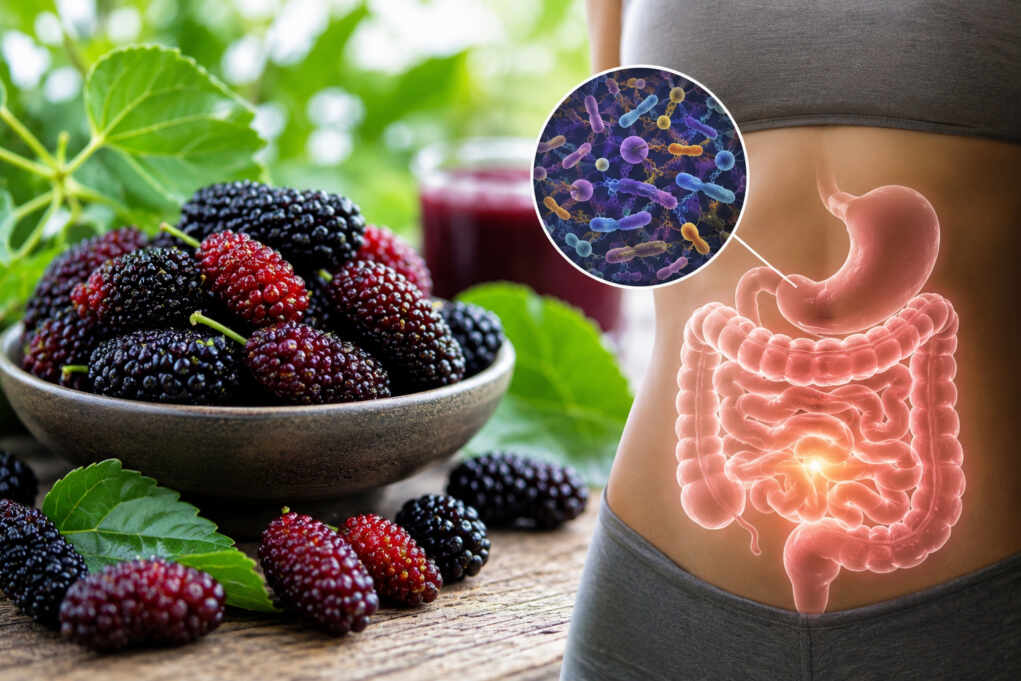
Mulberries may look like just another sweet, juicy berry, but these colorful fruits are attracting attention for something beyond their flavor: their potential role in digestive and gut health. Available in shades of white, red and deep purple-black, mulberries provide dietary fiber, vitamin C, iron and a variety of plant compounds, including anthocyanins and other polyphenols. Fresh mulberries contain roughly 1.7 grams of fiber per 100 grams, while a typical cup provides about 2 grams.
So, could adding mulberries to your diet actually change your gut? Possibly—but probably not in the dramatic way some headlines suggest. Your gut microbiome is influenced by your overall diet, lifestyle, medications and many other factors. What makes mulberries interesting is that their fiber can contribute to the food supply available to beneficial gut microbes, while their polyphenols may also interact with the microorganisms living in the digestive tract. Early laboratory and animal research is promising, but researchers still need more high-quality human studies before mulberries can be considered a proven microbiome-changing food.
Why Does Gut Health Matter?
Your gut is home to trillions of microorganisms, including bacteria, fungi and other microbes. Together, they form the gut microbiome, which plays important roles in digestion, immune regulation and maintaining the intestinal environment. A diverse and balanced microbiome is generally associated with better digestive and overall health.
Diet is one of the major factors that can influence this microbial community. In particular, dietary fiber acts as a source of nourishment for certain beneficial bacteria. As these microbes ferment fiber, they can produce compounds known as short-chain fatty acids, including butyrate, which helps support the cells lining the colon.
That makes fiber-rich fruits such as berries an appealing part of a gut-friendly eating pattern.
Mulberries Bring Fiber to the Table
One of the simplest reasons mulberries may benefit digestion is their fiber content. Fresh mulberries provide both soluble and insoluble fiber. Healthline reports that approximately 25% of their fiber is soluble and 75% is insoluble.
These two forms of fiber behave differently. Insoluble fiber helps add bulk to stool and supports regular bowel movements, while soluble fiber can form a gel-like substance during digestion and can serve as fuel for beneficial gut bacteria.
This doesn’t mean that eating a handful of mulberries will instantly transform your digestive system. Rather, regularly including them as part of a varied, fiber-rich diet can help you increase your overall fiber intake—which is much more important for gut health than relying on one particular food.
What About Mulberries and the Gut Microbiome?
This is where things get particularly interesting.
Mulberries contain not only fiber but also polyphenols and anthocyanins, the plant compounds responsible for much of the intense color found in darker varieties. Researchers are investigating how these compounds interact with gut microbes and whether they can influence microbial diversity and the production of beneficial metabolites.
A recent review examining mulberry and gut functionality found that experimental studies have reported changes in gut microbial populations after exposure to mulberry-derived preparations. Some studies observed increases in bacteria such as Bifidobacterium, Lactobacillus and Akkermansia, as well as increases in short-chain fatty acids. However, the review emphasized an important limitation: much of the evidence comes from laboratory and animal research rather than well-controlled human trials.
That distinction matters. Results seen in mice or laboratory experiments don’t automatically mean that eating fresh mulberries will produce the same effects in people.
Could Mulberries Help With Digestion?
They may.
Fiber helps keep material moving through the digestive tract and can make stools softer and bulkier. Adequate fiber intake is associated with better bowel regularity and can help reduce constipation.
Mulberries can therefore be one small piece of a digestion-friendly diet. They can be eaten fresh, added to oatmeal or yogurt, blended into smoothies, or mixed into salads and other dishes. WebMD notes that mulberries can also be used similarly to other berries in baked goods, parfaits and other recipes.
However, if your current diet is low in fiber, suddenly eating large amounts of any high-fiber food may cause gas, bloating or abdominal discomfort. Increasing fiber gradually and drinking enough fluid can make the transition easier.
The Antioxidant Bonus
Gut health isn’t only about fiber. Mulberries also contain antioxidant plant compounds, including anthocyanins, flavonoids and phenolic compounds.
These substances help protect cells from oxidative stress. Healthline notes that darker, more mature mulberries tend to contain higher levels of certain plant compounds, while WebMD highlights the berries’ flavonoids, vitamin C and other nutrients.
Some researchers are particularly interested in how polyphenols and gut bacteria interact. Certain polyphenols can reach the colon, where microbes may transform them into other compounds. At the same time, gut bacteria can influence how the body processes these plant compounds.
This creates an intriguing two-way relationship—but it is still an area of active research rather than a reason to view mulberries as a treatment for digestive disease.
Fresh Mulberries vs. Dried Mulberries
How you eat mulberries matters.
Fresh mulberries contain a considerable amount of water and relatively few calories. Dried mulberries are much more concentrated, meaning you can consume considerably more carbohydrate and natural sugar in a smaller portion. Healthline reports that fresh mulberries contain about 1.7 grams of fiber per 100 grams, while dried mulberries contain substantially more fiber by weight because much of their water has been removed.
Dried fruit can still be nutritious, but portion size is worth considering. Choosing fresh or frozen unsweetened mulberries is an easy way to enjoy the fruit without adding extra sugar.
Could Mulberries Affect Blood Sugar?
There is some interesting research here, although it should not be confused with proof that mulberries treat diabetes.
Mulberry leaves contain a compound called 1-deoxynojirimycin, or DNJ, which has been investigated for its potential to slow carbohydrate digestion. Research involving mulberry leaf extracts has reported effects on post-meal blood sugar, but this is different from eating the fruit itself. Healthline emphasizes that more research is needed before firm conclusions can be made about these effects.
There is also emerging research into the relationship between mulberry fruit, gut microbes and glucose metabolism. A 2025 study in mice found that a specially processed mulberry preparation altered gut microbial populations and increased short-chain fatty acid production. While scientifically interesting, the study involved an experimental preparation and animals—not people eating ordinary fresh mulberries.
So, Can Mulberries “Change” Your Gut?
The honest answer is: they may influence it, but we don’t yet know how much.
Mulberries have several characteristics that make them potentially valuable for gut health: dietary fiber, polyphenols and other plant compounds. Their fiber can support regular digestion and provide fuel for certain gut microbes, while early research suggests that mulberry-derived compounds may influence microbial composition and microbial metabolites.
But there is no strong evidence yet that mulberries alone can dramatically reshape the human microbiome or treat conditions such as irritable bowel syndrome, inflammatory bowel disease or other digestive disorders.
The bigger lesson may be less about one “superfood” and more about dietary variety. Harvard Health recommends increasing fiber from a broad range of plant foods because fiber supports beneficial gut bacteria and is associated with greater microbial diversity.
How to Add More Mulberries to Your Diet
If you enjoy their sweet-tart flavor, mulberries are easy to incorporate into everyday meals:
- Add fresh mulberries to oatmeal or overnight oats.
- Mix them into plain yogurt with nuts and seeds.
- Blend them into a smoothie.
- Add them to a fruit or leafy-green salad.
- Use them in homemade chia pudding.
- Freeze fresh mulberries for a cold snack.
- Choose unsweetened dried mulberries as a small addition to trail mix.
For gut health, however, don’t stop at mulberries. Combine them with other fiber-rich foods such as beans, lentils, whole grains, vegetables, nuts, seeds and a variety of other fruits. A diverse plant-based diet gives your gut microbiome a broader range of nutrients to work with.
The Bottom Line
Mulberries are more than a delicious seasonal fruit. Their fiber can support regular digestion, while their colorful polyphenols and anthocyanins make them an interesting subject of gut-microbiome research.
Could they change your gut? Potentially, as part of a broader healthy diet—but the science isn’t strong enough yet to call mulberries a microbiome miracle. The most sensible approach is to enjoy them as one of many fiber-rich plant foods rather than expecting a single berry to transform your digestive health.
If you’re looking to support your gut, consistency and variety are likely to matter more than chasing a single superfood. A diet rich in different fruits, vegetables, whole grains, legumes, nuts and seeds gives your gut microbes a much wider menu—and mulberries can be a delicious addition to that menu.
Sources:
- Healthline — Mulberries 101: Nutrition Facts and Health Benefits
- WebMD — Mulberries: Health Benefits, Nutrients, Preparation Information
- Harvard Health — 5 Simple Ways to Improve Gut Health
- Cleveland Clinic — Difference Between Soluble & Insoluble Fiber
- Acıbadem Health Group — Mulberry: A Complete Medical Overview
Disclaimer
The watching, interacting, and participation of any kind with anything on this page does not constitute or initiate a doctor-patient relationship with Dr. Farrah™. None of the statements here have been evaluated by the Food and Drug Administration (FDA). The products of Dr. Farrah™ are not intended to diagnose, treat, cure, or prevent any disease. The information being provided should only be considered for education and entertainment purposes only. If you feel that anything you see or hear may be of value to you on this page or on any other medium of any kind associated with, showing, or quoting anything relating to Dr. Farrah™ in any way at any time, you are encouraged to and agree to consult with a licensed healthcare professional in your area to discuss it. If you feel that you’re having a healthcare emergency, seek medical attention immediately. The views expressed here are simply either the views and opinions of Dr. Farrah™ or others appearing and are protected under the First Amendment.
Dr. Farrah™ is a highly experienced Licensed Medical Doctor certified in evidence-based clinical nutrition, not some enthusiast, formulator, or medium promoting the wild and unrestrained use of nutrition products for health issues without clinical experience and scientific evidence of therapeutic benefit. Dr. Farrah™ has personally and keenly studied everything she recommends, and more importantly, she’s closely observed the reactions and results in a clinical setting countless times over the course of her career involving the treatment of over 150,000 patients.
Dr. Farrah™ promotes evidence-based natural approaches to health, which means integrating her individual scientific and clinical expertise with the best available external clinical evidence from systematic research. By individual clinical expertise, I refer to the proficiency and judgment that individual clinicians acquire through clinical experience and clinical practice.
Dr. Farrah™ does not make any representations or warranties with respect to the accuracy, applicability, fitness, or completeness of any multimedia content provided. Dr. Farrah™ does not warrant the performance, effectiveness, or applicability of any sites listed, linked, or referenced to, in, or by any multimedia content.
To be clear, the multimedia content is not intended to be a substitute for professional medical advice, diagnosis, or treatment. Always seek the advice of your physician or other qualified health providers with any questions you may have regarding a medical condition. Never disregard professional medical advice or delay in seeking it because of something you have read or seen in any website, video, image, or media of any kind. Dr. Farrah™ hereby disclaims any and all liability to any party for any direct, indirect, implied, punitive, special, incidental, or other consequential damages arising directly or indirectly from any use of the content, which is provided as is, and without warranties.