
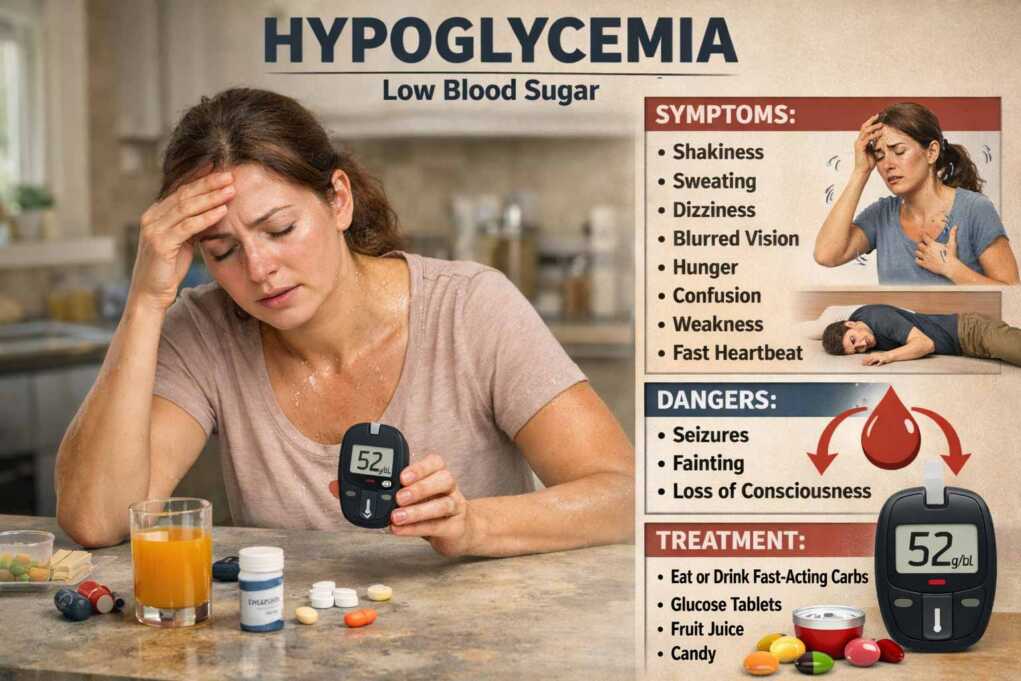
Your body depends on a steady supply of glucose — commonly called blood sugar — to function properly. Glucose fuels your brain, muscles, and vital organs, allowing you to think clearly, move efficiently, and maintain essential processes like breathing and heart function. Under normal circumstances, hormones such as insulin and glucagon work together to keep blood sugar within a narrow, healthy range. When that balance is disrupted, and glucose levels fall too low, a condition known as hypoglycemia occurs.
Low blood sugar can develop for several reasons. It is most common in people with diabetes who use insulin or certain oral medications, but it can also affect people without diabetes under specific conditions, such as prolonged fasting, heavy alcohol use, severe illness, or hormonal disorders. Hypoglycemia is typically defined as a blood glucose level below 70 mg/dL. While mild drops can cause uncomfortable symptoms, more severe declines can interfere with brain function and quickly become dangerous if not treated.
Why Glucose Is So Important
Glucose is the brain’s primary energy source. Unlike muscles, which can store and use other forms of fuel, the brain relies almost entirely on a continuous supply of glucose from the bloodstream. When levels begin to fall, the body activates emergency responses to correct the imbalance.
The pancreas reduces insulin production and releases glucagon, a hormone that signals the liver to release stored glucose. At the same time, stress hormones such as adrenaline (epinephrine) are released. These hormones help raise blood sugar — but they also produce many of the noticeable early symptoms of hypoglycemia.
If these corrective mechanisms fail or if glucose continues to drop, the brain begins to struggle, leading to more serious neurological symptoms.
Early Warning Signs of Low Blood Sugar
In the early stages, symptoms are often caused by the release of stress hormones. These are sometimes referred to as “adrenergic” symptoms and may include:
- Shakiness or trembling
- Sweating
- Rapid heartbeat
- Anxiety or nervousness
- Irritability
- Sudden hunger
- Dizziness or lightheadedness
- Headache
These warning signs are the body’s way of telling you that glucose levels are falling and action is needed. Consuming fast-acting carbohydrates — such as fruit juice, glucose tablets, or regular (non-diet) soda — can often reverse symptoms quickly.
Some people, especially those who have had diabetes for many years, may develop hypoglycemia unawareness, a condition in which early warning signs become less noticeable. This increases the risk of severe episodes because the person may not recognize the need for treatment.
What Happens as Blood Sugar Drops Further
If blood glucose continues to decline, symptoms shift from hormonal reactions to direct brain dysfunction. This stage is often referred to as “neuroglycopenia,” meaning the brain is not receiving enough glucose.
Symptoms may include:
- Confusion
- Difficulty concentrating
- Blurred or double vision
- Slurred speech
- Clumsiness or poor coordination
- Unusual behavior or personality changes
- Drowsiness
At this point, judgment may be impaired. A person may not realize they are experiencing hypoglycemia, making outside assistance crucial.
Severe Hypoglycemia: A Medical Emergency
When blood sugar drops significantly — often below 54 mg/dL — the risk of serious complications increases. Severe hypoglycemia can cause:
- Seizures
- Loss of consciousness
- Inability to swallow
- Coma
Without prompt treatment, prolonged glucose deprivation can lead to brain injury and, in rare cases, death. Severe episodes require immediate medical intervention. Treatment may involve emergency glucagon injection or intravenous glucose administered by healthcare professionals.
Causes of Low Blood Sugar
In People With Diabetes
The most common causes include:
- Taking too much insulin
- Taking diabetes medications without eating enough
- Skipping or delaying meals
- Increasing physical activity without adjusting food or medication
- Drinking alcohol, especially on an empty stomach
In People Without Diabetes
Though less common, hypoglycemia can also result from:
- Heavy alcohol consumption
- Critical illnesses affecting the liver, heart, or kidneys
- Hormone deficiencies (such as adrenal or pituitary disorders)
- Rare insulin-producing tumors (insulinomas)
- Certain medications
Who Is at Higher Risk?
Some groups are more vulnerable to dangerous drops in blood sugar:
- People with type 1 diabetes
- Individuals who use insulin or sulfonylurea medications
- Older adults
- People with kidney disease
- Those who have had previous severe hypoglycemia
- Individuals with hypoglycemia unawareness
Children and elderly adults may experience symptoms differently and may be less able to recognize or communicate what is happening.
Long-Term Effects of Repeated Low Blood Sugar
Occasional mild episodes can usually be managed without lasting harm. However, repeated severe hypoglycemia may:
- Increase risk of cardiovascular events
- Impair cognitive function over time
- Increase risk of accidents and injuries
- Reduce quality of life due to fear of episodes
For people with diabetes, preventing hypoglycemia is a key part of overall disease management.
How Low Blood Sugar Is Treated
Mild to Moderate Hypoglycemia
The “15-15 rule” is commonly recommended:
- Consume 15 grams of fast-acting carbohydrates.
- Wait 15 minutes.
- Recheck blood sugar and repeat if necessary.
Examples of 15 grams of carbohydrates include:
- 4 glucose tablets
- 4 ounces of fruit juice
- 4 ounces of regular soda
- 1 tablespoon of sugar or honey
Severe Hypoglycemia
If a person cannot safely swallow:
- Administer glucagon (if available)
- Call emergency medical services immediately
Never give food or drink to someone who is unconscious.
Preventing Low Blood Sugar
Prevention strategies include:
- Monitoring blood glucose regularly
- Eating balanced meals on schedule
- Adjusting medication for exercise
- Limiting alcohol intake
- Working with a healthcare provider to tailor treatment goals
- Using continuous glucose monitoring (CGM) devices when appropriate
Education is one of the most powerful tools for preventing complications. Recognizing early symptoms and acting quickly can prevent most cases from progressing to severe hypoglycemia.
When to See a Doctor
Seek medical advice if:
- You experience frequent low blood sugar episodes
- You have symptoms without knowing the cause
- You’ve had a severe episode requiring assistance
- You notice reduced awareness of warning signs
Persistent or unexplained hypoglycemia should always be evaluated by a healthcare professional.
Sources:
- Mayo Clinic
https://www.mayoclinic.org/diseases-conditions/hypoglycemia - Centers for Disease Control and Prevention
https://www.cdc.gov/diabetes/about/low-blood-sugar-hypoglycemia.html - Johns Hopkins Medicine
https://www.hopkinsmedicine.org/health/conditions-and-diseases/diabetes/hypoglycemia-low-blood-sugar - WebMD
https://www.webmd.com/diabetes/hypoglycemia-overview - Healthline
https://www.healthline.com/health/low-blood-sugar-effects-on-body
Disclaimer
The watching, interacting, and participation of any kind with anything on this page does not constitute or initiate a doctor-patient relationship with Dr. Farrah™. None of the statements here have been evaluated by the Food and Drug Administration (FDA). The products of Dr. Farrah™ are not intended to diagnose, treat, cure, or prevent any disease. The information being provided should only be considered for education and entertainment purposes only. If you feel that anything you see or hear may be of value to you on this page or on any other medium of any kind associated with, showing, or quoting anything relating to Dr. Farrah™ in any way at any time, you are encouraged to and agree to consult with a licensed healthcare professional in your area to discuss it. If you feel that you’re having a healthcare emergency, seek medical attention immediately. The views expressed here are simply either the views and opinions of Dr. Farrah™ or others appearing and are protected under the first amendment.
Dr. Farrah™ is a highly experienced Licensed Medical Doctor certified in evidence-based clinical nutrition, not some enthusiast, formulator, or medium promoting the wild and unrestrained use of nutrition products for health issues without clinical experience and scientific evidence of therapeutic benefit. Dr. Farrah™ has personally and keenly studied everything she recommends, and more importantly, she’s closely observed the reactions and results in a clinical setting countless times over the course of her career involving the treatment of over 150,000 patients.
Dr. Farrah™ promotes evidence-based natural approaches to health, which means integrating her individual scientific and clinical expertise with the best available external clinical evidence from systematic research. By individual clinical expertise, I refer to the proficiency and judgment that individual clinicians acquire through clinical experience and clinical practice.
Dr. Farrah™ does not make any representation or warranties with respect to the accuracy, applicability, fitness, or completeness of any multimedia content provided. Dr. Farrah™ does not warrant the performance, effectiveness, or applicability of any sites listed, linked, or referenced to, in, or by any multimedia content.
To be clear, the multimedia content is not intended to be a substitute for professional medical advice, diagnosis, or treatment. Always seek the advice of your physician or other qualified health providers with any questions you may have regarding a medical condition. Never disregard professional medical advice or delay in seeking it because of something you have read or seen in any website, video, image, or media of any kind. Dr. Farrah™ hereby disclaims any and all liability to any party for any direct, indirect, implied, punitive, special, incidental, or other consequential damages arising directly or indirectly from any use of the content, which is provided as is, and without warranties.