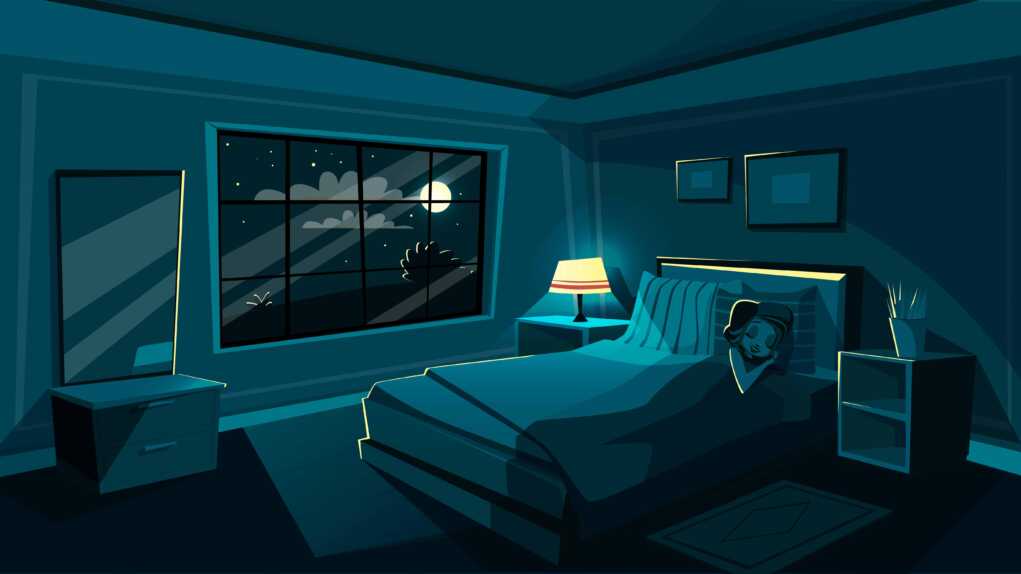
Sleep isn’t just your brain’s downtime to recharge—it’s a crucial period when your body performs vital maintenance, from repairing tissue to regulating hormones. But recent research suggests that how dark your sleep environment is may be just as critical as how long you sleep. In particular, sleeping in total darkness appears to significantly benefit your heart, while even modest amounts of nighttime light exposure can carry measurable cardiovascular risks.
At first glance, leaving a night light or cracked-open curtains might seem innocuous. Yet, these little intrusions of artificial light can disrupt your circadian rhythm, activate stress pathways, and impair metabolic function. Over time, this disruption may lead to inflammation, impaired glucose control, and other physiological changes that increase the risk of heart disease. Below, we delve into the science behind these findings, explore the mechanisms at play, and offer practical advice for creating a heart-healthy sleep environment.
Why Darkness Matters: The Science Behind the Heart Risk
Circadian Rhythm & Cardiovascular Health
- Our circadian rhythm, the body’s internal 24-hour clock, regulates not only sleep but also key cardiovascular functions, including blood pressure, heart rate, and hormone release. Disrupting this rhythm can ripple through many physiological systems.
- A landmark cohort study in the JAMA Network Open found that over ~9.5 years, individuals exposed to brighter nights had significantly higher risks of several cardiovascular diseases, including coronary artery disease, heart failure, myocardial infarction, atrial fibrillation, and stroke. JAMA Network+2Ovid+2
- Notably, these risks remained even after adjusting for traditional cardiovascular risk factors (like diet, exercise, sleep duration, socioeconomic status, and even genetic risk). JAMA Network
Physiological Stress from Light at Night
- Artificial light exposure at night may activate the sympathetic nervous system (your “fight or flight” response), leading to higher heart rates and reduced heart-rate variability — signals that the body is under stress rather than fully resting. PubMed
- In a controlled lab study, just one night of moderate light exposure (about 100 lux) during sleep increased heart rate, lowered heart-rate variability, and caused the following-morning’s insulin resistance in otherwise healthy adults. PubMed
- Insulin resistance is a key metabolic risk factor: when cells don’t respond well to insulin, blood glucose stays higher, potentially increasing the risk for diabetes, which itself is a risk factor for heart disease.
Inflammation & Vascular Damage
- Over time, the chronic stress and metabolic disruption triggered by light exposure may contribute to vascular inflammation — damaging blood vessel walls and promoting atherosclerosis (hardening of the arteries).
- Research reported by the American Heart Association noted that participants with higher night-light exposure had elevated markers of vascular inflammation in their brains and arteries, suggesting that light-induced stress may directly contribute to artery damage. American Heart Association
- Another possible mechanism is melatonin suppression: light at night can reduce melatonin production, and melatonin helps regulate inflammation and protect blood vessels. The Times of India+1
Who Is at Risk — And Why Some People May Be More Vulnerable
Age, Sex, and Genetic Factors
- The JAMA cohort study found stronger associations between bright-night exposure and cardiovascular risk in women (for coronary artery disease and heart failure) and in younger individuals (for heart failure and atrial fibrillation). JAMA Network+1
- This suggests that certain subgroups may be more sensitive to the adverse effects of light during sleep, possibly due to hormonal differences, genetic predispositions, or circadian sensitivity.
Urban Living & Light Pollution
- Many people live in environments where light pollution is pervasive — streetlights, traffic, and glow from neighboring buildings can infiltrate bedrooms.
- According to the American Heart Association, reducing indoor light and limiting screen exposure before bed may help mitigate these risks. American Heart Association
- Experts also suggest using blackout curtains, shielding outdoor lights, or employing motion-sensitive lighting to reduce unnecessary night-time illumination. American Heart Association
Practical Tips: How to Optimize Your Sleep Environment for Heart Health
1. Make Your Bedroom as Dark as Possible
-
- Use blackout curtains or blinds to block external light.
- Turn off or cover bedroom lights, and avoid keeping TVs or screens on during the night.
- If total darkness feels unsafe (especially for older adults), use very dim, warm-colored lights (like red or amber), which have less disruptive effects on circadian rhythms.
2. Limit Pre-Sleep Screen Time
-
- Avoid using phones, tablets, or watching TV just before bed. The blue light from screens suppresses melatonin, making it harder for your body to wind down.
3. Use Eye Masks or Sleep Accessories
-
- A comfortable, quality eye mask can help block stray light and support a darker sleep environment.
- For people who need light for safety (e.g., moving around in the dark), consider low-level, low-intensity night lights placed near the floor rather than overhead lights.
4. Advocate for Better Outdoor Lighting
-
- Where possible, push for smart outdoor lighting: motion-sensitive street lamps, downward-facing lights, and reduced brightness in neighborhoods can all help reduce light pollution.
- Communities can also benefit from initiatives that shield streetlights or retrofit existing lighting to be less disruptive.
Conclusion
Emerging science strongly suggests that sleeping in total darkness isn’t just a comfort choice—it may be a critical strategy for protecting your heart. Even moderate night-time light exposure has been linked to elevated heart rate, metabolic disruption, and greater risk of cardiovascular disease. Given that these risks persist above and beyond traditional risk factors, optimizing your sleep environment could be a simple yet powerful way to bolster heart health.
By reducing or eliminating light in your bedroom, limiting screen exposure before bed, and using sleep-friendly lighting strategies, you can better align your body’s internal clock, support metabolic regulation, and lower physiological stress — all of which may help guard against heart disease over the long run.
Sources:
- JAMA Network Open — Light Exposure at Night and Cardiovascular Disease Incidence JAMA Network+1
- PubMed — Light exposure during sleep impairs cardiometabolic function PubMed
- American Heart Association — Exposure to more artificial light at night may raise heart disease risk American Heart Association
- NHLBI / National Institutes of Health — Sleeping with even a small amount of light could harm heart health NHLBI, NIH
- Times of India / Health Reporting — Dim your lights at night and save your heart; scientists reveal why The Times of India
Disclaimer
The watching, interacting, and participation of any kind with anything on this page does not constitute or initiate a doctor-patient relationship with Dr. Farrah™. None of the statements here have been evaluated by the Food and Drug Administration (FDA). The products of Dr. Farrah™ are not intended to diagnose, treat, cure, or prevent any disease. The information being provided should only be considered for education and entertainment purposes only. If you feel that anything you see or hear may be of value to you on this page or on any other medium of any kind associated with, showing, or quoting anything relating to Dr. Farrah™ in any way at any time, you are encouraged to and agree to consult with a licensed healthcare professional in your area to discuss it. If you feel that you’re having a healthcare emergency, seek medical attention immediately. The views expressed here are simply either the views and opinions of Dr. Farrah™ or others appearing and are protected under the first amendment.
Dr. Farrah™ is a highly experienced Licensed Medical Doctor certified in evidence-based clinical nutrition, not some enthusiast, formulator, or medium promoting the wild and unrestrained use of nutrition products for health issues without clinical experience and scientific evidence of therapeutic benefit. Dr. Farrah™ has personally and keenly studied everything she recommends, and more importantly, she’s closely observed the reactions and results in a clinical setting countless times over the course of her career involving the treatment of over 150,000 patients.
Dr. Farrah™ promotes evidence-based natural approaches to health, which means integrating her individual scientific and clinical expertise with the best available external clinical evidence from systematic research. By individual clinical expertise, I refer to the proficiency and judgment that individual clinicians acquire through clinical experience and clinical practice.
Dr. Farrah™ does not make any representation or warranties with respect to the accuracy, applicability, fitness, or completeness of any multimedia content provided. Dr. Farrah™ does not warrant the performance, effectiveness, or applicability of any sites listed, linked, or referenced to, in, or by any multimedia content.
To be clear, the multimedia content is not intended to be a substitute for professional medical advice, diagnosis, or treatment. Always seek the advice of your physician or other qualified health providers with any questions you may have regarding a medical condition. Never disregard professional medical advice or delay in seeking it because of something you have read or seen in any website, video, image, or media of any kind. Dr. Farrah™ hereby disclaims any and all liability to any party for any direct, indirect, implied, punitive, special, incidental, or other consequential damages arising directly or indirectly from any use of the content, which is provided as is, and without warranties.