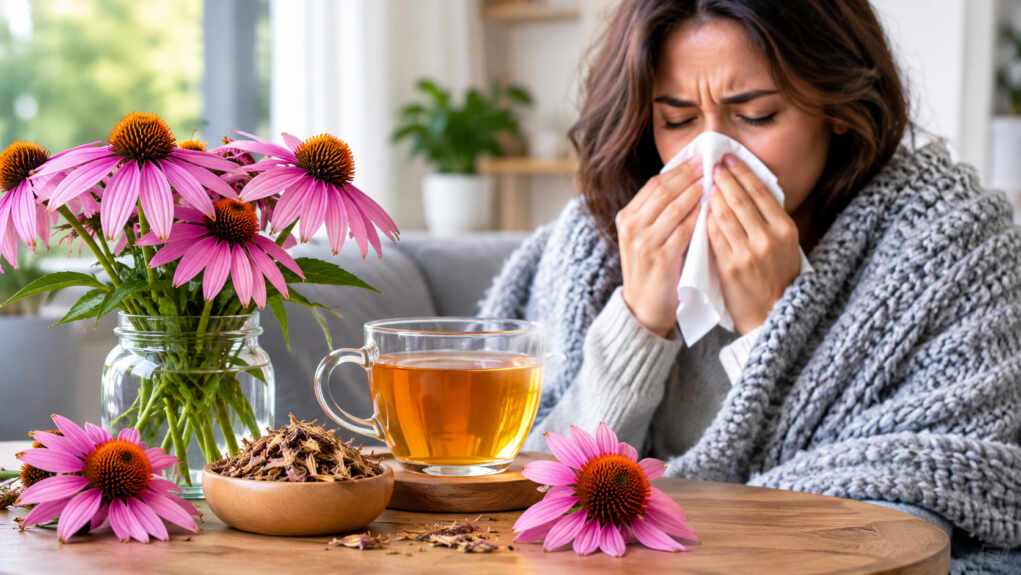
The common cold is one of the most frequent health complaints, especially during colder months and seasonal changes. From a scratchy throat and persistent sneezing to a stuffy nose and general fatigue, cold symptoms can disrupt everyday activities and leave people searching for natural ways to support their immune systems. Among the many herbal remedies that have stood the test of time, echinacea remains one of the most popular natural remedies for colds. Traditionally used for respiratory complaints, this flowering plant has earned a reputation as an herbal option for people looking to strengthen their body’s natural defenses.
But what makes echinacea such a familiar name in natural cold remedies? Its long history of traditional use, potential immune-supporting properties, and availability in different supplement forms have helped maintain its popularity. Although scientific research has produced mixed results regarding its effectiveness, some studies suggest that certain echinacea preparations may offer modest benefits in reducing the risk of respiratory infections. Understanding how echinacea works, what the research says, and how to use it responsibly can help you decide whether this herbal remedy deserves a place in your seasonal wellness routine.
What Is Echinacea?
Echinacea is a flowering plant native to North America, commonly known as purple coneflower. It belongs to the daisy family and has been used in traditional herbal medicine for generations.
Several species are used in herbal products, including:
- Echinacea purpurea: One of the most commonly researched and widely available species.
- Echinacea angustifolia: Traditionally used for immune and respiratory health.
- Echinacea pallida: Another species used in certain herbal preparations.
Different parts of the plant, including its roots, leaves, stems, and flowers, may be used to manufacture supplements and herbal products.
Today, echinacea is available in capsules, tablets, liquid extracts, tinctures, teas, and combination herbal supplements. However, these products are not interchangeable because their ingredients, concentrations, and preparation methods can vary considerably.
Why Echinacea Remains Popular for Cold Relief
1. Its Potential to Support Immune Function
One of the biggest reasons echinacea remains popular is its potential influence on the immune system.
Researchers have investigated several naturally occurring compounds in echinacea, including alkamides, polysaccharides, and caffeic acid derivatives. These compounds may influence different immune-related processes and inflammatory responses.
The idea behind using echinacea for colds is straightforward: supporting normal immune activity may help the body respond to invading microorganisms.
However, it is important to distinguish between laboratory findings and proven benefits in people. Although echinacea has demonstrated biological activity in research settings, scientists have not established that it reliably strengthens immunity or prevents common colds in everyday use.
2. It May Help Reduce the Risk of Catching a Cold
Another reason people turn to echinacea is the possibility that it may help reduce their chances of developing a respiratory infection.
Some clinical research suggests that particular echinacea preparations may modestly reduce the risk of developing upper respiratory tract infections. A 2019 systematic review and meta-analysis reported a reduction in respiratory infection risk among participants taking echinacea compared with those receiving a placebo.
However, the findings are not conclusive. Different studies have examined different plant species, formulations, doses, and treatment periods.
The National Institutes of Health’s Office of Dietary Supplements also notes that echinacea may slightly reduce the risk of catching a cold, although the overall evidence remains mixed.
This potential preventive effect helps explain why echinacea continues to attract attention among people interested in natural approaches to seasonal wellness.
3. It Has a Long History in Traditional Herbal Medicine
Echinacea’s popularity did not begin with modern supplements. Indigenous communities in North America historically used echinacea for various health complaints, including respiratory infections and other conditions.
Over time, the plant became an established ingredient in traditional herbal preparations and eventually gained international recognition as a natural wellness product.
Its long history of use contributes to its reputation as a familiar herbal remedy. Many people are drawn to echinacea because it represents a traditional approach to supporting health.
Nevertheless, traditional use should not be confused with scientific proof. Modern clinical research is necessary to determine which benefits are supported by reliable evidence.
4. It Is Available in Convenient Forms
Accessibility is another important factor behind echinacea’s continued popularity.
Unlike some traditional remedies that require preparation, echinacea is widely available in convenient forms that fit different lifestyles.
Common options include:
- Echinacea tea: A popular herbal beverage that can be incorporated into a relaxing daily routine.
- Capsules and tablets: Convenient options for people who prefer measured supplement doses.
- Liquid extracts: Concentrated preparations that can be taken according to product instructions.
- Tinctures: Herbal extracts commonly used in traditional wellness practices.
- Combination supplements: Products that combine echinacea with other ingredients marketed for immune support.
Choosing a product requires attention to its species, ingredients, concentration, and quality. A supplement containing one echinacea preparation may not produce the same results as another.
5. Some Research Suggests It May Influence Cold Symptoms
While echinacea has not been established as a cure for the common cold, researchers continue to investigate whether certain preparations can influence symptom severity or recovery.
Some clinical trials have reported improvements in cold-related symptoms, while others have found little or no meaningful difference compared with placebo.
The National Center for Complementary and Integrative Health (NCCIH) emphasizes that the evidence is inconsistent and that it remains unclear whether echinacea can shorten the duration of a cold.
This distinction matters because preventing an infection, reducing symptoms, and shortening an illness are three different outcomes.
For now, echinacea is best viewed as a herbal supplement with possible but unconfirmed benefits rather than a proven cold treatment.
What Does Scientific Research Say About Echinacea?
Despite its popularity, echinacea is not a scientifically proven cure for the common cold. Research findings differ, partly because studies have tested different species, extracts, and dosages.
Here are some important findings:
- National Institutes of Health (NIH): Research reviewed by the Office of Dietary Supplements suggests echinacea may slightly reduce the risk of catching a cold, but it does not appear to shorten the duration or reduce the severity of symptoms.
- National Center for Complementary and Integrative Health (NCCIH): Some echinacea preparations may offer limited benefits, but there is insufficient evidence to establish consistent effectiveness.
- Centers for Disease Control and Prevention (CDC): A review discussed in the CDC’s Yellow Book suggests echinacea may improve cold symptoms, although the quality of the evidence ranges from low to moderate.
- Mayo Clinic: Studies have produced mixed results. Some suggest that echinacea may lessen symptoms or shorten recovery when taken early, while others have found no significant benefit.
- Cochrane: Its research reviews highlight the considerable differences between echinacea preparations and the lack of convincing evidence for consistent benefits.
The takeaway is that echinacea remains an interesting subject of scientific research, but its benefits should not be exaggerated. More well-designed clinical trials are needed to establish which preparations, if any, provide meaningful results.
How to Use Echinacea as Part of Your Wellness Routine
If you are considering echinacea during cold season, it is important to approach it as a dietary supplement rather than a replacement for medical treatment.
Here are some practical considerations:
Choose Reputable Echinacea Products
Look for products from established manufacturers that clearly identify the echinacea species, plant parts, ingredient quantities, and other components.
Third-party quality testing, when available, can provide additional reassurance about product identity and quality.
Follow the Product Instructions
Echinacea supplements come in different concentrations and formulations. There is no universally established dosage that has been proven effective for preventing or treating colds.
Follow the manufacturer’s directions and consult a healthcare professional before starting supplementation, particularly if you take medication.
Avoid Assuming That More Is Better
Taking larger quantities does not necessarily provide greater benefits. Excessive or inappropriate supplement use may increase the likelihood of unwanted side effects.
Combine It With Healthy Daily Habits
Echinacea should not be the foundation of your cold-prevention strategy. Other practical measures include:
- Eating a balanced diet with fruits, vegetables, and adequate protein.
- Getting sufficient sleep and allowing your body time to recover.
- Washing your hands regularly.
- Staying physically active.
- Drinking enough fluids.
- Keeping recommended vaccinations up to date.
- Avoiding close contact with people who are sick when possible.
These habits support general health and help reduce exposure to respiratory infections.
Is Echinacea Safe? Possible Side Effects and Precautions
Although echinacea is generally well tolerated by many healthy adults when used for short periods, it is not suitable for everyone.
Possible side effects include:
- Nausea and stomach discomfort.
- Diarrhea or other digestive problems.
- Skin rashes.
- Allergic reactions, which can occasionally be severe.
- Sleep disturbances in some individuals.
People with allergies to plants in the daisy family, including ragweed, chrysanthemums, and marigolds, should be particularly cautious because allergic reactions are possible.
Certain groups should seek medical advice before using echinacea:
Pregnant or breastfeeding women: There is insufficient evidence establishing the safety of echinacea during pregnancy and breastfeeding.
Children: Research on echinacea in children is limited and inconsistent. Some studies have reported an increased risk of skin rashes. Parents should consult a pediatrician before giving herbal supplements to children.
People with autoimmune conditions: Because echinacea may influence immune activity, people with autoimmune disorders should discuss its use with their healthcare providers.
People taking prescription medications: Echinacea may interact with certain medications, including immunosuppressants and drugs processed by liver enzymes. Medical guidance is important before combining it with prescription treatments.
Natural does not automatically mean harmless. Taking the time to understand possible interactions and side effects is an essential part of responsible supplement use.
Can Echinacea Replace Conventional Cold Medicine?
No. Echinacea should not replace established medical care or treatments recommended by a healthcare professional.
The common cold is usually caused by viruses and generally improves on its own. Treatment typically focuses on managing symptoms while the body recovers.
Depending on your symptoms, conventional supportive care may include:
- Rest and adequate hydration.
- Saline nasal sprays for nasal congestion.
- Appropriate over-the-counter pain relievers for aches, headaches, or fever.
- Honey to help soothe coughing in adults and children over one year old.
Antibiotics do not treat ordinary viral colds, although a healthcare professional may prescribe them if a bacterial infection develops.
It is also important to remember that influenza and COVID-19 can cause symptoms similar to those of the common cold. Seek medical advice if symptoms are severe, persistent, or worsening, or if you experience difficulty breathing, chest pain, or signs of dehydration.
Why Echinacea Continues to Be a Popular Herbal Remedy
Echinacea’s lasting popularity comes from a combination of traditional herbal use, scientific interest, accessibility, and its association with immune health.
For people who prefer exploring natural wellness options, it remains an appealing supplement because it is widely available and has been investigated in numerous clinical studies.
Its potential to influence immune responses and possibly reduce the risk of certain respiratory infections continues to attract researchers. At the same time, inconsistent study results remind consumers that herbal supplements should be approached with realistic expectations.
Rather than viewing echinacea as a guaranteed solution for colds, it is more sensible to consider it an optional supplement whose benefits remain uncertain. Choosing reputable products, understanding possible interactions, and seeking professional advice can help people make informed decisions about its use.
Final Thoughts
Echinacea remains a go-to herbal remedy for colds because of its long history in traditional medicine, potential immune-supporting properties, and widespread availability. Although some research suggests that certain preparations may offer modest benefits, there is not enough consistent scientific evidence to establish echinacea as an effective treatment or reliable prevention method for the common cold.
Ultimately, maintaining healthy daily habits, practicing good hygiene, getting adequate rest, and seeking appropriate medical care remain more dependable ways to protect your health. If you are interested in trying echinacea, consult a healthcare professional to determine whether it is appropriate for your individual circumstances.
Sources:
- National Center for Complementary and Integrative Health (NCCIH) – Echinacea: Usefulness and Safety
- NIH Office of Dietary Supplements – Dietary Supplements for Immune Function and Infectious Diseases
- Mayo Clinic – Common Cold: Diagnosis and Treatment
- Centers for Disease Control and Prevention (CDC) – Complementary and Integrative Health Approaches to Travel Wellness
- Cochrane – Common Cold and Echinacea Research
- MedlinePlus – Dietary Supplements and Herbal Medicine Information
Website operated and published by:
FAB LTD
Ground Floor, 14 Stewart Dr.
Berea, East London 5241
South Africa
Disclaimer
The watching, interacting, and participation of any kind with anything on this page does not constitute or initiate a doctor-patient relationship with Dr. Farrah™. None of the statements here have been evaluated by the Food and Drug Administration (FDA). The products of Dr. Farrah™ are not intended to diagnose, treat, cure, or prevent any disease. The information being provided should only be considered for education and entertainment purposes only. If you feel that anything you see or hear may be of value to you on this page or on any other medium of any kind associated with, showing, or quoting anything relating to Dr. Farrah™ in any way at any time, you are encouraged to and agree to consult with a licensed healthcare professional in your area to discuss it. If you feel that you’re having a healthcare emergency, seek medical attention immediately. The views expressed here are simply either the views and opinions of Dr. Farrah™ or others appearing and are protected under the First Amendment.
Dr. Farrah™ is a highly experienced Licensed Medical Doctor certified in evidence-based clinical nutrition, not some enthusiast, formulator, or medium promoting the wild and unrestrained use of nutrition products for health issues without clinical experience and scientific evidence of therapeutic benefit. Dr. Farrah™ has personally and keenly studied everything she recommends, and more importantly, she’s closely observed the reactions and results in a clinical setting countless times over the course of her career involving the treatment of over 150,000 patients.
Dr. Farrah™ promotes evidence-based natural approaches to health, which means integrating her individual scientific and clinical expertise with the best available external clinical evidence from systematic research. By individual clinical expertise, I refer to the proficiency and judgment that individual clinicians acquire through clinical experience and clinical practice.
Dr. Farrah™ does not make any representations or warranties with respect to the accuracy, applicability, fitness, or completeness of any multimedia content provided. Dr. Farrah™ does not warrant the performance, effectiveness, or applicability of any sites listed, linked, or referenced to, in, or by any multimedia content.
To be clear, the multimedia content is not intended to be a substitute for professional medical advice, diagnosis, or treatment. Always seek the advice of your physician or other qualified health providers with any questions you may have regarding a medical condition. Never disregard professional medical advice or delay in seeking it because of something you have read or seen in any website, video, image, or media of any kind. Dr. Farrah™ hereby disclaims any and all liability to any party for any direct, indirect, implied, punitive, special, incidental, or other consequential damages arising directly or indirectly from any use of the content, which is provided as is, and without warranties.