
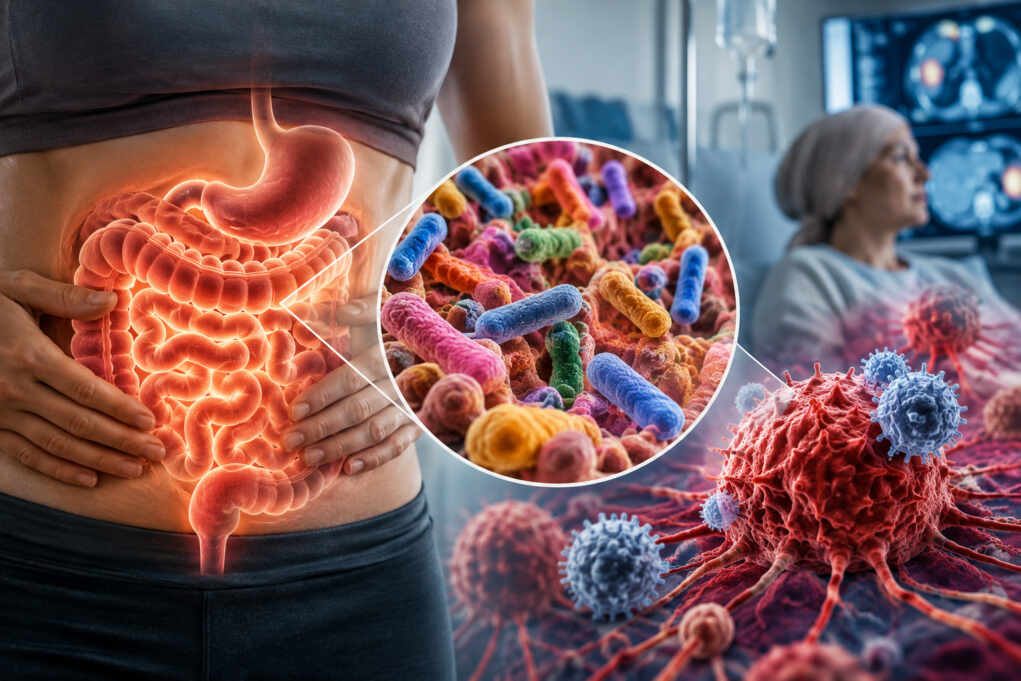
For decades, cancer research has focused largely on the tumor itself: its genetic mutations, its ability to grow and spread, and the ways medicines can destroy cancer cells. But scientists are increasingly looking beyond the tumor to another complex ecosystem inside the human body—the gut microbiome. Trillions of microorganisms live in the digestive tract, including bacteria, viruses and fungi, and researchers are discovering that these microscopic communities can influence metabolism, inflammation and the immune system. The question now being investigated is whether they can also influence how effectively a person’s cancer treatment works.
This does not mean that eating a particular food or taking a probiotic can cure cancer. Instead, the emerging science points to a more intriguing possibility: the microorganisms living in the gut may help determine how a person’s immune system responds to certain cancer therapies. Studies have linked differences in gut-microbiome composition with responses to immunotherapy, while researchers are also investigating whether deliberately changing the microbiome could make existing treatments more effective. The field remains experimental, but the findings could eventually help doctors develop more personalized approaches to cancer treatment.
Why the Gut Matters to the Immune System
The gut is far more than a digestive organ. It is closely connected to the body’s immune system, and the microorganisms living there interact continuously with immune cells and other biological processes.
This relationship has attracted particular attention in cancer immunotherapy. Immunotherapy works by helping the immune system recognize and attack cancer cells. Some of the most important forms of immunotherapy, including immune checkpoint inhibitors, have transformed treatment for certain cancers—but they do not work for every patient. Researchers therefore want to understand why some tumors respond while others resist treatment.
The National Cancer Institute says researchers are investigating how the microbiome shapes immune responses and cancer-treatment outcomes. Scientists have found associations between particular gut bacteria and responses to immune checkpoint inhibitors, raising the possibility that the microbiome could eventually become part of cancer-treatment planning.
What Researchers Have Discovered
Some of the strongest evidence so far comes from studies of melanoma and immunotherapy.
Cancer Research UK has reported research showing that patients with advanced melanoma who responded to certain immunotherapies tended to have more diverse gut bacterial communities than patients whose cancers did not respond. Researchers also found that transferring the gut microbiome of treatment responders into mice could improve their response to immunotherapy, suggesting that the relationship may be more than a simple coincidence. However, animal findings cannot automatically be translated into effective treatments for humans.
A particularly interesting human study involved patients with advanced melanoma who had previously failed to respond to immunotherapy. Researchers transferred fecal material from patients who had responded well to treatment. According to Harvard Health, several of the previously unresponsive patients subsequently showed tumor shrinkage or disease stabilization after receiving the microbiome transplant alongside immunotherapy. The study was small, however, and researchers emphasized that much more work is needed.
These findings have encouraged researchers to explore the gut microbiome as a possible biomarker—a biological feature that could help predict whether a treatment is likely to work.
Could the Microbiome Improve More Than Immunotherapy?
The potential connection may extend beyond checkpoint inhibitors.
Researchers at MD Anderson Cancer Center are investigating how the gut microbiome affects several forms of cancer treatment. Their work has explored relationships between gut bacteria and immunotherapy, as well as the possibility that manipulating the microbiome could improve treatment responses.
More recent research is expanding the picture. In 2025, MD Anderson researchers reported that the gut microbiome was associated with responses and toxicities in patients receiving CAR T-cell therapy for multiple myeloma. Their findings suggest that disruptions in the microbiome may also be relevant to how patients tolerate advanced cellular therapies.
In 2026, MD Anderson researchers reported another potentially important finding: in preclinical models, changing the gut microbiome altered how quickly the liver cleared certain nanoparticle-based chemotherapy drugs from the bloodstream. The researchers found that reshaping the microbiome could increase the amount of time the drug remained available to reach tumors. Because this work was conducted in preclinical models, it is not yet evidence that changing the microbiome will improve chemotherapy outcomes in people.
Why Scientists Are Being Cautious
The microbiome is extraordinarily complicated. There is no single “good” bacterium or ideal microbiome that applies to everyone.
A person’s microbial community can be influenced by diet, medications, antibiotics, age, disease and many other factors. Even people with the same type of cancer can have very different microbiomes. MD Anderson researchers have also cautioned that commercially available probiotics are not necessarily an effective way to create a microbiome that improves cancer treatment.
This is an important distinction because promising research can easily be misunderstood. The evidence does not currently show that patients should independently take probiotics, undergo fecal microbiota transplantation, stop prescribed medications or radically change their diet in an attempt to make cancer treatment work better.
In fact, antibiotics may also complicate the picture. Some studies have found associations between antibiotic exposure and poorer responses to certain immunotherapies, possibly because antibiotics can disrupt the gut microbiome. But antibiotics remain essential treatments for potentially serious infections, so patients should never avoid prescribed antibiotics without discussing the decision with their medical team.
The Future: More Personalized Cancer Treatment
The long-term goal is not simply to create a “healthier gut.” Researchers are trying to determine which microorganisms, microbial products and interactions with the immune system actually matter for specific cancers and treatments.
One possibility is that doctors could eventually analyze a patient’s tumor, immune system and gut microbiome together before selecting a treatment. The NCI describes this type of integrated approach as a potential direction for future cancer research.
Researchers at Johns Hopkins are similarly studying how microbiome communities influence cancer development and responses to immunotherapy. Their work includes investigating how microorganisms interact with tumors and immune cells, particularly in cancers such as colorectal and esophageal cancer.
If these discoveries translate successfully into clinical practice, future treatments could potentially include carefully designed microbiome therapies, dietary interventions, microbial products or other strategies intended to help the immune system respond more effectively to cancer.
A Promising Piece of a Much Bigger Puzzle
The idea that the gut could influence cancer treatment is one of the more fascinating developments in modern oncology. The evidence increasingly suggests that cancer does not exist in isolation: tumors interact with immune cells, metabolism and the broader biological environment—including the microorganisms living inside us.
But the science is still developing. The gut microbiome may eventually become an important tool for predicting treatment response or improving therapies, but it is not currently a standalone cure for cancer. For patients today, proven cancer treatments—including surgery, radiation, chemotherapy, targeted therapies and immunotherapies when appropriate—remain the foundation of care.
The most exciting possibility is not that the gut will replace conventional cancer treatment. It is that understanding the gut may help doctors make existing treatments smarter, more precise and more effective for individual patients. In that sense, the key to the next generation of cancer treatment may not be hidden in one place—it may be found by understanding the remarkable conversation between cancer cells, the immune system and the microscopic world inside the gut.
Sources:
- National Cancer Institute — The Immune System and Microbiome
- Harvard Health — Adjusting gut bacteria may improve response to cancer treatment
- UT MD Anderson Cancer Center — The gut microbiome and cancer treatment: What we do and don’t know
- Johns Hopkins Medicine — The Role of the Microbiome in Fighting Esophageal Cancer
- Cancer Research UK — Gut bacteria may influence response to cancer immunotherapy
Disclaimer
The watching, interacting, and participation of any kind with anything on this page does not constitute or initiate a doctor-patient relationship with Dr. Farrah™. None of the statements here have been evaluated by the Food and Drug Administration (FDA). The products of Dr. Farrah™ are not intended to diagnose, treat, cure, or prevent any disease. The information being provided should only be considered for education and entertainment purposes only. If you feel that anything you see or hear may be of value to you on this page or on any other medium of any kind associated with, showing, or quoting anything relating to Dr. Farrah™ in any way at any time, you are encouraged to and agree to consult with a licensed healthcare professional in your area to discuss it. If you feel that you’re having a healthcare emergency, seek medical attention immediately. The views expressed here are simply either the views and opinions of Dr. Farrah™ or others appearing and are protected under the First Amendment.
Dr. Farrah™ is a highly experienced Licensed Medical Doctor certified in evidence-based clinical nutrition, not some enthusiast, formulator, or medium promoting the wild and unrestrained use of nutrition products for health issues without clinical experience and scientific evidence of therapeutic benefit. Dr. Farrah™ has personally and keenly studied everything she recommends, and more importantly, she’s closely observed the reactions and results in a clinical setting countless times over the course of her career involving the treatment of over 150,000 patients.
Dr. Farrah™ promotes evidence-based natural approaches to health, which means integrating her individual scientific and clinical expertise with the best available external clinical evidence from systematic research. By individual clinical expertise, I refer to the proficiency and judgment that individual clinicians acquire through clinical experience and clinical practice.
Dr. Farrah™ does not make any representations or warranties with respect to the accuracy, applicability, fitness, or completeness of any multimedia content provided. Dr. Farrah™ does not warrant the performance, effectiveness, or applicability of any sites listed, linked, or referenced to, in, or by any multimedia content.
To be clear, the multimedia content is not intended to be a substitute for professional medical advice, diagnosis, or treatment. Always seek the advice of your physician or other qualified health providers with any questions you may have regarding a medical condition. Never disregard professional medical advice or delay in seeking it because of something you have read or seen in any website, video, image, or media of any kind. Dr. Farrah™ hereby disclaims any and all liability to any party for any direct, indirect, implied, punitive, special, incidental, or other consequential damages arising directly or indirectly from any use of the content, which is provided as is, and without warranties.