
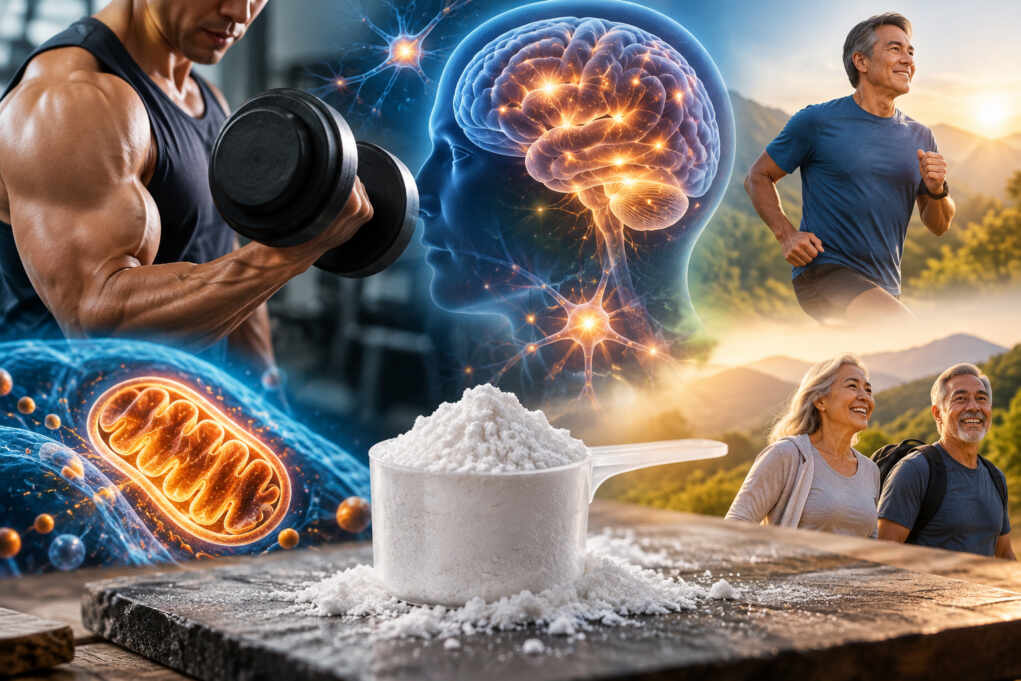
For years, creatine has been associated almost exclusively with weight rooms, protein shakes and athletes chasing greater strength. But creatine is much more than a sports supplement. It is a naturally occurring compound that helps cells rapidly regenerate adenosine triphosphate (ATP), the molecule the body uses as a readily available source of energy. While most of the body’s creatine is stored in skeletal muscle, smaller amounts are found in the brain and other tissues, where energy production is equally important.
That broader role has made creatine increasingly interesting to researchers studying brain function, fatigue and healthy aging. Early evidence suggests that supplementation may have benefits beyond exercise, including possible improvements in certain aspects of memory and cognition and support for maintaining muscle as we get older. At the same time, the research is not conclusive enough to consider creatine a proven treatment for cognitive decline or an all-purpose anti-aging supplement. The most established benefits remain its effects on muscle energy, strength and performance, particularly when combined with resistance exercise.
How Creatine Powers Your Cells
Creatine works partly by increasing the body’s stores of phosphocreatine. During demanding physical activity, phosphocreatine helps regenerate ATP, allowing muscles to produce energy quickly. This is especially useful during short, intense efforts such as lifting weights, sprinting or repeated bursts of exercise.
That energy system isn’t exclusive to muscle. The brain also has a high demand for ATP, which is why researchers have been interested in whether increasing brain creatine stores could influence mental performance. Creatine is naturally produced by the body and can also be obtained from foods such as meat and seafood.
What Creatine May Do for the Brain
The brain depends heavily on a continuous supply of energy. Because creatine participates in cellular energy metabolism, researchers have investigated whether additional creatine could help the brain cope with periods of high energy demand.
Some studies suggest that creatine supplementation may improve aspects of memory and cognitive performance, with potential benefits appearing more noticeable in certain groups, including older adults and people who consume little dietary creatine. However, results across studies have been mixed. More research is needed to determine which people are most likely to benefit and how much creatine would be appropriate for cognitive purposes.
This distinction is important. Creatine should not currently be presented as a proven way to prevent dementia, Alzheimer’s disease, or normal age-related cognitive decline. Evidence for brain health is promising enough to justify continued research, but not strong enough to make those claims.
Creatine and Everyday Energy
Creatine is sometimes described as an “energy booster,” but that phrase can be misleading. It does not work like caffeine, which can make you feel more alert within a relatively short period. Instead, creatine helps support the biochemical system cells use to rapidly regenerate ATP.
Its clearest effect is therefore seen during short periods of high-intensity physical activity. Supplementation can increase phosphocreatine stores in muscle, helping support repeated bouts of demanding exercise.
Whether that translates into feeling more energetic during ordinary daily life is much less certain. Creatine is not a stimulant, and there is limited evidence that it can eliminate everyday tiredness in otherwise healthy people.
A Potential Role in Healthy Aging
One of the most interesting areas of creatine research involves aging. As people grow older, they naturally tend to lose muscle mass, strength, and physical capacity. This process can eventually affect mobility and independence.
Creatine appears particularly useful when paired with resistance training. Research suggests that supplementation combined with strength exercise can help older adults improve strength and support muscle-related outcomes.
That matters because healthy aging isn’t simply about living longer—it is also about maintaining the ability to walk, climb stairs, carry groceries, and perform everyday activities. Preserving muscle and strength can be an important part of maintaining physical function as the years go by.
There may also be a connection between muscle and brain health. Physical activity and resistance training themselves are associated with numerous health benefits, so creatine is best viewed as a potential addition to a broader healthy-aging strategy rather than a replacement for exercise, nutritious food or adequate sleep.
Who Might Benefit Most?
Creatine isn’t necessarily equally useful for everyone. People who consume little or no meat may have lower dietary creatine intake, and some research suggests that individuals with lower baseline creatine stores could experience more noticeable effects from supplementation.
Older adults who combine creatine with resistance training are another group of interest because they are simultaneously addressing two major challenges of aging: declining muscle strength and the need to maintain physical function.
For healthy adults interested primarily in exercise performance, creatine monohydrate remains the most extensively studied form. Other forms have not demonstrated clear advantages over creatine monohydrate.
How Much Creatine Is Typically Used?
A commonly recommended maintenance amount is 3 to 5 grams of creatine monohydrate per day.
A loading phase—taking substantially larger amounts for several days—is sometimes used to saturate muscle stores more quickly, but it isn’t essential for everyone. Taking a smaller daily amount can also gradually increase creatine stores.
Importantly, there is no established standard dose specifically for preventing cognitive decline or promoting “brain health.” Some research investigating cognitive effects has used doses that differ from conventional sports supplementation, so higher doses should not automatically be assumed to provide greater brain benefits.
Is Creatine Safe?
For many healthy adults, creatine is considered one of the better-studied sports supplements. Research indicates that recommended doses are generally considered safe for many people, including with longer-term use.
The most noticeable effect for some people is an increase in body weight caused largely by increased water stored in muscle. Digestive symptoms can also occur, particularly with larger doses.
People with kidney disease or other significant medical conditions should speak with a healthcare professional before taking creatine. It is also worth remembering that dietary supplements are not regulated in exactly the same way as prescription medicines, making product quality an important consideration.
The Bigger Picture
Creatine’s reputation as a muscle-building supplement doesn’t tell the whole story. Its fundamental job is helping cells manage energy, and that function extends beyond skeletal muscle. The brain also depends on energy-intensive cellular processes, which explains why creatine has become an area of interest in cognitive research.
Still, the strongest evidence today remains around exercise performance, strength and muscle-related benefits. Potential effects on memory, cognition and healthy aging are promising but less certain. Rather than viewing creatine as a magic pill for youth or mental sharpness, it makes more sense to see it as one potentially useful tool within a larger approach to health—one that includes regular exercise, adequate protein and overall nutrition, good sleep and other established healthy-aging habits.
For adults considering supplementation, creatine monohydrate at a conventional daily dose has a substantial research history. But individual circumstances matter, particularly when kidney problems, medications or other medical conditions are involved. A healthcare professional can help determine whether supplementation is appropriate.
Sources:
Website operated and published by:
FAB LTD
Ground Floor, 14 Stewart Dr.
Berea, East London 5241
South Africa
Disclaimer
The watching, interacting, and participation of any kind with anything on this page does not constitute or initiate a doctor-patient relationship with Dr. Farrah™. None of the statements here have been evaluated by the Food and Drug Administration (FDA). The products of Dr. Farrah™ are not intended to diagnose, treat, cure, or prevent any disease. The information being provided should only be considered for education and entertainment purposes only. If you feel that anything you see or hear may be of value to you on this page or on any other medium of any kind associated with, showing, or quoting anything relating to Dr. Farrah™ in any way at any time, you are encouraged to and agree to consult with a licensed healthcare professional in your area to discuss it. If you feel that you’re having a healthcare emergency, seek medical attention immediately. The views expressed here are simply either the views and opinions of Dr. Farrah™ or others appearing and are protected under the First Amendment.
Dr. Farrah™ is a highly experienced Licensed Medical Doctor certified in evidence-based clinical nutrition, not some enthusiast, formulator, or medium promoting the wild and unrestrained use of nutrition products for health issues without clinical experience and scientific evidence of therapeutic benefit. Dr. Farrah™ has personally and keenly studied everything she recommends, and more importantly, she’s closely observed the reactions and results in a clinical setting countless times over the course of her career involving the treatment of over 150,000 patients.
Dr. Farrah™ promotes evidence-based natural approaches to health, which means integrating her individual scientific and clinical expertise with the best available external clinical evidence from systematic research. By individual clinical expertise, I refer to the proficiency and judgment that individual clinicians acquire through clinical experience and clinical practice.
Dr. Farrah™ does not make any representations or warranties with respect to the accuracy, applicability, fitness, or completeness of any multimedia content provided. Dr. Farrah™ does not warrant the performance, effectiveness, or applicability of any sites listed, linked, or referenced to, in, or by any multimedia content.
To be clear, the multimedia content is not intended to be a substitute for professional medical advice, diagnosis, or treatment. Always seek the advice of your physician or other qualified health providers with any questions you may have regarding a medical condition. Never disregard professional medical advice or delay in seeking it because of something you have read or seen in any website, video, image, or media of any kind. Dr. Farrah™ hereby disclaims any and all liability to any party for any direct, indirect, implied, punitive, special, incidental, or other consequential damages arising directly or indirectly from any use of the content, which is provided as is, and without warranties.