
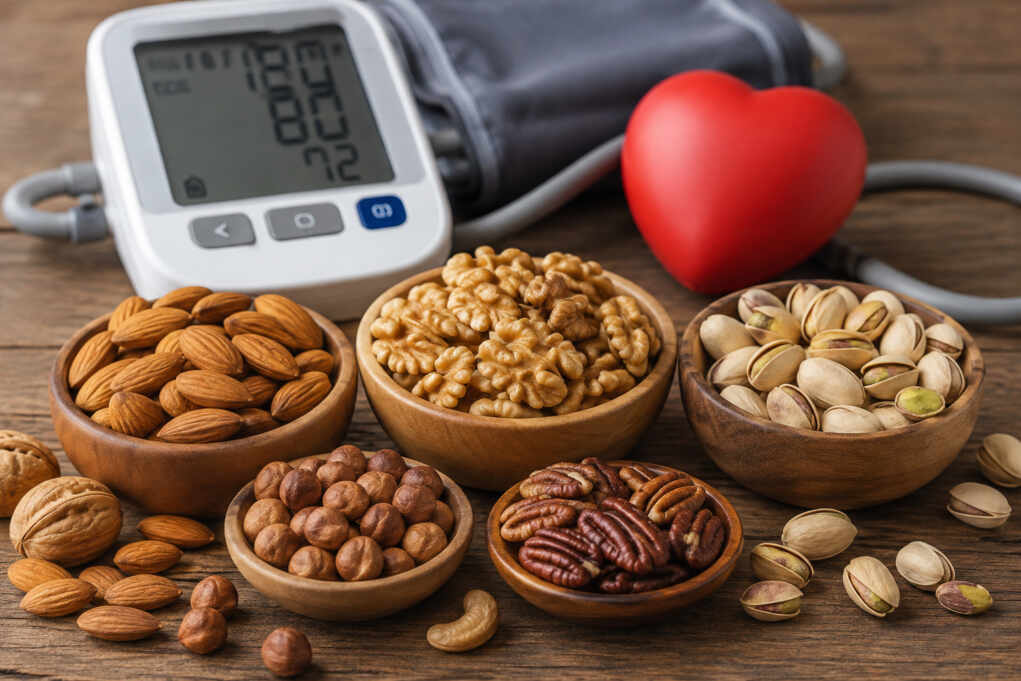
High blood pressure is often called a “silent” health problem because it can develop without obvious symptoms while gradually putting extra strain on the heart and blood vessels. The good news is that everyday food choices can play an important role in supporting healthier blood pressure. Among the foods gaining attention are nuts—small but nutrient-dense foods that provide healthy fats, fiber, protein, minerals and other compounds associated with cardiovascular health.
Recent research adds to the evidence that regularly eating nuts may be linked with a lower risk of developing hypertension. A 2026 systematic review and meta-analysis reported that people who ate about a handful of nuts a day had an approximately 20% lower risk of developing high blood pressure, although the researchers emphasized that an association does not prove that nuts themselves prevent hypertension.
Why Nuts May Benefit Blood Pressure
Nuts contain several nutrients that can support cardiovascular health. Most varieties are rich in unsaturated fats, which can help improve blood cholesterol levels when they replace less healthy saturated fats. They also provide fiber, plant protein, magnesium, potassium and other nutrients that contribute to an overall heart-friendly eating pattern. Mayo Clinic notes that regular nut consumption may improve artery health, reduce inflammation and lower the chances of high blood pressure.
Another potentially important component is L-arginine, an amino acid found in nuts. The body uses L-arginine to produce nitric oxide, a compound that helps blood vessels relax and supports blood flow. Harvard’s T.H. Chan School of Public Health notes that nuts are also sources of potassium, vitamin E, folate and fiber, all of which can contribute to a healthy cardiovascular diet.
A Small Serving Can Go a Long Way
When it comes to nuts, more isn’t necessarily better. They are nutritious but calorie-dense, so portion size matters. A typical serving is about 1 ounce (28 grams)—roughly a small handful. The American Heart Association gives the same serving-size guidance and recommends options such as almonds, peanuts, pistachios, pecans, hazelnuts and walnuts.
Rather than adding nuts on top of an already calorie-heavy diet, consider using them as a replacement for less nutritious snacks. A handful of unsalted almonds instead of salty chips, for example, can provide protein, fiber and beneficial fats while reducing your intake of highly processed snack foods. Harvard’s nutrition experts similarly recommend using nuts in place of less healthy snacks rather than simply adding them to the diet.
Which Nuts Are Best?
There isn’t necessarily one “best” nut for blood pressure. Almonds, pistachios, walnuts, pecans, hazelnuts and peanuts can all fit into a heart-healthy eating pattern. Walnuts stand out nutritionally because they are particularly rich in alpha-linolenic acid (ALA), a plant-based omega-3 fatty acid. Research reviewed by Harvard Health has also associated nut consumption with improvements in cardiovascular risk factors, including blood pressure and cholesterol.
The way nuts are prepared may be just as important as the type you choose. Unsalted or lightly salted nuts are generally preferable, since excessive sodium intake can work against blood-pressure goals. The American Heart Association recommends choosing nuts and nut butters with little added sodium, while Mayo Clinic also advises choosing unsalted or unsweetened varieties.
Nuts Are Part of the Bigger Picture
Eating nuts should not be viewed as a replacement for proven approaches to managing blood pressure. The strongest dietary evidence supports an overall eating pattern rich in vegetables, fruits, whole grains, legumes, nuts and other nutrient-dense foods while limiting excess sodium, added sugar and unhealthy fats. The DASH eating plan, for example, specifically includes nuts as part of a dietary approach designed to help prevent or manage high blood pressure.
For people who already have hypertension, nuts alone should not be expected to bring blood pressure into a healthy range. Medication, regular physical activity, maintaining a healthy weight, moderating sodium intake and following medical advice may all be important depending on an individual’s circumstances.
The Bottom Line
A small handful of nuts can be an easy addition to a heart-conscious diet. Their combination of unsaturated fats, fiber, plant protein, minerals and other beneficial compounds makes them a nutritious alternative to many processed snacks. Emerging research suggests that regular nut consumption may be associated with a lower risk of developing high blood pressure, but more research is needed to determine exactly how much nuts contribute to that benefit.
For a simple daily habit, choose about 1 ounce of unsalted or lightly salted nuts, vary the types you eat, and use them to replace less nutritious snacks. Combined with an overall balanced eating pattern and other healthy lifestyle habits, that small handful may be a worthwhile step toward better heart and blood-pressure health.
Sources:
- Healthline — A Handful of Nuts a Day May Help Keep Blood Pressure at Bay
- Mayo Clinic — Nuts and your heart: Eating nuts for heart health
- American Heart Association — Go Nuts (But Just a Little!)
- Harvard T.H. Chan School of Public Health — Nuts for the Heart
- Verywell Health — How Many Nuts Should You Really Eat Every Day
Disclaimer
The watching, interacting, and participation of any kind with anything on this page does not constitute or initiate a doctor-patient relationship with Dr. Farrah™. None of the statements here have been evaluated by the Food and Drug Administration (FDA). The products of Dr. Farrah™ are not intended to diagnose, treat, cure, or prevent any disease. The information being provided should only be considered for education and entertainment purposes only. If you feel that anything you see or hear may be of value to you on this page or on any other medium of any kind associated with, showing, or quoting anything relating to Dr. Farrah™ in any way at any time, you are encouraged to and agree to consult with a licensed healthcare professional in your area to discuss it. If you feel that you’re having a healthcare emergency, seek medical attention immediately. The views expressed here are simply either the views and opinions of Dr. Farrah™ or others appearing and are protected under the First Amendment.
Dr. Farrah™ is a highly experienced Licensed Medical Doctor certified in evidence-based clinical nutrition, not some enthusiast, formulator, or medium promoting the wild and unrestrained use of nutrition products for health issues without clinical experience and scientific evidence of therapeutic benefit. Dr. Farrah™ has personally and keenly studied everything she recommends, and more importantly, she’s closely observed the reactions and results in a clinical setting countless times over the course of her career involving the treatment of over 150,000 patients.
Dr. Farrah™ promotes evidence-based natural approaches to health, which means integrating her individual scientific and clinical expertise with the best available external clinical evidence from systematic research. By individual clinical expertise, I refer to the proficiency and judgment that individual clinicians acquire through clinical experience and clinical practice.
Dr. Farrah™ does not make any representations or warranties with respect to the accuracy, applicability, fitness, or completeness of any multimedia content provided. Dr. Farrah™ does not warrant the performance, effectiveness, or applicability of any sites listed, linked, or referenced to, in, or by any multimedia content.
To be clear, the multimedia content is not intended to be a substitute for professional medical advice, diagnosis, or treatment. Always seek the advice of your physician or other qualified health providers with any questions you may have regarding a medical condition. Never disregard professional medical advice or delay in seeking it because of something you have read or seen in any website, video, image, or media of any kind. Dr. Farrah™ hereby disclaims any and all liability to any party for any direct, indirect, implied, punitive, special, incidental, or other consequential damages arising directly or indirectly from any use of the content, which is provided as is, and without warranties.