
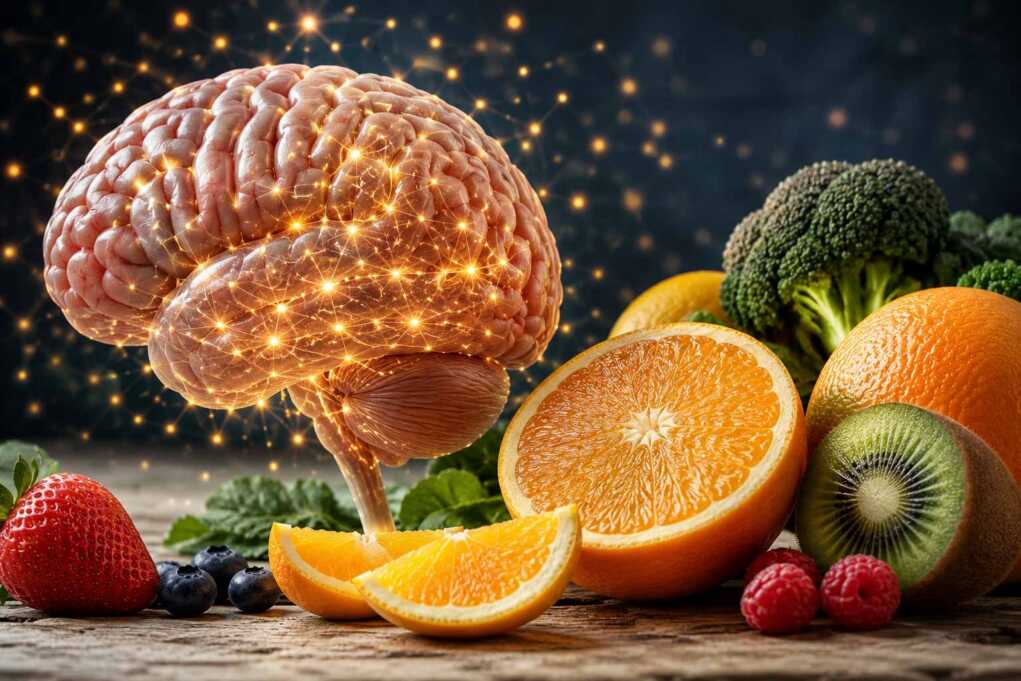
As people live longer, maintaining cognitive health has become one of the most important aspects of healthy aging. Researchers continue to investigate how lifestyle choices, including diet, may influence the risk of memory loss and age-related cognitive decline. Among the nutrients receiving increasing attention is vitamin C, a powerful antioxidant that plays a vital role in numerous bodily functions, from immune support to collagen production.
Recent research suggests that vitamin C may also have a meaningful relationship with brain health in older adults. Studies have found that individuals with higher blood levels of vitamin C tend to show signs of healthier brain structure and stronger connectivity in regions associated with memory, attention, and cognitive performance. While scientists caution that these findings demonstrate an association rather than direct cause and effect, they add to a growing body of evidence highlighting the importance of adequate nutrition throughout the aging process.
Understanding Vitamin C’s Role in the Brain
Vitamin C, also known as ascorbic acid, is an essential nutrient that the human body cannot produce on its own. It must be obtained through foods such as citrus fruits, berries, bell peppers, broccoli, tomatoes, and leafy greens. Beyond its well-known role in supporting the immune system, vitamin C functions as a potent antioxidant, helping protect cells from damage caused by free radicals.
The brain is particularly vulnerable to oxidative stress because it consumes large amounts of oxygen and contains high levels of fatty acids that can be damaged by oxidation. Researchers believe vitamin C may help defend brain cells against this damage, potentially supporting long-term cognitive function. Vitamin C also contributes to the production of neurotransmitters, the chemical messengers that allow nerve cells to communicate effectively.
New Research Links Vitamin C to Brain Structure
A large study involving more than 2,000 adults aged 64 and older found that higher plasma vitamin C levels were associated with greater gray matter volume and stronger connectivity within the brain’s default mode network, a system involved in memory, attention, and self-referential thinking. Participants with lower vitamin C levels tended to have lower gray matter volume and reduced network connectivity.
These findings are significant because age-related reductions in gray matter and brain connectivity are often linked to cognitive decline. Researchers suggest that maintaining healthy vitamin C levels may help preserve important brain structures as people age. However, they emphasize that more long-term studies are needed to determine whether vitamin C directly contributes to these benefits or simply reflects broader healthy lifestyle patterns.
Evidence from Earlier Studies
The recent findings are supported by previous research examining vitamin C deficiency and cognitive performance. One study involving older adults found that those with low vitamin C levels were significantly more likely to experience cognitive impairment compared with those who maintained adequate levels. Researchers concluded that vitamin C deficiency may be an important and potentially modifiable factor associated with cognitive health in aging populations.
Although these studies do not prove that vitamin C alone can prevent dementia or memory loss, they reinforce the idea that adequate nutrition is an important component of brain health. Experts increasingly recognize that a balanced diet rich in vitamins, minerals, and antioxidants may help support cognitive resilience over time.
Getting Enough Vitamin C
Health experts generally recommend obtaining vitamin C primarily through food rather than relying on supplements. Fruits and vegetables provide vitamin C along with fiber, phytochemicals, and other nutrients that contribute to overall health. Good sources include oranges, strawberries, kiwi, broccoli, kale, Brussels sprouts, and red bell peppers.
The recommended daily intake for most adults is approximately 75 milligrams for women and 90 milligrams for men. While supplements can help individuals who have difficulty meeting their nutritional needs, excessive doses may cause digestive discomfort and, in some cases, increase the risk of kidney stones.
The Bottom Line
Emerging research suggests that higher vitamin C levels may be associated with healthier brain structure and better cognitive function later in life. Its antioxidant properties, role in neurotransmitter production, and ability to combat oxidative stress make vitamin C a nutrient of significant interest in aging research. While scientists have not yet established a direct causal relationship, maintaining adequate vitamin C intake through a balanced diet appears to be a sensible strategy for supporting both overall health and long-term brain function. As research continues, vitamin C may prove to be one piece of the larger puzzle of healthy cognitive aging.
Sources:
- National Institutes of Health Office of Dietary Supplements – Vitamin C Fact Sheet
- Mayo Clinic – Vitamin C Overview
- Harvard Health – Myths and Truths About Vitamin C
- Cleveland Clinic – Benefits of Vitamin C
- Health.com – Foods Rich in Vitamin C
Disclaimer
The watching, interacting, and participation of any kind with anything on this page does not constitute or initiate a doctor-patient relationship with Dr. Farrah™. None of the statements here have been evaluated by the Food and Drug Administration (FDA). The products of Dr. Farrah™ are not intended to diagnose, treat, cure, or prevent any disease. The information being provided should only be considered for education and entertainment purposes only. If you feel that anything you see or hear may be of value to you on this page or on any other medium of any kind associated with, showing, or quoting anything relating to Dr. Farrah™ in any way at any time, you are encouraged to and agree to consult with a licensed healthcare professional in your area to discuss it. If you feel that you’re having a healthcare emergency, seek medical attention immediately. The views expressed here are simply either the views and opinions of Dr. Farrah™ or others appearing and are protected under the first amendment.
Dr. Farrah™ is a highly experienced Licensed Medical Doctor certified in evidence-based clinical nutrition, not some enthusiast, formulator, or medium promoting the wild and unrestrained use of nutrition products for health issues without clinical experience and scientific evidence of therapeutic benefit. Dr. Farrah™ has personally and keenly studied everything she recommends, and more importantly, she’s closely observed the reactions and results in a clinical setting countless times over the course of her career involving the treatment of over 150,000 patients.
Dr. Farrah™ promotes evidence-based natural approaches to health, which means integrating her individual scientific and clinical expertise with the best available external clinical evidence from systematic research. By individual clinical expertise, I refer to the proficiency and judgment that individual clinicians acquire through clinical experience and clinical practice.
Dr. Farrah™ does not make any representation or warranties with respect to the accuracy, applicability, fitness, or completeness of any multimedia content provided. Dr. Farrah™ does not warrant the performance, effectiveness, or applicability of any sites listed, linked, or referenced to, in, or by any multimedia content.
To be clear, the multimedia content is not intended to be a substitute for professional medical advice, diagnosis, or treatment. Always seek the advice of your physician or other qualified health providers with any questions you may have regarding a medical condition. Never disregard professional medical advice or delay in seeking it because of something you have read or seen in any website, video, image, or media of any kind. Dr. Farrah™ hereby disclaims any and all liability to any party for any direct, indirect, implied, punitive, special, incidental, or other consequential damages arising directly or indirectly from any use of the content, which is provided as is, and without warranties.