
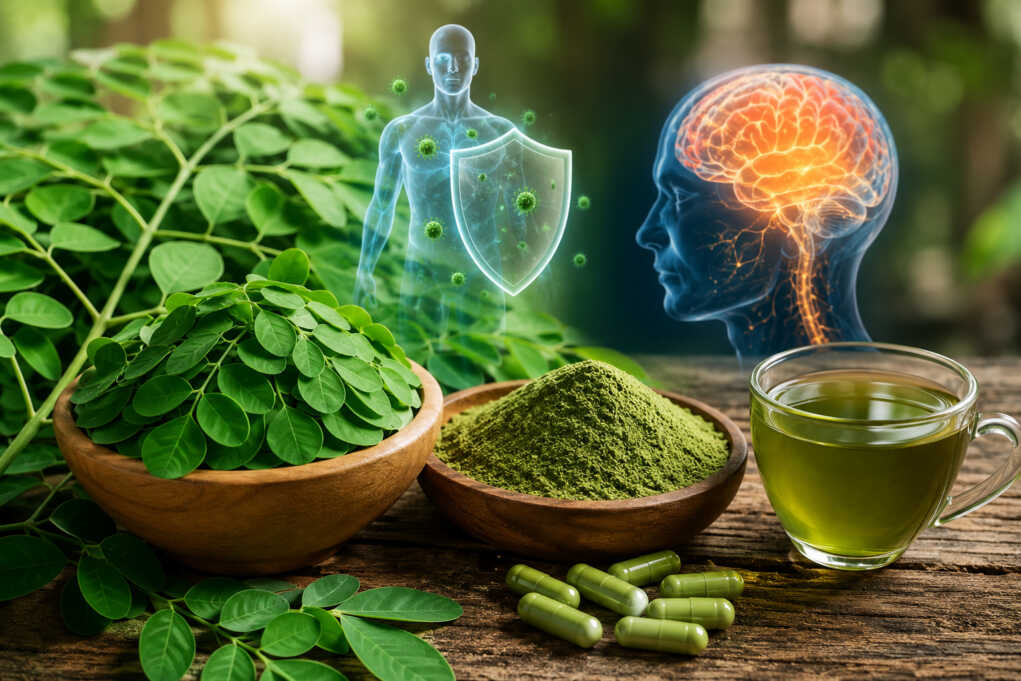
For centuries, moringa (Moringa oleifera) has been treasured across Asia and Africa as both a nourishing food and a traditional herbal remedy. Often called the “miracle tree” or “drumstick tree,” nearly every part of the plant—from its leaves to its pods—has been used in cooking and natural medicine. Today, this ancient superfood has gained global attention as researchers continue to explore its impressive nutritional profile and potential health benefits.
While moringa is not a cure-all, growing scientific evidence suggests that it may play a valuable role in supporting overall wellness, particularly when it comes to brain function and immune health. Rich in vitamins, minerals, antioxidants, and plant compounds, moringa can complement a balanced diet and healthy lifestyle. Experts also emphasize that although early findings are promising, more large-scale human studies are needed to fully understand its long-term health effects.
A Nutritional Powerhouse
One of the biggest reasons moringa has earned its reputation as a superfood is its remarkable concentration of nutrients. The leaves are packed with vitamin A, vitamin C, vitamin E, calcium, potassium, iron, magnesium, and plant-based protein. They also contain essential amino acids that help support the body’s daily functions.
Moringa is especially valued for its abundance of antioxidants, including quercetin, chlorogenic acid, and beta-carotene. These compounds help protect cells from oxidative stress, a process linked to aging and the development of chronic diseases.
Supporting Brain Health Naturally
The brain requires a constant supply of nutrients and protection from oxidative damage to function at its best. Moringa’s antioxidant content may help defend brain cells against free radicals, reducing oxidative stress that has been associated with age-related cognitive decline.
Some laboratory and animal studies suggest that moringa’s anti-inflammatory and neuroprotective compounds may help preserve memory, learning, and overall brain function. Researchers are investigating whether these properties could contribute to protecting against neurodegenerative diseases in the future. However, experts caution that more human clinical trials are necessary before definitive conclusions can be made.
Additionally, moringa contains nutrients such as vitamin E, vitamin C, iron, and several B vitamins that contribute to normal brain function. Iron, in particular, helps transport oxygen throughout the body, including to the brain, supporting concentration and mental performance.
Strengthening the Immune System
A healthy immune system relies on proper nutrition, and moringa delivers several nutrients known to support immune function. Vitamin C helps stimulate the production and function of white blood cells, while vitamin A plays a vital role in maintaining healthy skin and mucous membranes, the body’s first line of defense against harmful pathogens.
The plant’s antioxidants also help reduce inflammation and oxidative stress, allowing immune cells to function more efficiently. Although moringa should not replace medical treatment or vaccinations, incorporating it into a nutrient-rich diet may contribute to stronger overall immune health.
Additional Health Benefits
Beyond brain and immune support, research has linked moringa to several other potential health benefits, including:
- Helping reduce inflammation.
- Supporting healthy cholesterol levels.
- Assisting in maintaining normal blood sugar levels.
- Promoting heart health through its antioxidant properties.
- Providing important nutrients that may help prevent nutritional deficiencies.
Most of these findings remain under active investigation, and scientists continue to study the effectiveness of moringa in human populations.
Easy Ways to Add Moringa to Your Diet
Moringa is available in several forms, making it easy to include in everyday meals:
- Add moringa powder to smoothies or protein shakes.
- Stir it into soups, stews, or vegetable dishes.
- Brew moringa leaves into herbal tea.
- Mix the powder into oatmeal, yogurt, or fruit bowls.
- Use fresh moringa leaves in salads or traditional recipes where available.
Because moringa has a mild earthy flavor, many people combine it with fruits or other ingredients to balance its taste.
A Few Precautions
Although moringa leaves are generally considered safe when consumed as food, concentrated supplements may interact with certain medications, particularly those used for diabetes or high blood pressure. Pregnant women should also avoid certain parts of the moringa plant, such as the root and bark, due to potential safety concerns.
Anyone considering moringa supplements should consult a healthcare professional, especially if they have an existing medical condition or take prescription medications.
The Bottom Line
Moringa has earned its place among the world’s most celebrated superfoods thanks to its exceptional nutritional value and long history of traditional use. Its rich supply of antioxidants, vitamins, and minerals may help support brain function, strengthen the immune system, and contribute to overall health when combined with a balanced diet and healthy lifestyle.
While scientific research continues to uncover new possibilities, moringa should be viewed as a nutritious addition to—not a replacement for—evidence-based medical care. As more clinical studies emerge, this ancient plant may continue to prove why it has remained a trusted source of nourishment for generations.
Sources:
- Cleveland Clinic – https://health.clevelandclinic.org/moringa-benefits
- Healthline – https://www.healthline.com/nutrition/6-benefits-of-moringa-oleifera
- WebMD – https://www.webmd.com/vitamins-supplements/moringa
- Medical News Today – https://www.medicalnewstoday.com/articles/319916
- PubMed – https://pubmed.ncbi.nlm.nih.gov/34843254/
Disclaimer
The watching, interacting, and participation of any kind with anything on this page does not constitute or initiate a doctor-patient relationship with Dr. Farrah™. None of the statements here have been evaluated by the Food and Drug Administration (FDA). The products of Dr. Farrah™ are not intended to diagnose, treat, cure, or prevent any disease. The information being provided should only be considered for education and entertainment purposes only. If you feel that anything you see or hear may be of value to you on this page or on any other medium of any kind associated with, showing, or quoting anything relating to Dr. Farrah™ in any way at any time, you are encouraged to and agree to consult with a licensed healthcare professional in your area to discuss it. If you feel that you’re having a healthcare emergency, seek medical attention immediately. The views expressed here are simply either the views and opinions of Dr. Farrah™ or others appearing and are protected under the first amendment.
Dr. Farrah™ is a highly experienced Licensed Medical Doctor certified in evidence-based clinical nutrition, not some enthusiast, formulator, or medium promoting the wild and unrestrained use of nutrition products for health issues without clinical experience and scientific evidence of therapeutic benefit. Dr. Farrah™ has personally and keenly studied everything she recommends, and more importantly, she’s closely observed the reactions and results in a clinical setting countless times over the course of her career involving the treatment of over 150,000 patients.
Dr. Farrah™ promotes evidence-based natural approaches to health, which means integrating her individual scientific and clinical expertise with the best available external clinical evidence from systematic research. By individual clinical expertise, I refer to the proficiency and judgment that individual clinicians acquire through clinical experience and clinical practice.
Dr. Farrah™ does not make any representation or warranties with respect to the accuracy, applicability, fitness, or completeness of any multimedia content provided. Dr. Farrah™ does not warrant the performance, effectiveness, or applicability of any sites listed, linked, or referenced to, in, or by any multimedia content.
To be clear, the multimedia content is not intended to be a substitute for professional medical advice, diagnosis, or treatment. Always seek the advice of your physician or other qualified health providers with any questions you may have regarding a medical condition. Never disregard professional medical advice or delay in seeking it because of something you have read or seen in any website, video, image, or media of any kind. Dr. Farrah™ hereby disclaims any and all liability to any party for any direct, indirect, implied, punitive, special, incidental, or other consequential damages arising directly or indirectly from any use of the content, which is provided as is, and without warranties.