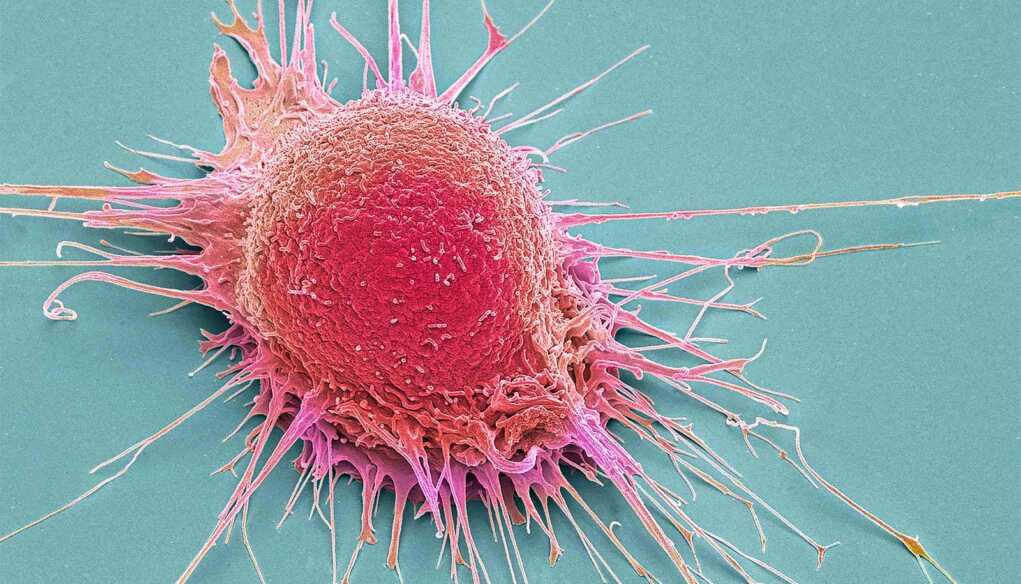
Scientists have revealed how certain immune cells may be quietly helping prostate cancer grow—and how blocking them could help the body fight back.
The study in Molecular Cancer Research identifies a group of cells called macrophages that, instead of protecting the body, appear to shield tumors from attack and promote tumor metastasis.
These cells are typically the immune system’s housekeeping crew—engulfing dead cells and responding to infection—but in prostate cancer, some are reprogrammed by tumors to suppress the body’s immune responses and promote their own spread.
Led by Assistant Professor Shenglin Mei of the Fralin Biomedical Research Institute Cancer Research Center in Washington, DC, the study focused on tumor-associated macrophages, in advanced prostate cancer—particularly in the bone, where the disease is most deadly and difficult to treat.
Among four macrophage subtypes identified, one stood out: a group marked by the proteins SPP1 and TREM2. These cells were found clustered inside tumor regions — not in surrounding tissue—and were linked to blood vessel growth, impaired immune activity, and the spread of cancer in the body.
Using spatial analysis—a technique that maps where cells are located within a tumor—researchers found that inflammatory, potentially tumor-fighting macrophages tended to remain outside tumor boundaries, but a specific subtype that produces the troublesome SPP1 and TREM2 proteins was found deep inside the tumors, in close contact with cancer cells.
“Macrophages often aid in fighting cancers,” Mei says. “However, certain subtypes foster an immune-suppressive environment, hindering the body’s natural defenses.”
In follow-up experiments, Mei and his colleagues tested whether blocking these cells could improve treatment. In mice with prostate tumors, they used an antibody to block the SPP1 protein—and found that tumors were more vulnerable to immunotherapy.
While immune checkpoint inhibitors have worked in many other cancers, they’ve failed in prostate cancer. But in this study, combining anti-SPP1 treatment with immunotherapy significantly boosted the immune response.
“Targeting SPP1/TREM2 tumor associated macrophages reversed immunosuppression, allowing more T cells—the immune system’s primary defenders—to infiltrate the tumor, resulting in slowed cancer progression,” Mei says.
Prostate cancer is the second most commonly diagnosed cancer in men in the United States and globally, with an estimated 1.47 million new cases worldwide in 2022, according to the World Cancer Research Fund.
Scientists have long suspected that the tumor microenvironment—the mix of immune cells, blood vessels, and signaling molecules around a tumor—plays a role in helping cancer escape detection. But this new study reveals, in greater detail, which cells are involved and how they’re working.
To make this discovery, Mei’s lab combined advanced techniques—including single-cell RNA sequencing, spatial transcriptomics, and NanoString digital spatial profiling—to map immune cell activity and location.
They also analyzed large-scale, publicly available datasets from hundreds of prostate cancer patients, ensuring their findings held up across human samples, mouse models, and disease stages.
“This is about more than just one cell type,” says Mei, who also has an appointment with the biomedical sciences and pathobiology department in the Virginia-Maryland College of Veterinary Medicine.
“It’s about using spatial and single-cell analysis together to uncover vulnerabilities that we couldn’t see before.”
This work builds directly on Mei’s earlier studies—a 2021 Cancer Cell paper that revealed an immunosuppressive tumor microenvironment in bone metastases, and a 2023 Nature Communications study that mapped immune cell patterns in primary tumors.
The new study expands on that foundation, integrating old and new datasets to reveal a previously hidden player in prostate cancer progression.
Additional researchers from Virginia Tech, Harvard Medical School, Massachusetts General Hospital, the University of Chicago, and Sweden’s Karolinska Institute contributed to the work.
Support for the project came from the Prostate Cancer Foundation, which awarded Mei a Young Investigator Award, and by the National Institutes of Health. Mei is among a cohort of new cancer research faculty at the research institute whose recruitment was supported by the Red Gates Foundation.
Source: Virginia Tech
Original Study DOI: 10.1158/1541-7786.MCR-24-0791
Important Notice: This article was originally published at https://www.futurity.org by John Pastor – Virginia Tech, where all credits are due.
Disclaimer
The watching, interacting, and participation of any kind with anything on this page does not constitute or initiate a doctor-patient relationship with Dr. Farrah™. None of the statements here have been evaluated by the Food and Drug Administration (FDA). The products of Dr. Farrah™ are not intended to diagnose, treat, cure, or prevent any disease. The information being provided should only be considered for education and entertainment purposes only. If you feel that anything you see or hear may be of value to you on this page or on any other medium of any kind associated with, showing, or quoting anything relating to Dr. Farrah™ in any way at any time, you are encouraged to and agree to consult with a licensed healthcare professional in your area to discuss it. If you feel that you’re having a healthcare emergency, seek medical attention immediately. The views expressed here are simply either the views and opinions of Dr. Farrah™ or others appearing and are protected under the first amendment.
Dr. Farrah™ is a highly experienced Licensed Medical Doctor certified in evidence-based clinical nutrition, not some enthusiast, formulator, or medium promoting the wild and unrestrained use of nutrition products for health issues without clinical experience and scientific evidence of therapeutic benefit. Dr. Farrah™ has personally and keenly studied everything she recommends, and more importantly, she’s closely observed the reactions and results in a clinical setting countless times over the course of her career involving the treatment of over 150,000 patients.
Dr. Farrah™ promotes evidence-based natural approaches to health, which means integrating her individual scientific and clinical expertise with the best available external clinical evidence from systematic research. By individual clinical expertise, I refer to the proficiency and judgment that individual clinicians acquire through clinical experience and clinical practice.
Dr. Farrah™ does not make any representation or warranties with respect to the accuracy, applicability, fitness, or completeness of any multimedia content provided. Dr. Farrah™ does not warrant the performance, effectiveness, or applicability of any sites listed, linked, or referenced to, in, or by any multimedia content.
To be clear, the multimedia content is not intended to be a substitute for professional medical advice, diagnosis, or treatment. Always seek the advice of your physician or other qualified health providers with any questions you may have regarding a medical condition. Never disregard professional medical advice or delay in seeking it because of something you have read or seen in any website, video, image, or media of any kind. Dr. Farrah™ hereby disclaims any and all liability to any party for any direct, indirect, implied, punitive, special, incidental, or other consequential damages arising directly or indirectly from any use of the content, which is provided as is, and without warranties.